- Membership
- Perks
- Things To Do
- Resources
- News
- About
- Shop
Related Content
Lyme Disease Hits Home
Aug. 20, 2026
Research led by UNC doctors and published Aug. 13 by the Centers for Disease Control and Prevention...
Read MoreA Win for Precision Medicine
Aug. 4, 2026
A research study involving thousands of volunteers has yielded a new test that can determine...
Read MoreLombardi Placed on Administrative Leave
July 27, 2026
The University announced Monday it has placed football program General Manager Michael Lombardi on paid...
Read More-
2026
-
2025
-
2024
-
2023
-
2022
-
2021
-
2020
-
2019
-
2018
-
2017
-
2016
-
2015
-
2014
-
2013
-
2012
-
2011
-
2010
-
2009
-
2008
-
2007
-
2006
-
2005
-
2004
- Academics and Athletics
- Admissions
- Alumni Profiles
- Alumni Recognition
- Around Town
- Arts
- Books
- Campus Profile
- Campus Safety
- Carolina Alumni Awards
- Carolina Alumni Leadership
- Carolina Alumni Programs and Outreach
- Carolina Alumni Reunions
- Carolina Alumni Review
- Celebrations
- Championships
- College and Costs
- Commencement
- Coronavirus
- Discovery
- Extracurricular
- Faculty
- Faculty Awards
- For the People
- Go Heels
- Greek Life
- Hark the Sounds
- Higher Education
- Homecoming
- In Class
- In Memoriam
- Innovation and Technology
- Issues
- Object Lesson
- On View
- Philanthropy
- Podcast
- Public Service
- Race and Reckoning
- Research
- Serving Our State
- Sexual Assault
- Silent Sam
- Sports
- Structures
- Student Achievement
- Students
- Timelines
- Tuition and Financial Aid
- UNC Libraries
- UNC’s History
- Undergraduate Spotlight
- University Achievements
- University Awards
- University Budget Issues
- University Development
- University Leadership
- University News
- University Rankings
- What We Do
- Who We Are
- Young Alumni
- Yours at Carolina
UNC Drug Expert Awarded MacArthur Genius Grant
Posted on Oct. 10, 2025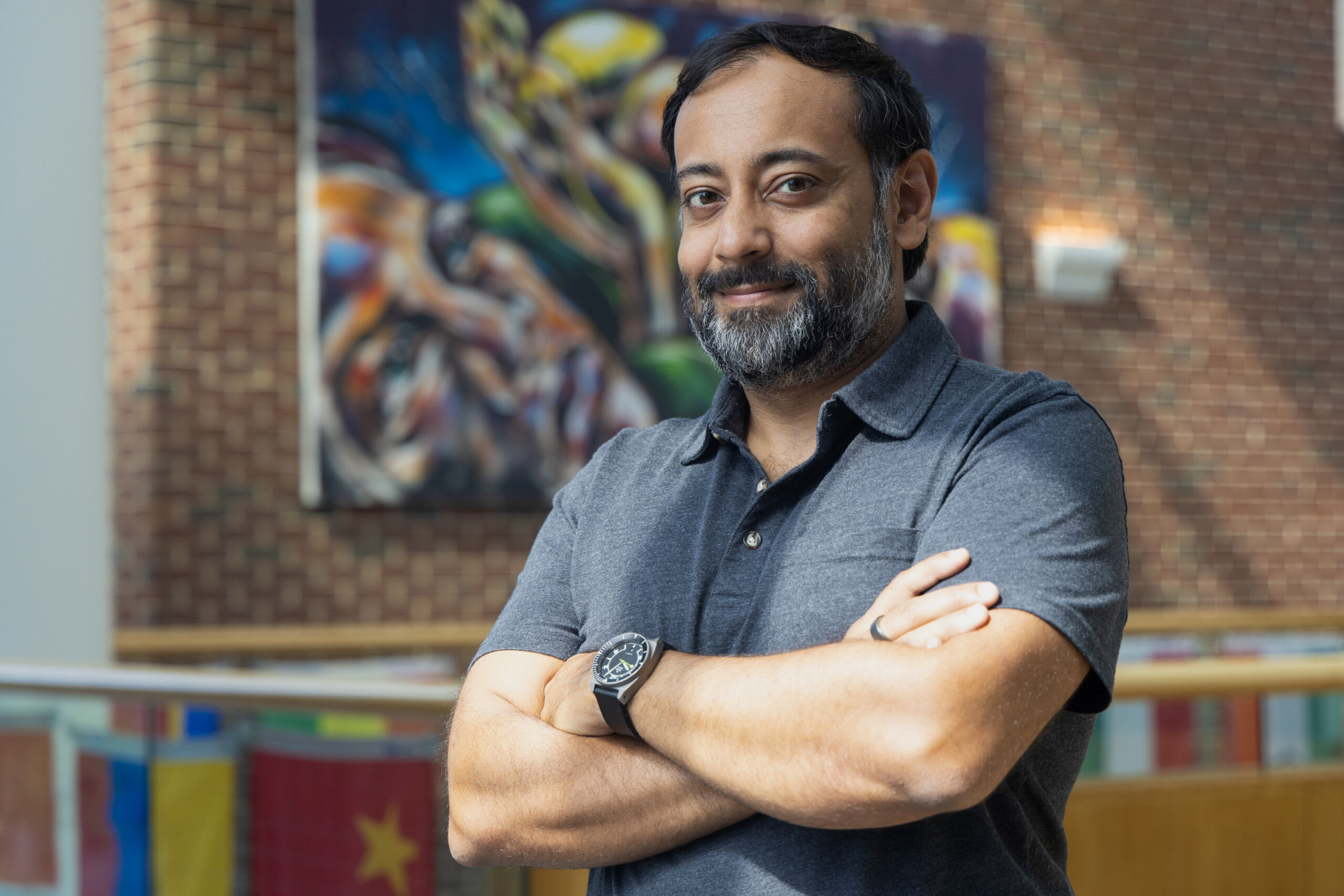
Nabarun Dasgupta ’13 (PhD) said his goal is to help people “make better decisions about what they put in their bodies.” (Photo: UNC)
Nabarun Dasgupta ’13 (PhD) and his team of researchers spend their days testing street drugs like cocaine, heroin and methamphetamines, unregulated samples mailed in from across the country.
The results of the tests, which are posted online, offer the public a glimpse at what is circulating through the unregulated drug market, such as counterfeit pills, psychedelics and cutting agents that dilute drug purity and range from harmless baking soda to potent fentanyl that can end a user’s life. Dasgupta said his goal is to help people “make better decisions about what they put in their bodies.”
Dasgupta, who directs the UNC Street Drug Analysis Lab, a program within the University’s Injury Prevention Research Center, was awarded in October a MacArthur Fellowship, commonly known as the “genius grant,” for developing innovative, practical programs to mitigate drug use and reduce opioid overdose deaths. The fellowship provides a no-strings-attached $800,000 award to its recipients over five years. The grant is “intended to support exceptionally creative individuals by providing them with significant financial freedom to pursue their work,” according to the website of the John D. and Catherine T. MacArthur Foundation, which awards the grants.
Dasgupta is an innovation fellow at UNC’s Gillings School of Global Public Health and the third faculty member at Carolina to receive the prestigious grant.
“Doing this work at Carolina is thrilling,” Dasgupta said. “Whenever we detect a street drug that’s never been seen before, we can call up world-class experts on campus and get immediate insight. The science that used to take years, we now do in weeks because we are focused on the socially relevant and actionable.”
Dasgupta’s team has tested more than 16,000 samples of street drugs, and he often collaborates with people who have used street drugs to design effective interventions.
Project Lazarus, an initiative he co-founded in Wilkes County in 2007, distributed naloxone directly to individuals with a drug prescription, which resulted in a significant reduction in the county’s overdose deaths. In 2020, he co-founded the Remedy Alliance/For the People, a nonprofit that distributes low- to no-cost supplies of naloxone to more than 500 harm reduction organizations nationwide.
The Street Drug Analysis Lab collects substance samples from users and dealers through the mail, a system made legal by a collection mechanism Dasgupta developed that renders the drugs unusable yet still chemically testable. Each sample is assigned a number, and the lab determines the ingredients in the samples before posting the results anonymously on its website using the number system. This allows users to know what kind of substances they are using, reducing the risk of using laced drugs. The database also allows researchers, community members and medical responders to stay informed about trends in drug use and overdose responses. “Our mission is science in service,” Dasgupta said.
— Ira Wilder ’24
© 2026 Carolina Alumni