- Membership
- Perks
- Things To Do
- Resources
- News
- About
- Shop
-
2026
-
2025
-
2024
-
2023
-
2022
-
2021
-
2020
-
2019
-
2018
-
2017
-
2016
-
2015
-
2014
-
2013
-
2012
-
2011
-
2010
-
2009
-
2008
-
2007
-
2006
-
2005
-
2004
- Academics and Athletics
- Admissions
- Alumni Profiles
- Alumni Recognition
- Around Town
- Arts
- Books
- Campus Profile
- Campus Safety
- Carolina Alumni Awards
- Carolina Alumni Leadership
- Carolina Alumni Programs and Outreach
- Carolina Alumni Reunions
- Carolina Alumni Review
- Celebrations
- Championships
- College and Costs
- Commencement
- Coronavirus
- Discovery
- Extracurricular
- Faculty
- Faculty Awards
- For the People
- Go Heels
- Greek Life
- Hark the Sounds
- Higher Education
- Homecoming
- In Class
- In Memoriam
- Innovation and Technology
- Issues
- Object Lesson
- On View
- Philanthropy
- Podcast
- Public Service
- Race and Reckoning
- Research
- Serving Our State
- Sexual Assault
- Silent Sam
- Sports
- Structures
- Student Achievement
- Students
- Timelines
- Tuition and Financial Aid
- UNC Libraries
- UNC’s History
- Undergraduate Spotlight
- University Achievements
- University Awards
- University Budget Issues
- University Development
- University Leadership
- University News
- University Rankings
- What We Do
- Who We Are
- Young Alumni
- Yours at Carolina
Veterans on Call
Posted on Nov. 3, 2025Nick Wiley ’18 (MHS) hoped to find a career path in college, studying physics for a couple years and then civil engineering. Neither inspired him. He turned to medicine … and the Navy, where he found his calling as a corpsman (a Navy medic) and then as an instructor at Fort Bragg.
Now, Wiley’s a professor and director of preclinical education for the School of Medicine’s physician assistant master’s program, which puts a premium on enrolling nontraditional students, especially veterans. The two-year PA program, which is about to enter its 10th year, has graduated 180 students, including 41 veterans. Six more vets are on track to graduate in a year. “This program is a good opportunity to be surrounded by people who were going through the same thing as you,” Wiley said, “in terms of transitioning out of military duty and trying to find your way.”
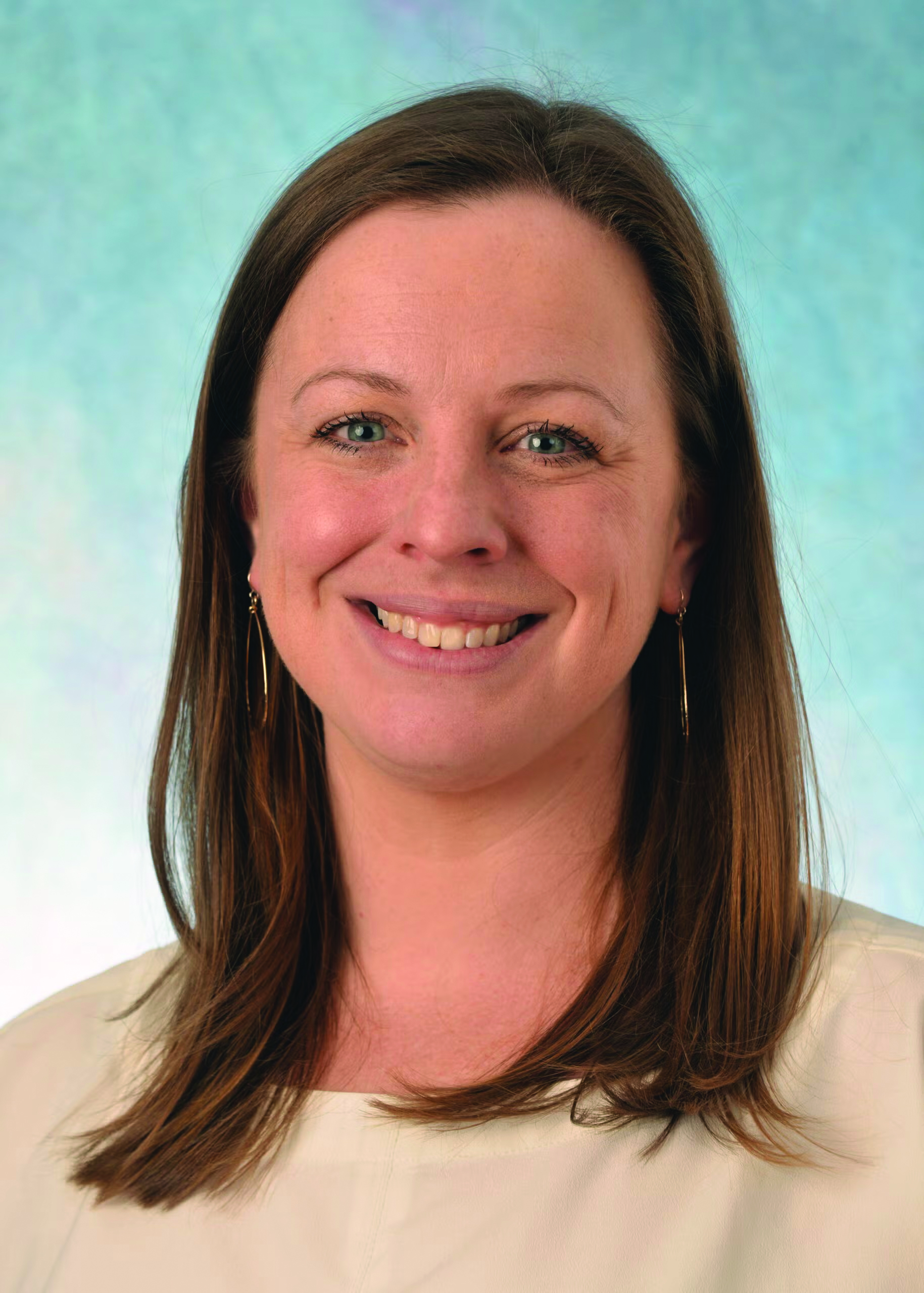
PA Program Director Katie Hanlon ’06 said veterans are beneficial to their classmates and patients.
PA Program Director Katie Hanlon ’06 said veterans are beneficial to their classmates and patients. “Veteran students bring emergent and critical care knowledge to each class,” she said. “When things get stressful, they help with team dynamics.”
Carolina’s program was the perfect fit for Wiley, but it took his military service to see it. In 2006, the United States was fighting wars in Iraq and Afghanistan. Several credits shy of graduation from the University of Kansas, he quit and enlisted, becoming a special operations independent duty Marine corpsman. He served for nine months in 2009 in Afghanistan, where he worked alongside and treated soldiers who had become his friends.
Once stationed back at Fort Bragg, Wiley took training courses at hospitals to remain certified as a medical instructor. In the burn unit at UNC Hospitals, he witnessed physician assistants as critical parts of surgical teams. He also learned about UNC’s PA program. After 10 years of military service, he chose to leave and enroll in UNC’s PA program in January 2017.
Physician assistants are much closer to doctors than assistants.
Each class of 20 students does a full year of coursework with just a week off between semesters. They’re in school from 8 a.m. to 5 p.m., crunching into one year nearly everything medical students learn in two. A PA student’s second year is full of monthlong clinical rotations. The intensive training prepares students for a variety of health care fields without having to focus on one, Hanlon said.
“We are able to practice a lot of medicine that’s in a doctor’s scope of practice,” Hanlon said. “We improve access to care, and veterans typically have a well-rounded nature that serves them well when relating to patients.” She said veterans have an amazing skill set, relate well to patients and are also mission-oriented. If everyone needs to get through something very difficult, “then that’s their mission.”
—Mark Derewicz
© 2026 Carolina Alumni