- Membership
- Perks
- Things To Do
- Resources
- News
- About
- Shop
-
2026
-
2025
-
2024
-
2023
-
2022
-
2021
-
2020
-
2019
-
2018
-
2017
-
2016
-
2015
-
2014
-
2013
-
2012
-
2011
-
2010
-
2009
-
2008
-
2007
-
2006
-
2005
-
2004
- Academics and Athletics
- Admissions
- Alumni Profiles
- Alumni Recognition
- Around Town
- Arts
- Books
- Campus Profile
- Campus Safety
- Carolina Alumni Awards
- Carolina Alumni Leadership
- Carolina Alumni Programs and Outreach
- Carolina Alumni Reunions
- Carolina Alumni Review
- Celebrations
- Championships
- College and Costs
- Commencement
- Coronavirus
- Discovery
- Extracurricular
- Faculty
- Faculty Awards
- For the People
- Go Heels
- Greek Life
- Hark the Sounds
- Higher Education
- Homecoming
- In Class
- In Memoriam
- Innovation and Technology
- Issues
- Object Lesson
- On View
- Philanthropy
- Podcast
- Public Service
- Race and Reckoning
- Research
- Serving Our State
- Sexual Assault
- Silent Sam
- Sports
- Structures
- Student Achievement
- Students
- Timelines
- Tuition and Financial Aid
- UNC Libraries
- UNC’s History
- Undergraduate Spotlight
- University Achievements
- University Awards
- University Budget Issues
- University Development
- University Leadership
- University News
- University Rankings
- What We Do
- Who We Are
- Young Alumni
- Yours at Carolina
AI Against Cancer
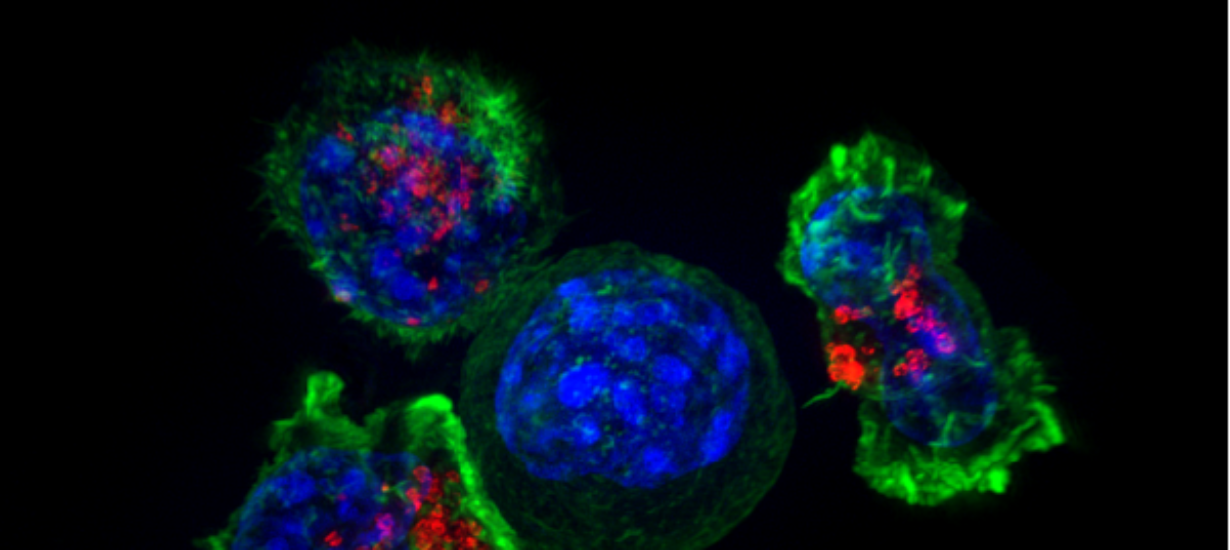
UNC Lineberger Comprehensive Cancer Center received a $40 million grant to make personalized cancer vaccines more effective, the University announced Tuesday.
The project will be funded through the OpenAI Foundation, the nonprofit organization that governs the for-profit company OpenAI Group PBC, and led by UNC immunologist Benjamin Vincent and computational biologist Alex Rubinsteyn. They are gathering clinical data for AI models they hope can identify therapeutically beneficial targets on the surface of cancer cells. The information could then be used to develop treatments that prompt a patient’s immune system to recognize and kill cancer cells.
“Personalized cancer vaccines are finally starting to show signs of clinical efficacy, but many fail in the development process because they are too arbitrary,” Rubinsteyn said. By “arbitrary,” he means that cancer vaccines have not been based on the precise details of each patient’s cancer biology. “Our goal is to help the world design personalized and more effective cancer vaccines, using the power of rich data and artificial intelligence.”
Cancer vaccines do not prevent disease. They are called vaccines because their aim is to train the immune system — as traditional preventive vaccines do for other diseases — to fight cancer inside the body. These vaccines are designed to find antigens, which are molecules (usually proteins) on the surface of cancer cells that are specific to each patient.
During the project, UNC scientists will develop and use AI methods to select tumor targets for inclusion in personalized vaccine therapies, and researchers will conduct clinical trials to evaluate whether the vaccines increase tumor-specific immune responses in patients with triple-negative breast cancer.
“Selecting tumor antigens that are actually good targets and understanding the relative potency of vaccine formulations for personalized therapy are big problems in the field,” Vincent said.
The UNC Lineberger grant is part of the OpenAI Foundation’s second science program, Public Data for Health, a $125 million initiative to create and preserve high-quality, open-access scientific data and AI tools relevant to human health.
“AI has enormous potential to help researchers design better cancer treatments, but that progress depends on having the right biological data to learn from,” said Jacob Trefethen, head of life sciences and curing diseases at the OpenAI Foundation, in a statement. “UNC’s work will generate data that researchers don’t have at the scale they need today and make those findings broadly available so scientists around the world can build on them … We hope to open up new possibilities for cancer research and ultimately help more patients benefit from advances that once felt out of reach.”
© 2026 Carolina Alumni