Animal Tales
Posted on Dec. 4, 2025Sometimes living your best life means helping others live theirs.
by Liv Reilly ’24
photos by Ira Wilder ’24
Listen to this story as read by Ira Wilder ’24
As Kristin Hartness ’08 sat through one of her final classes at Kenan Flagler Business School, she learned one last lesson from her favorite professor, C.J. Skender: Go into the world and live your best life. Seventeen years, one 300-pound pig and a Disney documentary later, Hartness has done just that.
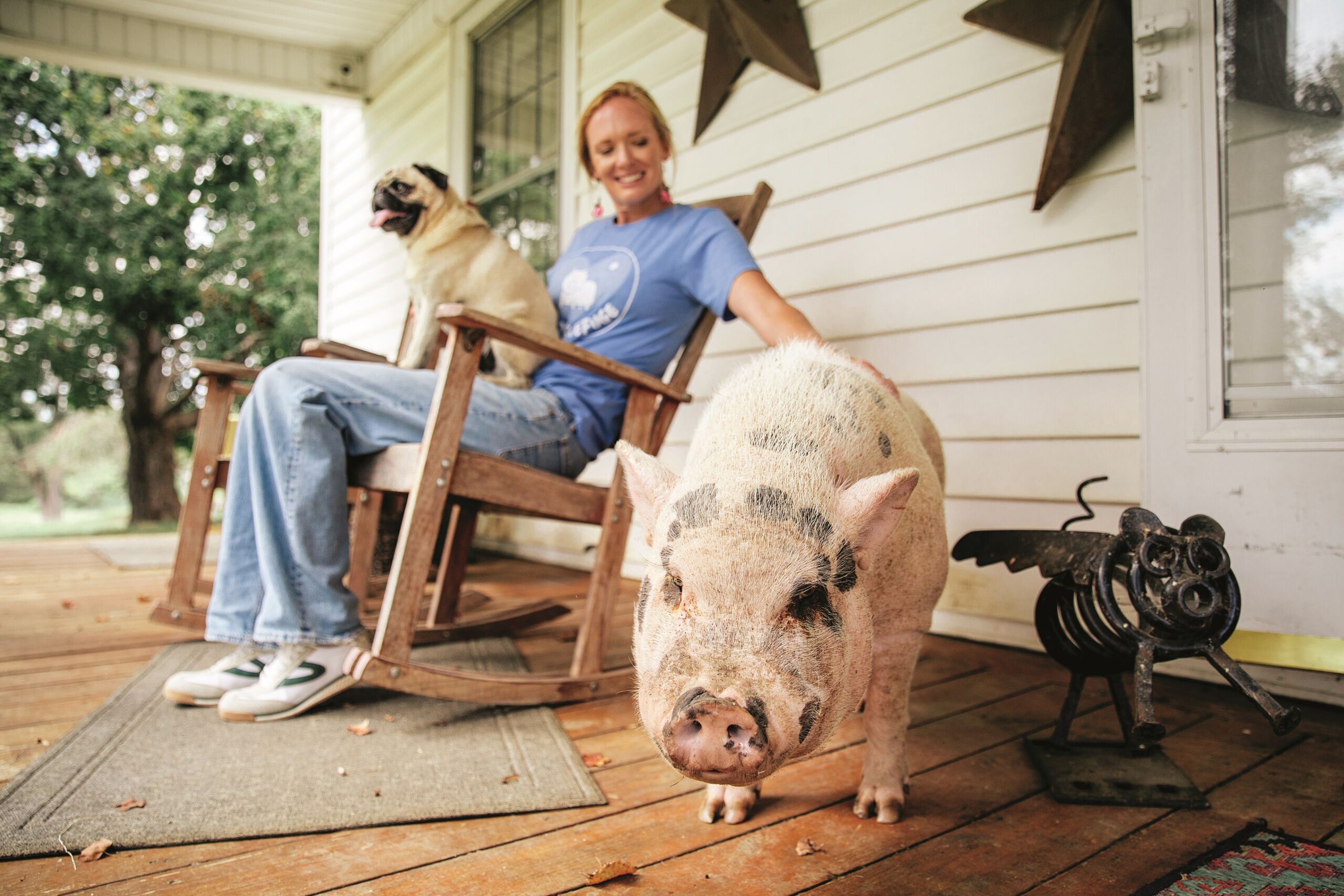
Hartness with her pug, Willie, a rescue dog from Maryland, and pig Biscuit. Biscuit was left at a kill shelter seven years ago before the refuge rescued him. (Photo: Ira Wilder ’24)
Along with her fiancé, Jay Yontz, she founded Ziggy’s Refuge, a farm animal sanctuary named for a once-tiny pig that changed the trajectory of their lives. In 2024 the couple rescued more than 225 animals, ranging from cats to emus, from life-threatening situations, abuse or neglect. They found homes for more than 200 animals, and they rushed to distribute more than $115,000 in supplies and grants for 47 sanctuaries in five states immediately following Hurricane Helene.
Hartness’ best life is spent in service to animals, and it all started because of the gift her parents gave her for graduation from Carolina.
Pig deception
Graduating as the 2008 recession took hold, Hartness didn’t find a job, but instead of worrying, she headed to the U.S. Virgin Islands.
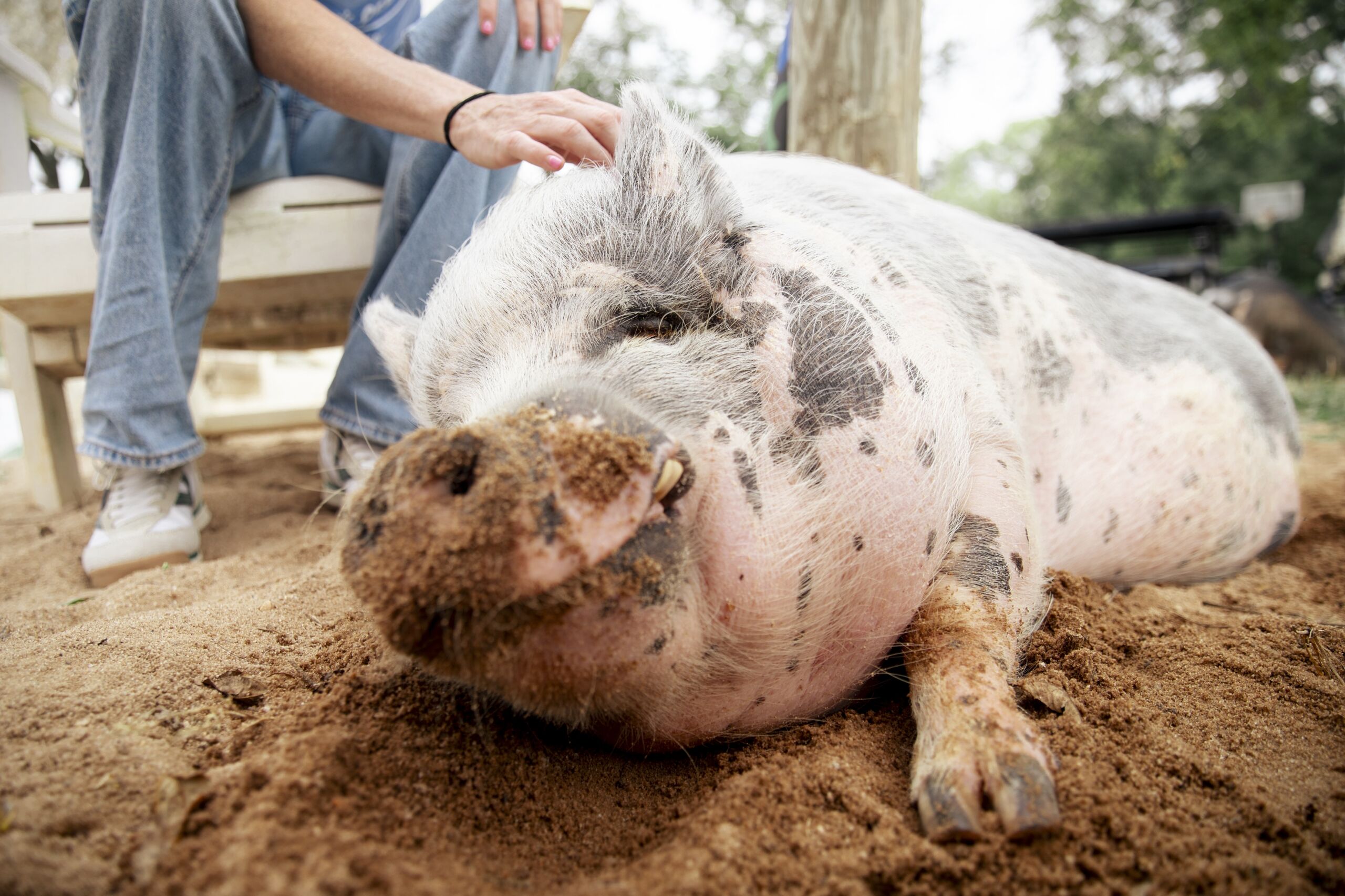
In 2010, Hartness adopted a small pig. Fifteen years later, she heads up Ziggy’s Refuge, a 175-acre animal sanctuary in Providence, just south of the Virginia border, which is now the permanent home to more than 90 animal residents. (Photo: Ira Wilder ’24)
One night, at a bar called the Soggy Dollar, she met a vice president at Scotiabank, Lawrence Aqui. After Hartness returned home to Reidsville, Aqui offered her a position at one of the banks in the Caribbean. Remembering Skender’s advice and her love of island life, Hartness, who studied business administration at UNC, took the job.
A little more than a year later, living in St. Thomas, Hartness visited a local animal shelter, thinking she could rescue a small dog, but the shelter had none available. She left empty handed but then changed her mind. She wanted a teacup pig instead.
In November 2010, Hartness brought home a pig the size of a small dog. His name was Ziggy; she affectionately calls him “Zig” or “my child.” Soon after, a neighbor handed Hartness a book about how to raise pigs. On the first page, she discovered National Pig Day is March 1 — her birthday. Giddy about the coincidence she considered an omen, Hartness turned to page two and learned pigs typically continue growing until they’re 5 years old. She felt relieved that Ziggy was a special breed and a supposed exception to the chart.
He wasn’t. “He grew, and he grew, and he grew,” said Hartness, who learned the hard way that teacup pigs do not actually exist. Some breeders use the term as a deceptive marketing tactic.
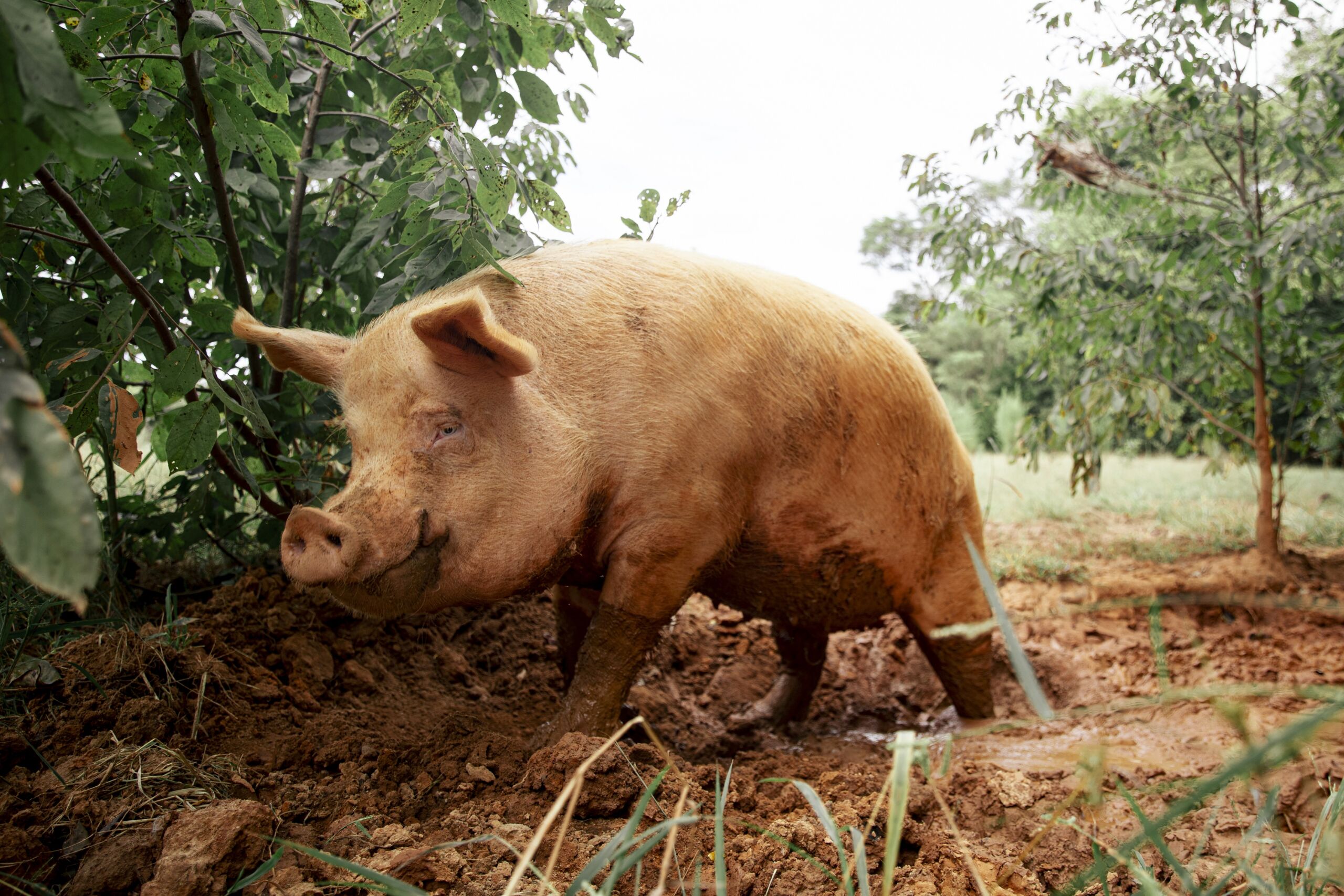
Ziggy’s Refuge rescued Percy and four other pigs from the floodwaters of Hurricane Florence in 2018 after the pigs had been treading water for days. Percy now weighs 700 pounds. (Photo: Ira Wilder ’24)
When the pigs grow past their expected 25 pounds, many owners cannot commit to the responsibility and surrender the animal. But not Hartness. She never once thought about giving up Ziggy, even though he could be more than a handful.
“I would get phone calls at work saying, ‘Ziggy’s down at the beach bar begging at the tables,’ ” Hartness said. “He got in so much trouble. And you know what? I encourage it, I do. I say, live your best life, that’s what you need to do.”
One night, a man at the bar started making bacon jokes after learning Hartness had a pet pig. She got tired of the banter and walked to the other side of the bar where she met a guy named Jay and explained to him that she had a baby, and the joker down the bar was picking on her baby.
Yontz responded, “Well, good for you. People have babies, that’s cool.’ ” She showed him a picture of Ziggy and continued to talk. “It was certainly a unique way to start getting to know each other,” Yontz remembered.
From that night on, Hartness, Yontz and Ziggy were a trio. About two and a half years later, they decided it was time to move off the island. Considering that Ziggy was 200 pounds over the carry-on limit and considered to be livestock by international travel regulations, they realized the only way to get Ziggy off the island was to charter a private plane. It took all of Hartness’ savings and an unexpected pit stop in Puerto Rico for immigration customs, but the family managed to get to the states, where they purchased a motor home and proceeded to travel across the country based on where Yontz’s job as a tennis court developer and builder took them. For more than two years, they traveled through 37 states, visiting friends, volunteering at animal sanctuaries and exploring dozens of beaches, monuments and national parks.
Zig wasn’t the biggest fan of riding in the motor home. So Hartness followed behind Yontz in an SUV because “that’s just what you got to do when you have a spoiled baby to please.”
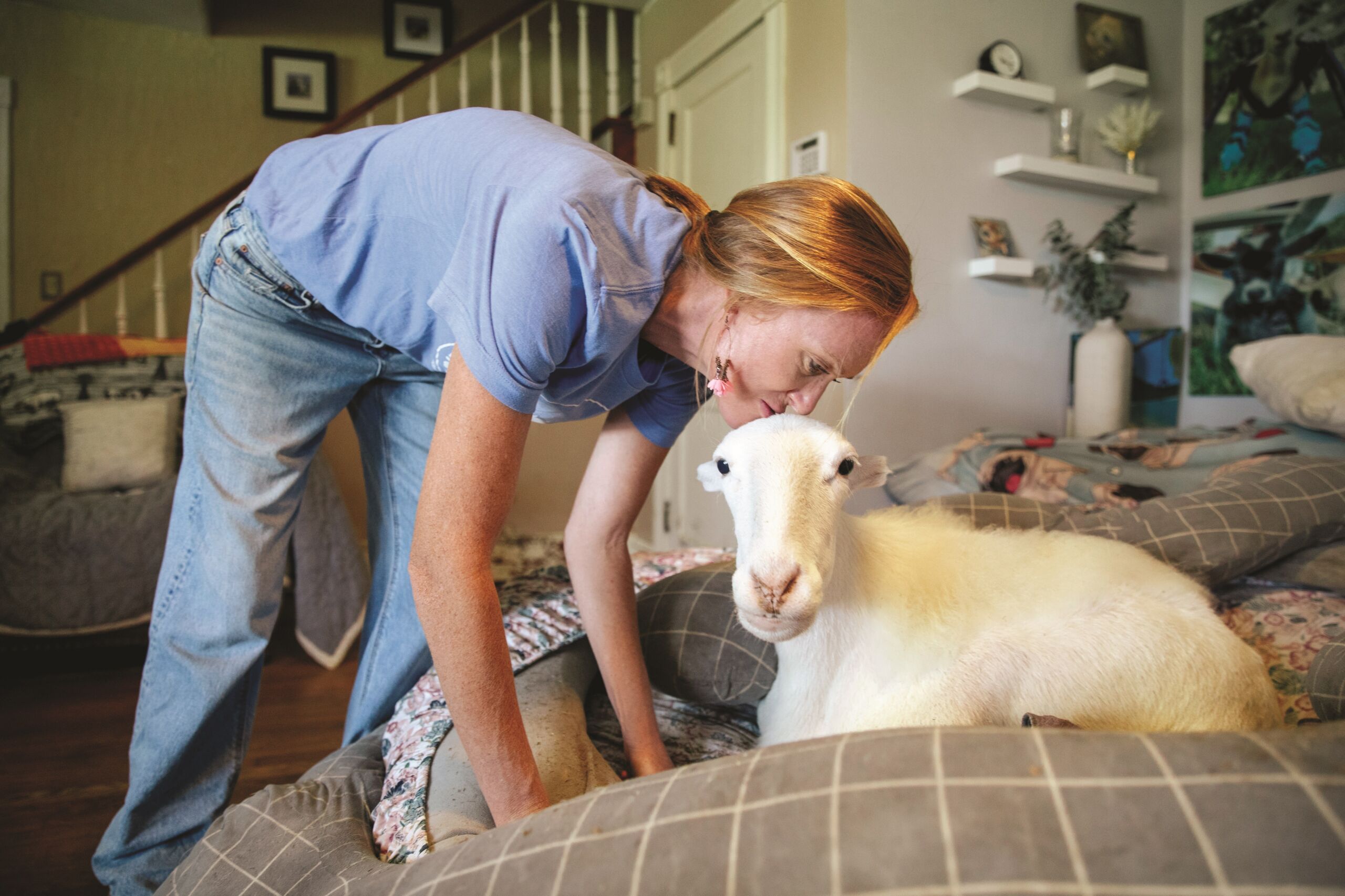
Moko’s back feet and ears fell off after they were frostbitten, leaving him completely immobile. Now, the sheep enjoys life in a motorized wheelchair, which the refuge has taught him to drive using a joystick. (Photo: Ira Wilder ’24)
As they documented their adventures through a Facebook page called Ziggy the Traveling Piggy, thousands of people began to follow their unusual journey. They could hardly go anywhere without people running up to pet Ziggy, asking for photos and wanting to know more about him.
Over time, Ziggy and family received VIP treatment, including invitations to the Sundance Film Festival and all-access passes to the Stagecoach Country Music Festival in Indio, California. As Hartness, Yontz and Ziggy met more people, it became clear they were influencing the way people thought about pigs, including many new friends becoming vegetarians, according to Hartness.
Zig’s impact on the public inspired Yontz and Hartness in 2016 to open Ziggy’s Refuge, a nonprofit animal sanctuary in Providence, about an hour north of Chapel Hill in Caswell County near the Virginia border. Rehabbing thousands of animals throughout the years, the refuge has taken in dogs, cats, horses, cows, donkeys, goats, sheep, emus, ducks and, of course, pigs. The refuge staff, including veterinarians and volunteers, work every day to spread awareness around the care of animals that aren’t typically pets and create better animal care practices.
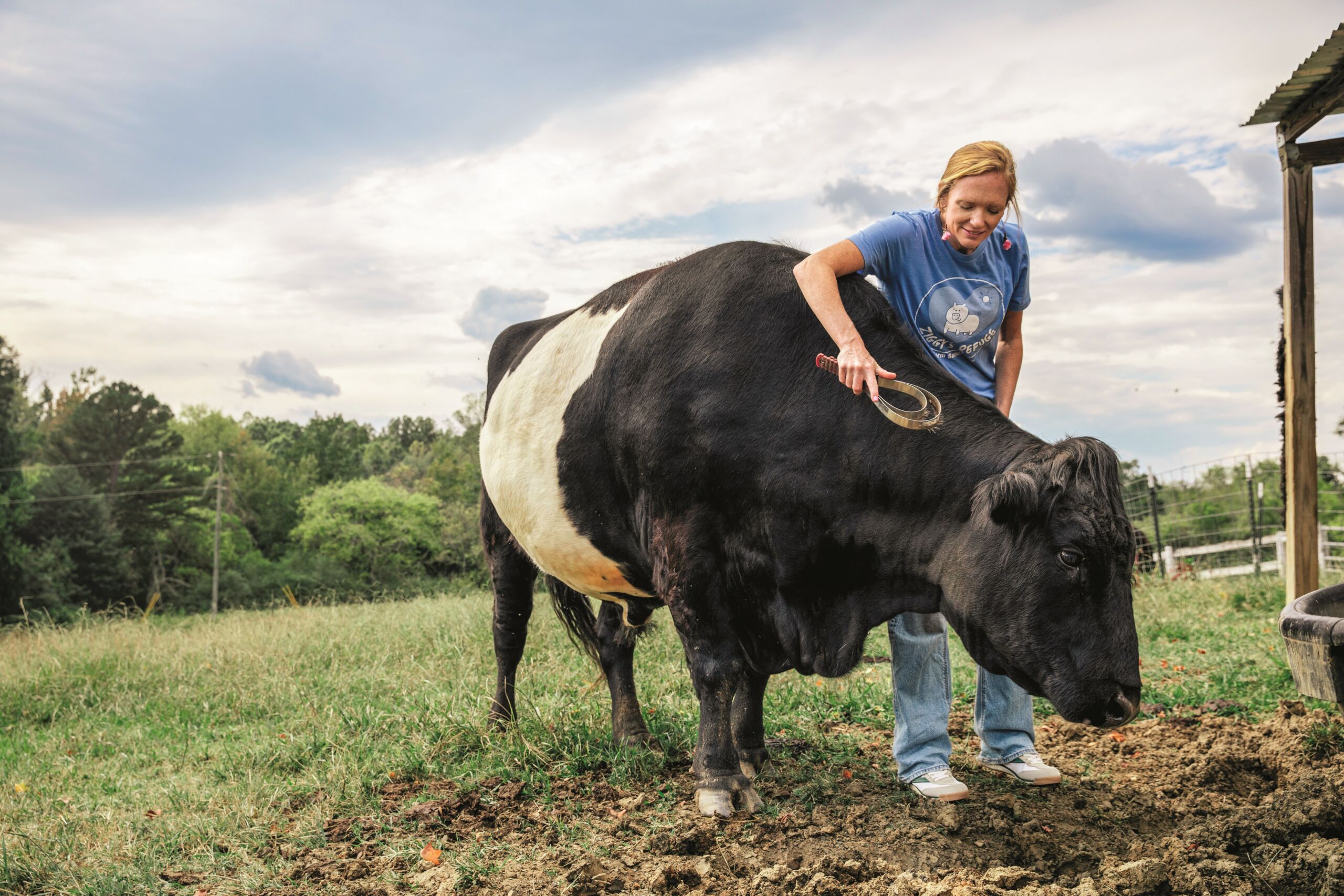
Elvis is a companion cow for his blind pasturemates Carson and Allie. Hartness says Elvis enjoys playing hide-and-seek and chasing hay-toting all-terrain vehicles. (Photo: Ira Wilder ’24)
The refuge currently has about 100 permanent animal residents that require around-the-clock care. Each of them was rescued from abusive homes, overbreeding and inbreeding situations or other unfortunate circumstances. With the help of the refuge, every animal spends its days healing, receiving love from staff and visitors and discovering what a happy home is like.
“Kristin is such an innovative thinker that she has a new idea every single day. There’s not enough time in the world to do everything she dreams up, but this place itself was just a dream eight years ago,” Jay said. “Seeing where it is now, and how we’re growing, building and continuing to do unique things within the sanctuary world, it’s something we’re certainly proud of.”
ZIGGY’S, BY THE NUMBERS
- 225+ animals rescued in 2024.
- 200+ animals rehomed through adoptions in 2024.
- 100 permanent residents, 25% of which are living with disabilities.
- Ziggy’s provided aid to 47 sanctuaries across 5 states impacted by Hurricane Helene, distributing more than $115,000 in grants, supplies, gas and generators.
Devotion
A few years ago, the refuge caught the eye of Elisabeth Jamison, the producer of Pets, a Disney documentary that explores the relationships between animals and people. Over the course of a few months, Jamison’s production crew visited the farm and experienced everything from daily tasks to Ziggy’s red-carpet birthday party and an emotional memorial service held in honor of Zippy, one of their pigs that was unable to make a full recovery from intestinal adhesion surgery and died in 2022.
The documentary debuted on Disney+ earlier this year.
While working with Hartness and Yontz, Jamison found that the heart of their story is devotion. Jamison said the couple have worked to create a life tailored to make Ziggy happy and to make a profoundly positive difference in the lives of many rescue animals even if the refuge is at capacity.
“They’re going to change the world,” Jamison said in an interview with the Review. “They have already. But we don’t even know the [full] reverberations of their work yet, and they are not done.” Jamison said the refuge is a feel-good place, but underneath that, Hartness and Yontz are changing how people see animals, and they are making the necessary inroads for more compassionate care of animals in general.
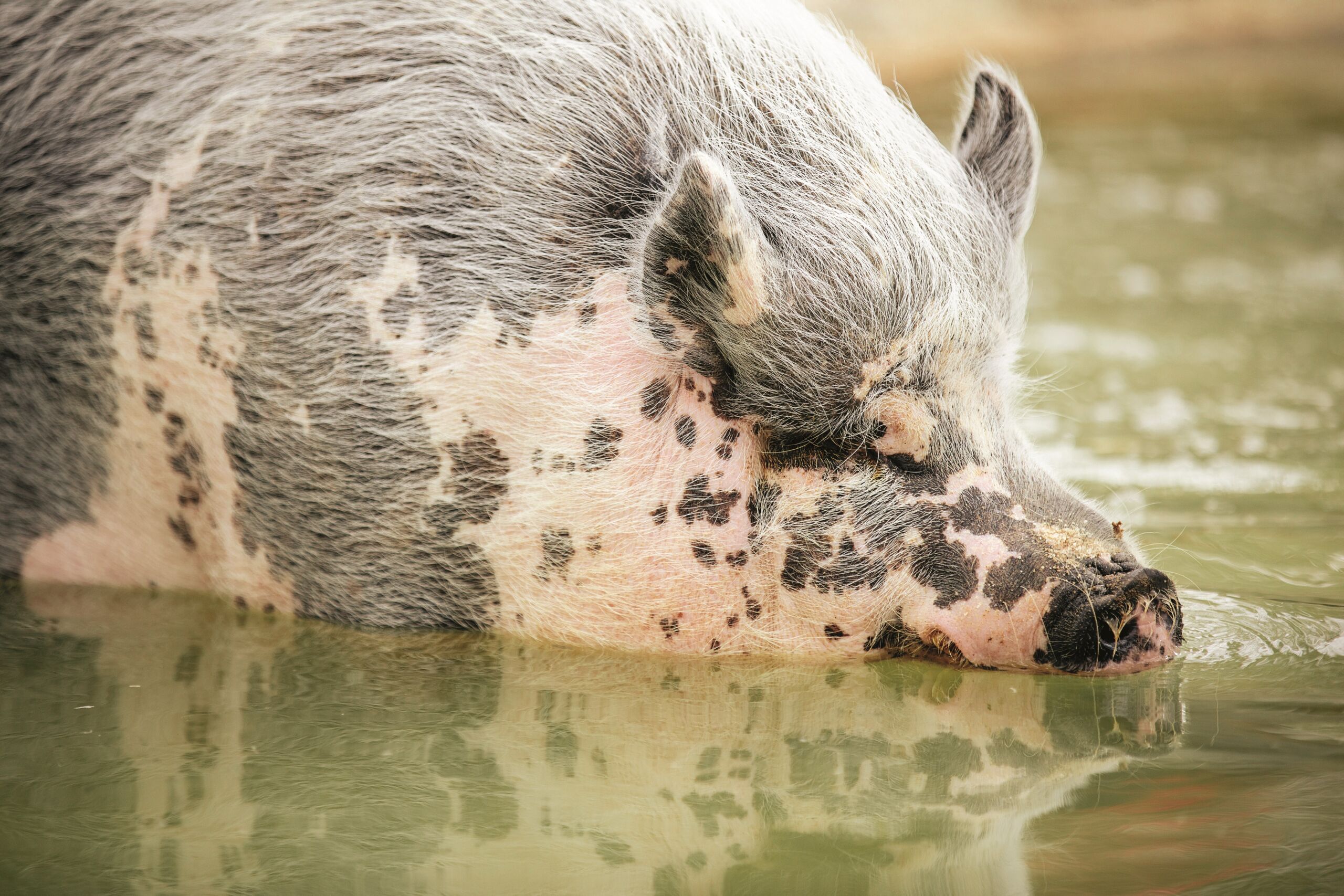
Ziggy, now 16 years old, has his own heated wading pool. (Photo: Ira Wilder ’24)
Still, Hartness doesn’t think of herself as someone who’s changing the world every day; she just gets up and “does what I feel like I’m supposed to be doing.”
Learn more about Ziggy’s Refuge: ziggysrefuge.org