- Membership
- Perks
- Things To Do
- Resources
- News
- About
- Shop
Related Content
Lyme Disease Hits Home
Aug. 20, 2026
Research led by UNC doctors and published Aug. 13 by the Centers for Disease Control and Prevention...
Read MoreA Win for Precision Medicine
Aug. 4, 2026
A research study involving thousands of volunteers has yielded a new test that can determine...
Read MoreUniversity Flags 28 Degree Programs
July 31, 2026
After University administrators conducted an academic review of 275 degree programs, 28 were flagged for...
Read More-
2026
-
2025
-
2024
-
2023
-
2022
-
2021
-
2020
-
2019
-
2018
-
2017
-
2016
-
2015
-
2014
-
2013
-
2012
-
2011
-
2010
-
2009
-
2008
-
2007
-
2006
-
2005
-
2004
- Academics and Athletics
- Admissions
- Alumni Profiles
- Alumni Recognition
- Around Town
- Arts
- Books
- Campus Profile
- Campus Safety
- Carolina Alumni Awards
- Carolina Alumni Leadership
- Carolina Alumni Programs and Outreach
- Carolina Alumni Reunions
- Carolina Alumni Review
- Celebrations
- Championships
- College and Costs
- Commencement
- Coronavirus
- Discovery
- Extracurricular
- Faculty
- Faculty Awards
- For the People
- Go Heels
- Greek Life
- Hark the Sounds
- Higher Education
- Homecoming
- In Class
- In Memoriam
- Innovation and Technology
- Issues
- Object Lesson
- On View
- Philanthropy
- Podcast
- Public Service
- Race and Reckoning
- Research
- Serving Our State
- Sexual Assault
- Silent Sam
- Sports
- Structures
- Student Achievement
- Students
- Timelines
- Tuition and Financial Aid
- UNC Libraries
- UNC’s History
- Undergraduate Spotlight
- University Achievements
- University Awards
- University Budget Issues
- University Development
- University Leadership
- University News
- University Rankings
- What We Do
- Who We Are
- Young Alumni
- Yours at Carolina
Centuries-Old Artifacts Unearthed on Campus
Posted on Jan. 31, 2025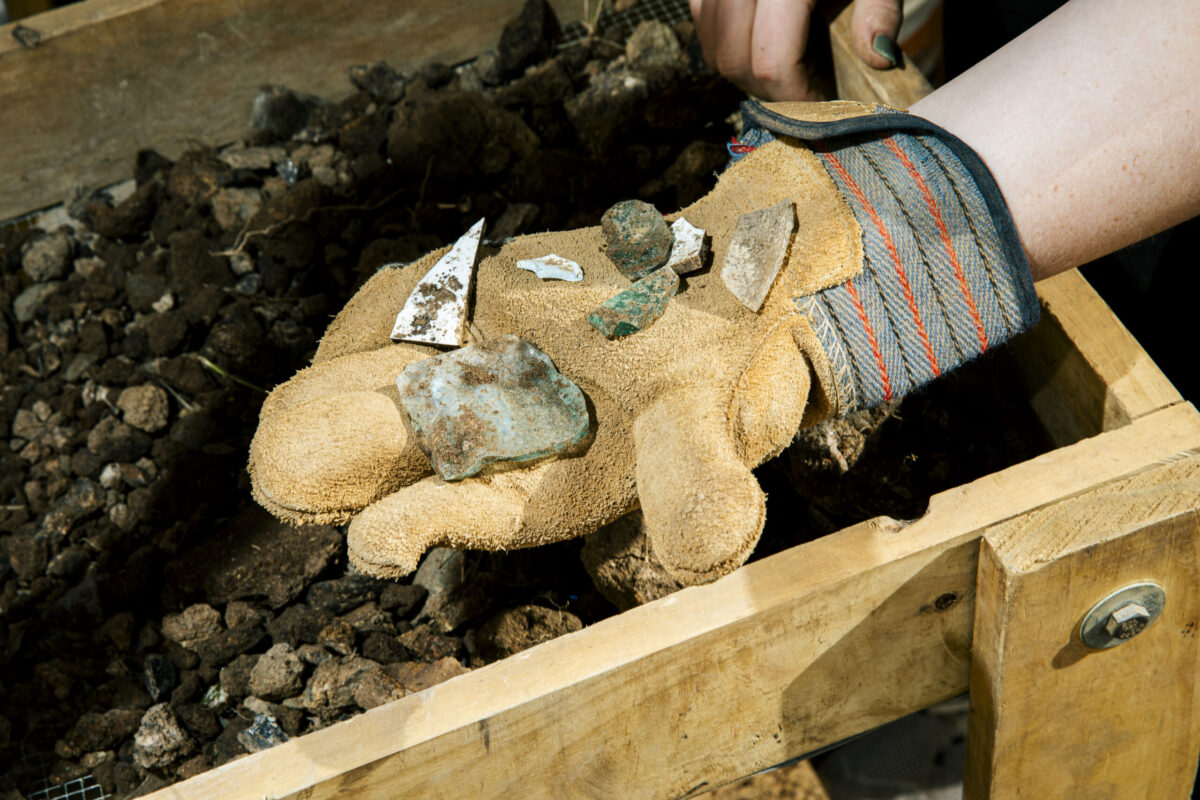
Pieces of glass and ceramic were uncovered in front of New East. (Photo: Carolina Alumni/Ira Wilder ’24)
Earlier this week, grounds workers were digging in front of New East to install a new bench. Jon Marcoux ’08 (PhD), an associate professor and the director of Research Laboratories of Archaeology at Carolina, walked by, looked at the pile of dirt and knew it was worth a closer look.
Marcoux told Mary Beth Fitts ’15 (PhD), a research archaeologist and adjunct associate professor, that they should investigate. “When we did see things glitter, we reached out to grounds,” Fitts said. “They were like, ‘We’ll stop immediately, and please take a look.’”
After an email blast to archaeology and classics students, volunteer screeners showed up, eager to work. Professors carefully moved the disturbed soil and guided students through sifting and sighting notable materials.
Within an hour, they started to fill up buckets of coal, brick, metal, plaster, pottery, glass and animal bones — likely more than 200-year-old discarded bits from what was the kitchen in the University’s first dining hall, a wood-frame house named Steward’s Hall. The building, completed in 1795, sat just south of where New East is today. According to preserved letters, the hall was notorious among students for unsavory meals.
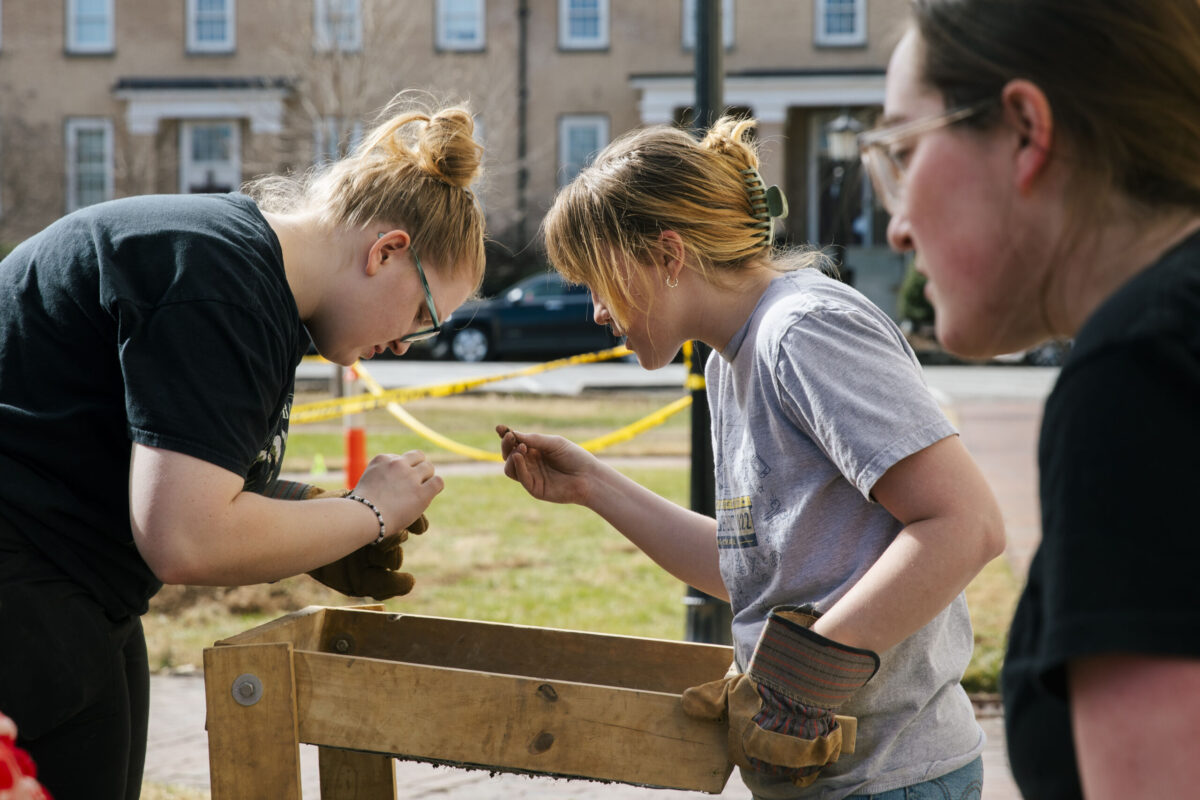
Students examine pieces from the disturbed soil in front of New East (Photo: Carolina Alumni/Ira Wilder ’24)
The New East site is one of the most historically significant regions of the University’s campus. Over the decades, archaeological investigations have given hints of what life was like before Steward’s Hall was dismantled in 1847. An abandoned well was discovered in 1995 by a crew laying fiber-optic cable, and an artifact-laden layer of clay was unearthed in 2007 during testing for a utility line.
“It’s amazing,” Fitts said. “Not only is this one of the most important archaeological sites on campus, but it gives students an opportunity for some hands-on experience in archaeology, which often only comes through field schools, which are sometimes expensive.”
Archaeology is a great way for the University community to learn about the day-to-day lives of people who weren’t written about, Fitts said. At the site of Steward’s Hall, it’s too early to know what might be revealed, but the ground may hold clues about the lives of the stewards (workers who oversaw day-to-day domestic affairs of the University), their family members and any enslaved people who worked on the site.
Fitts said such archaeological access to the past fascinates her students. Certainly, today’s Tar Heels share a long history with those who walked under the pine and poplars of campus more than 230 years ago.
© 2026 Carolina Alumni