Helene Recovery: Not What Was There, But Who
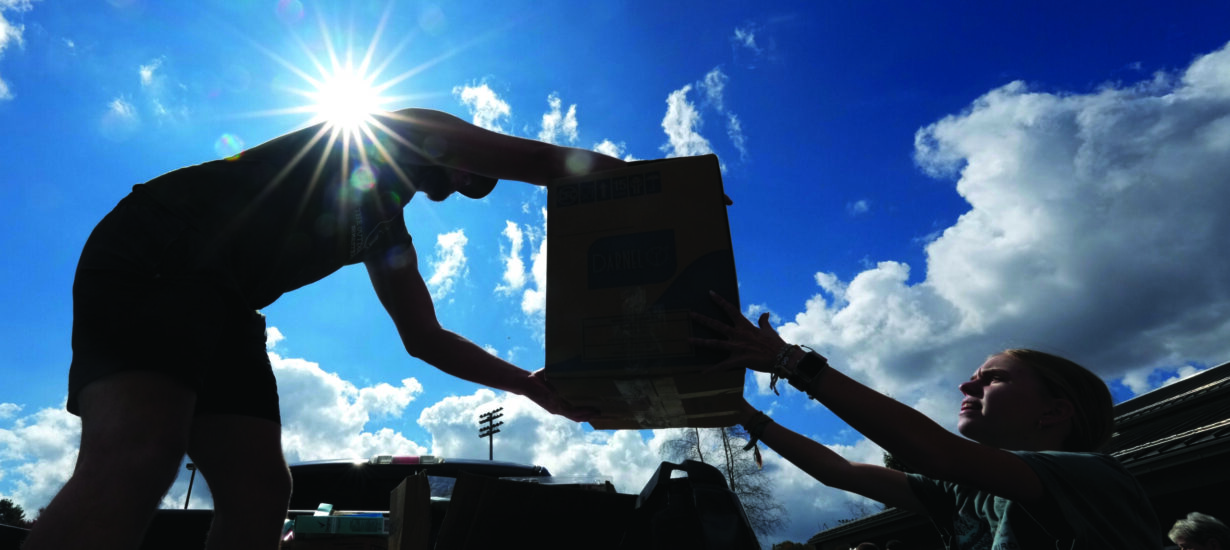
Weeks into the recovery from Hurricane Helene, communities across the North Carolina mountains are still facing fraught decisions about where and how to rebuild.
How openly people debate and share those decisions will matter a lot for the long-term health of the region, says Caela O’Connell ’14 (PhD), an environmental anthropologist at Carolina who has studied the way communities across the world respond to climate pressures and natural disasters. She’s found that the health of local civic life — how well people can reach shared decisions about infrastructure, investment and community goals — makes a big difference in the speed and breadth of recovery.
“When we look at communities that are able to recover, it’s their relationships with one another that often bridge these other things that are so hard,” said O’Connell, who has conducted research on disasters and environmental risks in the southeastern U.S. and Caribbean. “This is a place where culture matters so much and really shapes what recovery looks like.”
O’Connell sat down with the Review to offer some ideas for how the state’s mountain communities can emerge from Helene with their character intact, even if their physical structure is forever changed. The discussion was edited for clarity and brevity.
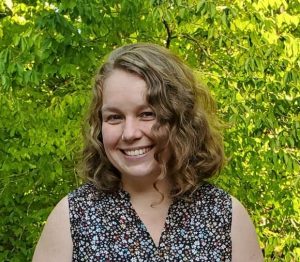
Caela O’Connell, an environmental anthropologist at Carolina who has studied the way communities across the world respond to climate pressures and natural disasters.
What insight does an environmental anthropologist bring to disaster recovery? What do you think about when you see these large-scale catastrophes that affect so many people but have very different impacts in different places?
Disasters are both collective events and individual events. I’m particularly focused on how whole communities can recover and how we can make recovery faster and better for everyone. In the initial response to a disaster, there’s a lot of focus on meeting basic human survival needs, and everyone is really working toward the same things — medical care, food and shelter, basic infrastructure.
In the recovery effort that comes after, things tend to become very individualized, individual homeowners, individual businesses — everyone trying to figure things out and make choices on their own, based on their own resources or capacity. And it’s understandable that there’s a lot of individual freedom and responsibility in how people choose to respond to a crisis.
But we know that for a community to recover well, everyone needs to recover well. Schooling, housing, employment, basic services — when there are major gaps in those systems, it’s much harder for individuals to make the decision to return, to rebuild, to invest in recovery. It becomes a chicken-and-egg thing as people try to decide whether to stay.
So that’s where I focus my research — on how these collective decisions and community resources can make the difference in whether a place comes back after a disaster or continues to struggle.
A lot of the focus after a disaster is getting back to normal, back to the way things were. But your research has cautioned against that instinct to try to replicate exactly what was there before. Given the scale of the destruction in parts of western North Carolina, how should people think about rebuilding?
Communities often think of their identity in terms of what was physically there before a disaster. But a community’s identity is really about who was there. The magic, what makes it unique to them, is the people.
Changing the structures, the physical pattern of a place, can definitely be a loss and a difficult thing to confront. But not at the fundamental level that people often think. When people come together and make a plan of what that community will look like, they’re often able to recapture that flavor of the place, even if the physical structure is different.
Sometimes you have to make hard decisions when things just can’t return to the way they were before. The time to have those conversations is sooner than you might think. As soon as the urgent, rapid-response period moves into the recovery phase, decisions have to be made. Where are roads going to go? What facilities are going to get rebuilt and reopened?
Sometimes those conversations don’t happen at all, which is one of those things that can fracture a community. You have to give people a way to voice the key aspects of a place that matter to them, the crucial things they need to have confidence in a recovery.
What’s the right venue for that kind of communal decision-making? Who should be hosting those discussions?
It’s challenging, because every community is different. In some places, it might be that a well-run local government can facilitate those discussions. In some places, it might be churches, with church leaders guiding their congregations through some of the big questions that need to get answered before recovery moves forward. Some communities are very entrepreneurial, with a lot of small business owners, and in those places it may be a civic board or a chamber of commerce that hosts those conversations and pulls people in.
The important thing is that it can’t be just a few people getting in a room and deciding. It has to be a process that includes everyone with a stake in the community, including those who may have evacuated far away after a disaster. And you have to recognize that conflict within that process is often healthy and important. People are in different life stages; they may have different fears and traumas in the aftermath of a disaster; they may have longstanding issues with how things were done before. Having the opportunity to talk all of that out together can lead to a much better, much wider recovery.
For people outside the region who care about western North Carolina, how can we be helpful?
If you’re able to, I strongly advise people to donate with cash, especially to funds that are going directly into individual communities through civic organizations and nonprofits that have a history of being present in these communities. There’s very good evidence that shows the more direct aid, the more money and the more decision-making power that can be put in people’s hands, the better.
And if you want to pitch in directly, make plans to do that in the months ahead. We see this so often, especially as media coverage moves on, that the time when people can make a difference volunteering on the ground will be in a few months or a year, when the urgency and attention have faded. So block off that time right now. Decide that for spring break or summer vacation, I’m going to go and help clean up and rebuild. Return at a time when western North Carolina is not so much in the news but still has plenty of need for outside labor and assistance.
One of my favorite examples is the Amish, especially in Pennsylvania and Ohio, who have a long history of showing up months into a disaster and using their carpentry skills to help people rebuild. They are really good at knowing to show up later, and that’s when there can really be a huge contribution.
How can an institution like Carolina, with different realms of expertise, help prepare for these catastrophes? Given your emphasis on local decision-making, what’s the right role for outside experts in moments like these?
I’m very excited about the way Carolina is working across disciplines to help train and prepare people. When you look at city and regional planning, at public policy, at environmental studies, there are a lot of classes focused on resilience and disaster preparation. Our students are going to be the future local and regional decision makers across the state, and I think they’re going to have a deeper understanding of the dynamics of recovery and how to make a positive difference.
I’d like to see some more ongoing training for local officials and emergency managers, giving them more opportunities to learn from one another. There are so many hard lessons learned when you experience something like this, and we can be a place where people come together and share those insights and help others prepare for what is going be inevitable for all communities at some point.
— Eric Johnson ’08