Mother of Invention
Posted on Oct. 26, 2026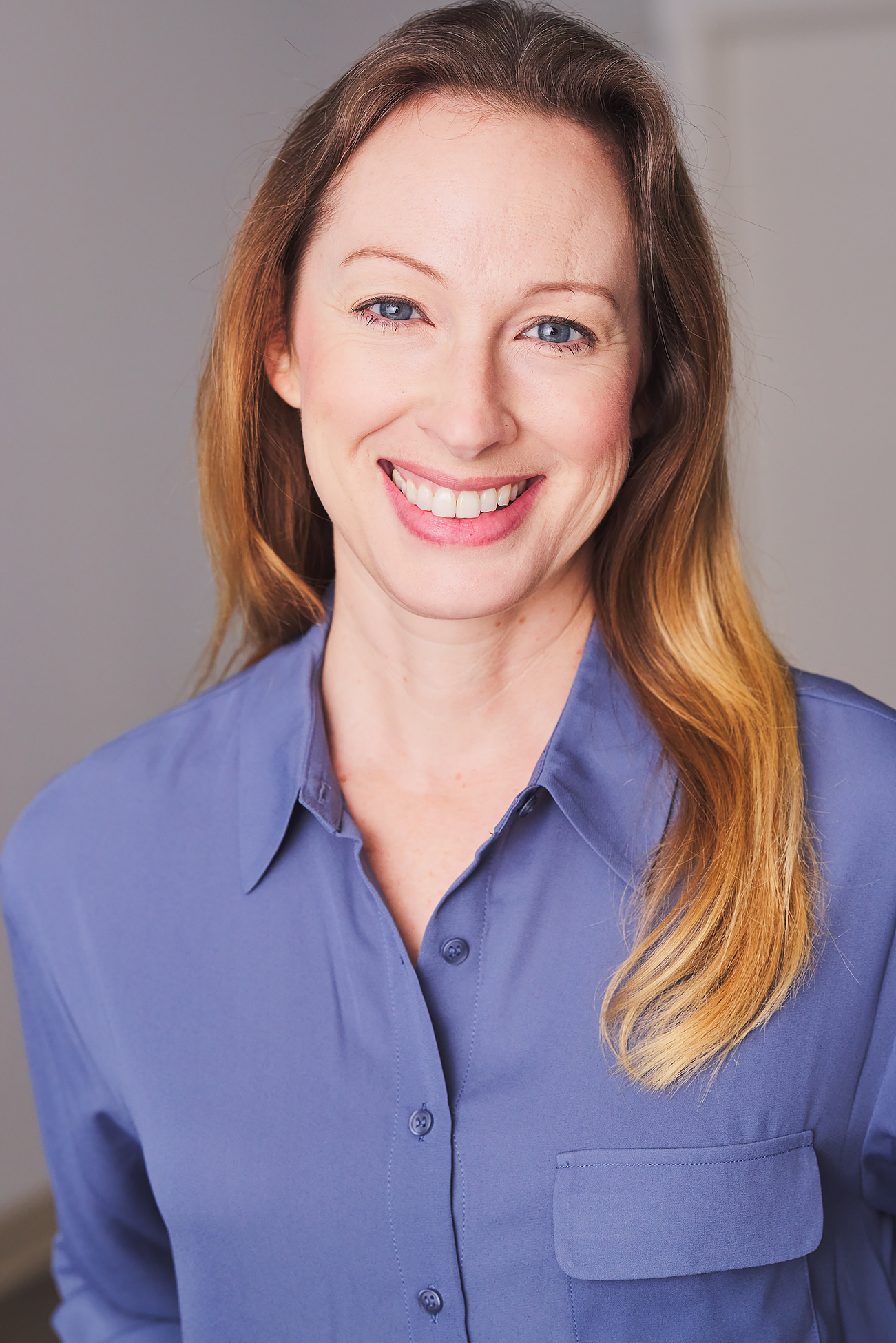
Huckle’s new book, The Earth Is Flat?! And Other Things My Mother Taught Me, explores her upbringing and her journey to untangle her own beliefs from the ones she grew up with.
Susan Huckle ’07 had a rainbow lollipop in hand and was as happy as could be, until she realized her mother had disappeared — probably forever, she thought.
Huckle, then 9 and an only child, was certain she knew what had happened: The Rapture took her mother from Earth to heaven, along with all the other good Christians. Huckle ran out of the store to look for the telltale piles of clothes that would be left on the sidewalk when Jesus summoned his best followers to heaven.
Moments later, she spotted her mother in line, waiting to pay for groceries. But to Huckle, who grew up in a house of rather extreme views, the Rapture seemed as plausible as any other explanation for her mother’s disappearance. After all, the end times were coming any day, according to her parents.
Huckle’s childhood was full of mega churches, miracle crusades and many hours spent listening to people speak in tongues. Her parents were evangelical Christians who loved a good conspiracy theory. She didn’t question when they stockpiled food and gasoline for Y2K and the inevitable collapse of society. She accepted her parents’ beliefs as true, as many children probably would.
“Although, I did wonder why God wouldn’t heal my father after he experienced a paralyzing stroke,” she said.
She was also unsure why she wasn’t more invested in the things she was told to want, such as finding a partner, getting married and having babies. Instead, more than anything, she wanted to become an actor.
Huckle’s new book, The Earth Is Flat?! And Other Things My Mother Taught Me, explores her upbringing and her journey to untangle her own beliefs from the ones she grew up with.
“It’s taken me a long time to get the fear out of my brain and body, because I grew up in a house where crazy things could happen at any moment and where Satan would catch you if you sinned,” she said. “But my experience helped me build empathy for people with strong, passionate or extreme beliefs that are different from mine. My parents weren’t bad people; they were just deeply devoted to what they believed was the truth.”
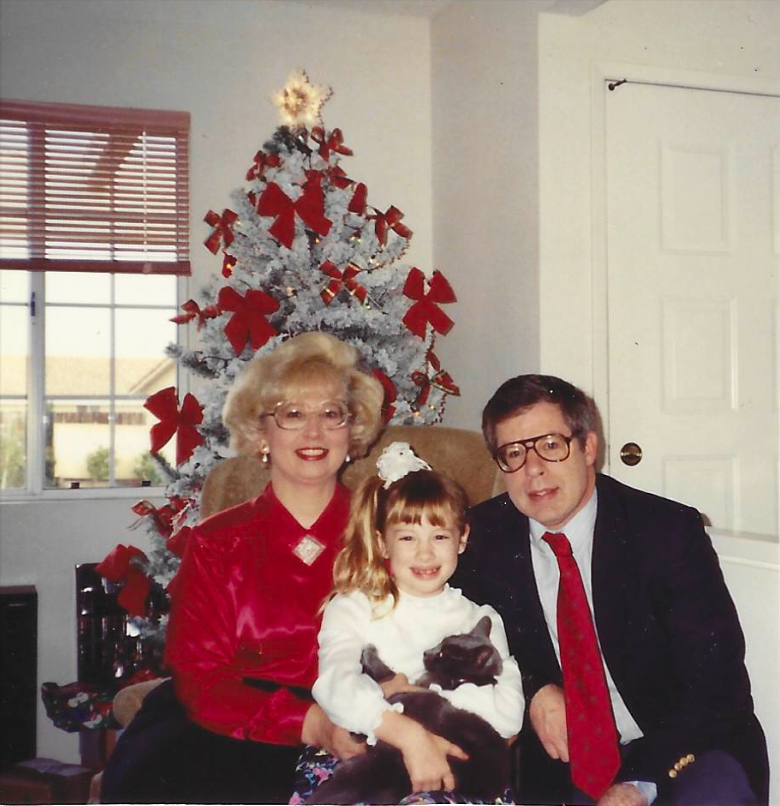
Her parents left her with no shortage of material to write about. They constantly warned Huckle about the many conspiracies of the world: 9/11, the Illuminati, NASA and the moon landing, who really shot JFK and, the one that made Huckle finally push back, the Earth is flat.
“See? It’s flat. You can see it!” her mother told her, while pointing at the horizon line from a viewpoint overlooking the Pacific.
Huckle still deeply loved her parents. In fact, her first concern during the flat Earth episode was how to protect her mother from the hate and judgment she might receive.
“Flat earthers are the most globally laughed-at group of idiots, and lumping her, my dear, misguided mother, in with them hurts,” Huckle wrote in her book, which she published on April 22, which was Earth Day. “I want to protect her from the mean kids on the playground.”
They were always a close-knit family, and Huckle never doubted her parents’ love for her. When she started college in Chapel Hill, they even moved from Santa Maria, California, to North Carolina. They moved back to California when Huckle decided to pursue an acting career in Los Angeles.
In L.A., she started questioning everything she’d been taught. As she launched her acting career with roles in musical theater, commercials and TV shows such as Jane the Virgin and The Mindy Project, Huckle met a lot of the people her parents had always warned her about, such as members of the LGBTQ+ community and Obama voters. As her social and professional circles expanded to include a more diverse cast of characters, she realized she loved the very people she was taught to view as sinners.
“Our beliefs inform such important things, like how we vote, how we decide who has rights and how we find hope in this chaotic world,” she said. “I felt how important it is to deeply consider our beliefs and to try to understand where they come from, how they impact the greater world and if they resonate with who we want to be.”
Over time, she distanced herself from her parents’ beliefs but made a big effort to stay close to her parents. She regularly drove up the coast to spend time with them in Santa Barbara. And she found herself gravitating toward roles that reminded her of her mother. Huckle loves playing big characters with endless energy, loud humor and a larger-than-life stage presence.
Both of her parents have died, and grief moved Huckle to write her book. She was a journalism major at UNC — “the practical backup,” she said, “in case acting failed” — and turned to writing as a way to process her emotions. She soon realized she had a book’s worth of material and started piecing it together with help from a writing group in Berkeley.
She often worked on her book between sets at her main acting gig in theme park performances. She’d sometimes take advantage of a 30-minute break to dip back into childhood memories or grief, writing in bursts before returning to the stage to entertain large crowds. As an actor, she’s a pro at compartmentalizing and could easily switch between the stage and the page.
She even approached writing her book like an actor. It’s broken into three acts, and each chapter reads as a scene. Though funny in parts — and published on Earth Day on purpose — the book has a serious message at its core: Question where your beliefs come from, and find empathy for those who might hold radically different beliefs.
“I would like to think that my story is so unique, but the truth is a lot of people have strong family disagreements about religion, politics, morality and what is true or not,” she said. “At the end of the day, we’re all humans, and I hope we can find ways to put down our differing beliefs, as passionate as they may be, and still be kind to each other and find ways to understand where someone else is coming from, even if we don’t agree.”
—Emily Halnon