- Membership
- Perks
- Things To Do
- Resources
- News
- About
- Shop
Related Content
PlayMakers to Open 50th Season
Aug. 28, 2026
UNC’s PlayMakers Repertory Company will open its 50th season Sept. 9 with the world premiere...
Read MoreDaily Show Comedian to Headline CPA Festival
Aug. 26, 2026
Carolina Performing Arts announced the lineup for its inaugural multi-day arts festival, “All. Together. Now.,”...
Read MoreWilson Library, NC Museum of History Collaborate on American Revolution Exhibit
June 30, 2026
Wilson Library is hosting an exhibition in collaboration with the NC Museum of History through...
Read More-
2026
-
2025
-
2024
-
2023
-
2022
-
2021
-
2020
-
2019
-
2018
-
2017
-
2016
-
2015
-
2014
-
2013
-
2012
-
2011
-
2010
-
2009
-
2008
-
2007
-
2006
-
2005
-
2004
- Academics and Athletics
- Admissions
- Alumni Profiles
- Alumni Recognition
- Around Town
- Arts
- Books
- Campus Profile
- Campus Safety
- Carolina Alumni Awards
- Carolina Alumni Leadership
- Carolina Alumni Programs and Outreach
- Carolina Alumni Reunions
- Carolina Alumni Review
- Celebrations
- Championships
- College and Costs
- Commencement
- Coronavirus
- Discovery
- Extracurricular
- Faculty
- Faculty Awards
- For the People
- Go Heels
- Greek Life
- Hark the Sounds
- Higher Education
- Homecoming
- In Class
- In Memoriam
- Innovation and Technology
- Issues
- Object Lesson
- On View
- Philanthropy
- Podcast
- Public Service
- Race and Reckoning
- Research
- Serving Our State
- Sexual Assault
- Silent Sam
- Sports
- Structures
- Student Achievement
- Students
- Timelines
- Tuition and Financial Aid
- UNC Libraries
- UNC’s History
- Undergraduate Spotlight
- University Achievements
- University Awards
- University Budget Issues
- University Development
- University Leadership
- University News
- University Rankings
- What We Do
- Who We Are
- Young Alumni
- Yours at Carolina
Old Book, New Buzz
Posted on Aug. 14, 2026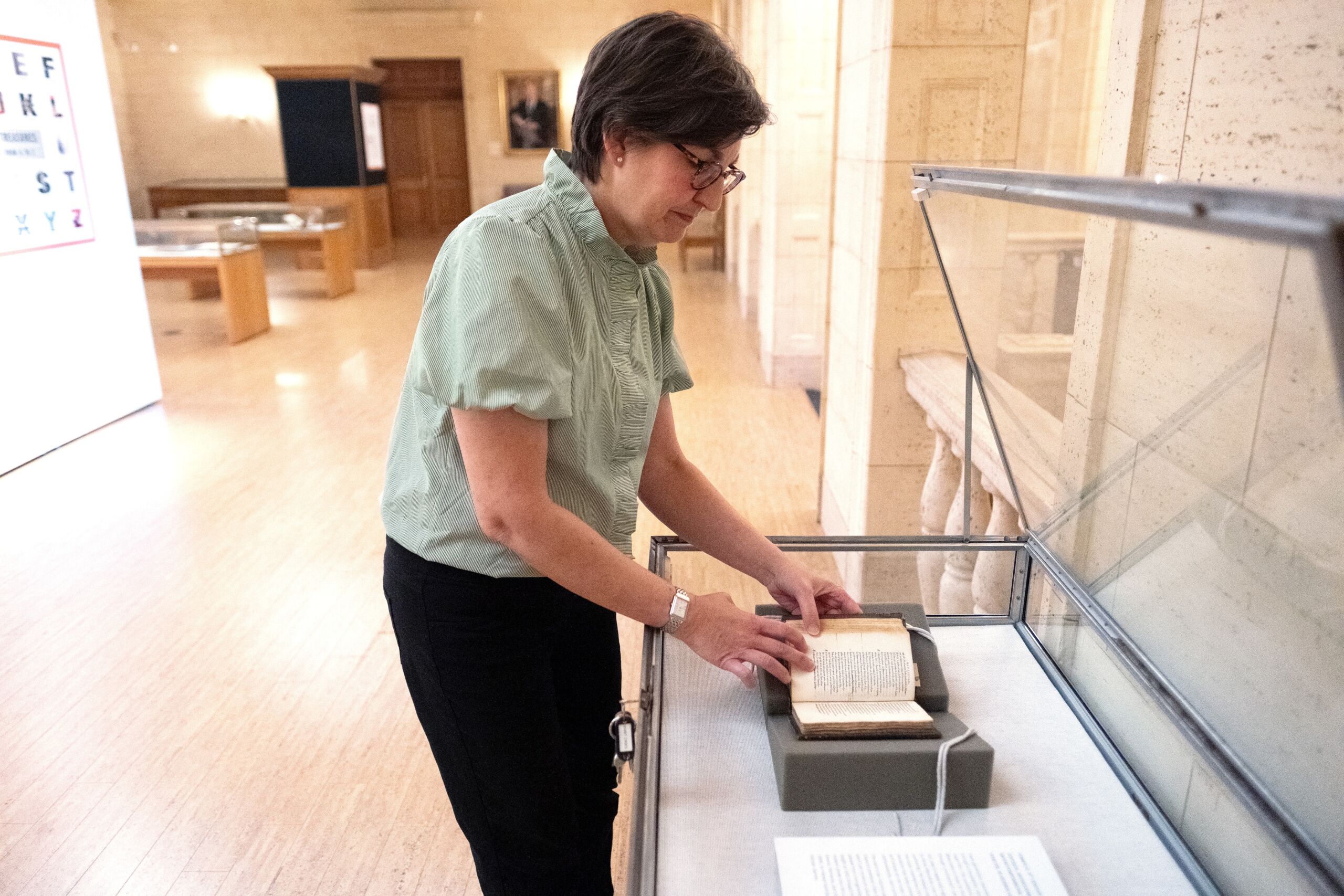
Wilson Library displays a 1517 printed edition of Homer’s The Odyssey in ancient Greek. (UNC/Jon Gardiner ’98)
As filmgoers flocked to theaters this summer to see Christopher Nolan’s adaptation of The Odyssey, students returning to campus in August were invited to peruse a rare antique copy of Homer’s 3,000-year-old poem.
The book, which is on public display for a limited time at Wilson Library, was printed in 1517 by Aldus Manutius, an Italian innovator of Renaissance publishing who was known for his preservation of classical works in a portable format. He printed this Greek version of The Odyssey less than 70 years after Johannes Gutenberg perfected the printing press.
UNC classics professor Eben Alexander, who taught in Chapel Hill from fall 1887 to 1909 and introduced modern Greek into the curriculum, owned the book prior to donating it to the University. His handwritten annotations are in the margins. It was apparently okay to scribble in 300-year-old books back then. There are just seven other versions of this edition of The Odyssey housed at U.S. universities and four more worldwide.
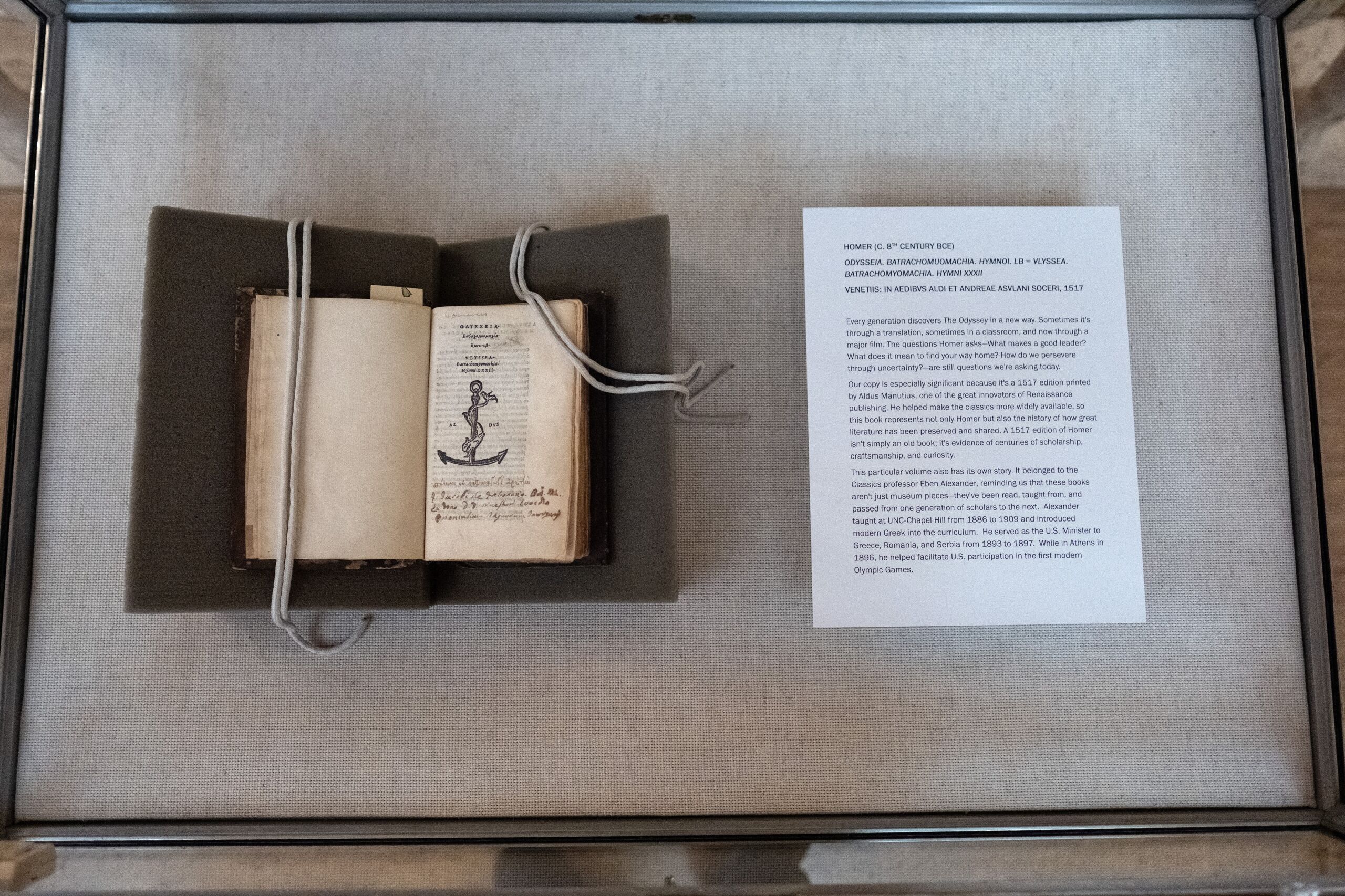
UNC classics professor Eben Alexander owned the book prior to donating it to the University. His handwritten annotations are in the margins.
(UNC/Jon Gardiner ’98)
Alexander served as the U.S. minister to Greece, Romania and Serbia and helped facilitate U.S. participation in the first modern Olympic Games. At Carolina, he was a library supervisor and helped establish a research library directed by Louis Round Wilson (class of 1899), for whom the library is named.
Regarding The Odyssey, the story of clever Odysseus’s journey home from war, Nolan’s film has inspired a bit of a renaissance. Year-to-date sales of all translations of Homer’s classic were up 76 percent as of July, according to USA Today, and e-book lender Libby reported a 217 percent increase in checkouts. Reading: not dead yet.
© 2026 Carolina Alumni