CentINNial Celebration
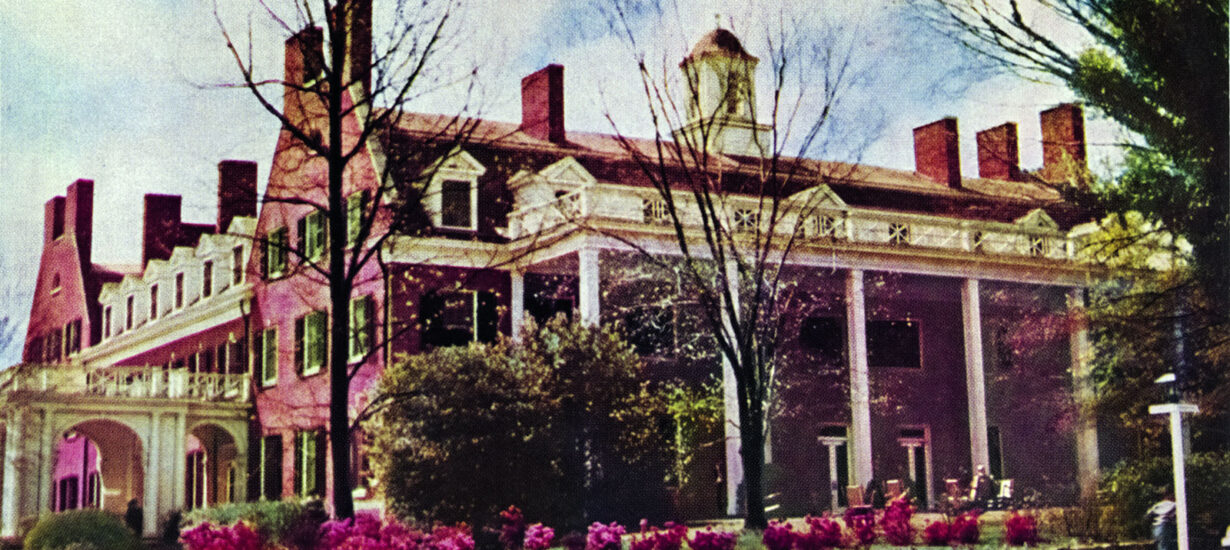
Carolina’s favorite place to stay turns 100.
by George Spencer
The Carolina Inn has been described as the University’s living room. But one could say it is the veritable epicenter of Chapel Hill. It sits on the spot where New Hope Chapel, a pre-Revolutionary War log building that gave the town its name, once stood centuries ago. The inn, completed in November 1924 and first opened to guests the following month, has reflected the arc of University, Southern and American culture during the past 100 years. Everything from the region’s changing architecture to politics and race and labor relations has played out within its walls. It has given board to some of the most influential figures of the 20th and 21st centuries — politicians, authors, actors, artists, musicians, civil rights leaders — even a spy. It’s been a place to gather with friends, family and alumni before Carolina games. Or to meet a colleague for business. It’s been where memories are made, hosting wedding events, parties and other celebrations, while also serving as a sanctuary for grief. It’s been a stage where life has transpired. It’s also quintessentially Carolina.
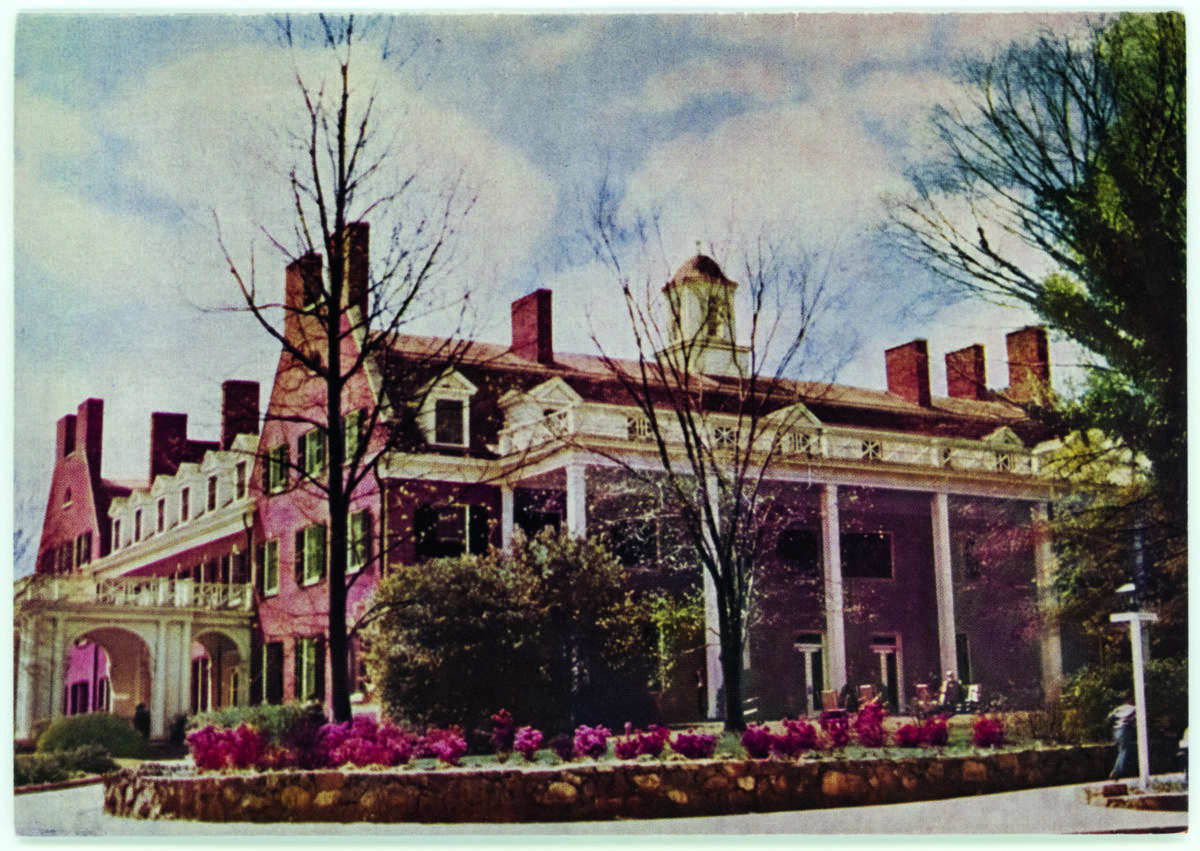
Postcard view of the inn from the 1950s. Around this time, the inn began to be profitable.
TIMELINE
1752 |
New Hope Chapel, an Anglican church, is built on the crest of the hill, giving Chapel Hill its name.
1830s |
Anglican influence declines. Only a few timbers of the chapel remain. The inn’s parking lot near Miller Hall now occupies space where the church stood.
1840s–50s |
Geology professor Elisha Mitchell, after whom Mount Mitchell is named, builds a home on the site. In 1857, he dies after falling from a cliff on the mountain, and his widow rents rooms to students.
1885 |
Engineering Professor Ralph Graves Jr. (class of 1871) buys the home and dies four years later. His widow runs it as a boarding house.
1919 |
The village has no decent place where visitors can rest their heads. The Alumni Review advocates for a hotel “establishment … in keeping with the needs of the University.”
1920 |
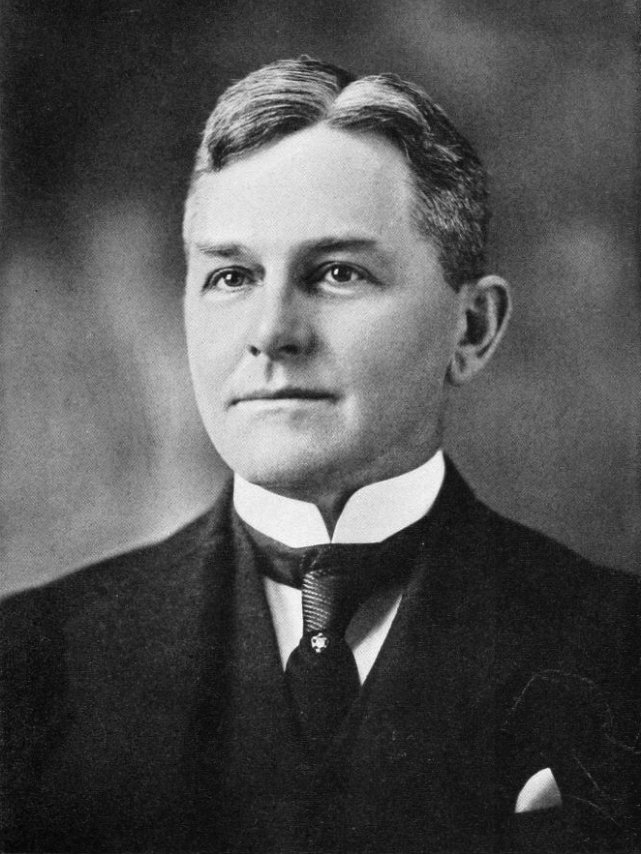
John Sprunt Hill (class of 1889)
Thriving businessman and trustee John Sprunt Hill (class of 1889) takes a room at a Franklin Street boarding house. Already suffering from the heat, his sleep is ruined when 12 or more rats (“big rats,” according to Hill) chase squeaking mice across his sheets and under his bed.
Shaken, Hill strolls the moonlit campus, sits on a rock by a huge oak tree at the corner of Cameron and Columbia streets and has an epiphany — he will build a “College Inn” where alumni and others can sleep free from nocturnal terrors.
University Inn, the town’s only hotel, also vermin infested, burns. Graham Memorial Hall is built on its site in 1931. “The lack of a hotel is the dark spot in the outlook of Chapel Hill — the blot on the landscape, the fly in the ointment, the toad in the bed,” laments the Greensboro Daily News.
An Alumni Review headline urges, “Let’s Build One,” referring to the hamlet’s lack of lodging. It’s “more than a village problem,” reported the magazine. “It is one that all of North Carolina has an interest in solving.”
1922 |
Hill proposes construction of the inn “to provide for the special wants and comforts of the University alumni” and others, according to the Review. It predicts the place will be “a first-class College Inn of fire-proof construction.” When nine other select alumni fail to each pony up $10,000, Hill pays the entire cost — $250,000, more than $4.5 million in 2024 dollars.
1923 |
Construction begins, and the old Mitchell-Graves house is moved to the back of the lot and renovated into a cafeteria for the yet-completed inn.
1924 |
Inn architect Arthur Nash, desiring the inn to appear like an Old South icon, applies thick white paint to mimic old plaster. Unnaturally small lightbulbs in wall sconces shimmer like candles. Dark upholstery and heavy furniture give the lobby a masculine feel. Often described as Colonial revival style, its architecture is more neoclassical. (Imagine Mount Vernon’s portico and cupola melded to an antebellum Greek revival plantation house.)
The 52-room inn starts taking guests in November with the official opening held in December. A Christmas ball commemorates the opening. Tickets for townsfolk cost 25 cents (about $4.50 in 2024 dollars). The alumni association establishes offices in the inn, beginning six decades of residence. Cameron Avenue and South Columbia are dirt streets but will soon be paved.
1934 |
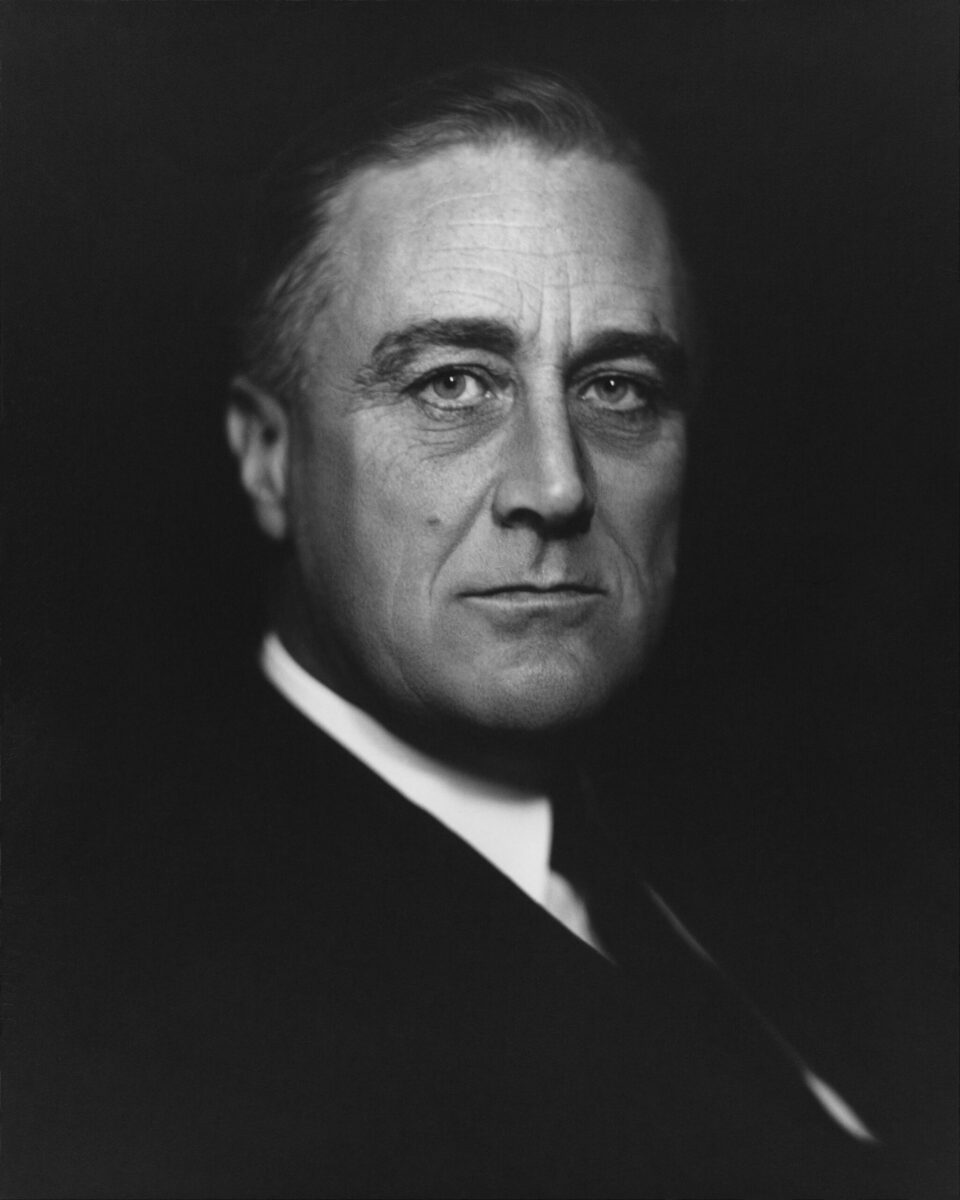
President Franklin D. Roosevelt
The inn begins a three-year tradition of hosting a birthday party in President Franklin Roosevelt’s honor to raise funds for the Warm Springs Foundation for Infantile Paralysis, the Georgia nonprofit FDR founded to help those with polio. (It would later become the March of Dimes.) The 1935 party featured ballroom dancing and square dancing with accompaniment courtesy of “Cates’s fiddle-banjo-guitar quartet of Carrboro,” according to The Chapel Hill Weekly. Those wishing to play bridge were requested to bring their own cards.
1935 |
Weary of managing the inn during the Depression’s hard times, Hill donates the building to UNC. He requires that its proceeds, after expenses, go to the University library, especially its “North Carolineana” holdings, now known as the North Carolina Collection in Wilson Library. The alumni association assumes oversight of the inn.
A University report chastises manager Annie Martin for failing to charge guests regular rates. She has left such decisions to the whims of desk clerks, according to the report. Amid charges she allows “drunkenness, noise, debauchery, [and] licentiousness,” she departs.
1937 |
The inn’s waiters, all of whom are Black, strike when a convention requires they do more work. When the inn offers a temporary pay raise, those who reject it are fired. Given the lack of good-paying jobs due to the Depression, many Black kitchen staff and porters stay, some for decades.
1939–42 |
Thanks to New Deal funding, a major expansion is completed in time to help feed and house an influx of servicemen. Two C-shaped wings with 40 guest rooms form a courtyard that faces South Columbia Street. (Renovations will continue on a regular basis for the next 12 to 15 years.)
The freestanding three-story Bryan Apartments is added. Also known as Alumni House, it is home to the alumni association and married graduate students, who live in 12 flats that Navy personnel occupy during WWII.
The original cafeteria is replaced with one seating 175.
An ill-conceived redecoration mars the lobby. Glossy white paint is slapped on its walls. Floral upholstery clashes with Colonial revival furniture.
Trustees commission a bronze plaque that thanks Hill, confirms the inn’s mission and is affixed to the wall behind the front desk.
1942 |
Fears that Japan may invade California force relocation of the Rose Bowl game in Los Angeles to Durham — a move suggested by Duke University, which was scheduled to play Oregon State. The inn’s enlarged capacity accommodates the entire Oregon State team. In the New Year’s Day contest, the Beavers gnaw down the Blue Devils 20–16.
The cafeteria serves a whopping 1,200 meals a day to hungry servicemen. The State Board of Health gives the presumably overtaxed facility a B, its lowest sanitation rating.
Unescorted women must sign in at the front desk before going upstairs. (Until the 1970s, couples without luggage were not allowed to check in.)
The inn struggles to break even during the war years.
1946 |
In a replay of the 1937 waiters’ work stoppage, Black staff refuse to serve Kiwanis convention guests. Later, the inn begins to replace Black waiters with white students who serve diners through the 1970s. The students are paid in food credits, not money.
1946–50 |
New University controller William D. Carmichael Jr. (class of 1921), a former New York ad man, despairs at what he calls the “tourist home” decor at the financially struggling inn. He orders renovations of the dining room, lobby, reception area and ladies’ parlor. His goal: Make the inn look like a genteel Southern country club.
The hotel begins to be consistently profitable under Carmichael’s leadership. During 13 years, $117,500 is transferred to the library, fulfilling Hill’s hopes.
Room rates jump an average of 50 percent in 1947.
Lavish hand-printed wallpaper depicting Niagara Falls and other scenic wonders is installed near the lobby. Restored samples now hang in the hallway that leads to the porte cochère on the east side of the inn.
1948 |
The Circus Parade carvings, made by University carpenter Carl Boettcher, a former furniture factory wood-carver who settled in Chapel Hill, roar into the Monogram Club’s snack bar.
1953 |
Andy Griffith ’49 gets his big break. He performs his classic monologue “What It Was, Was Football” in the ballroom. Afterward he meets publisher and record producer Orville Campbell ’42, who lands him a Capitol Records recording contract. The resulting disc sells nearly a million copies, winning the Mount Airy native national fame.
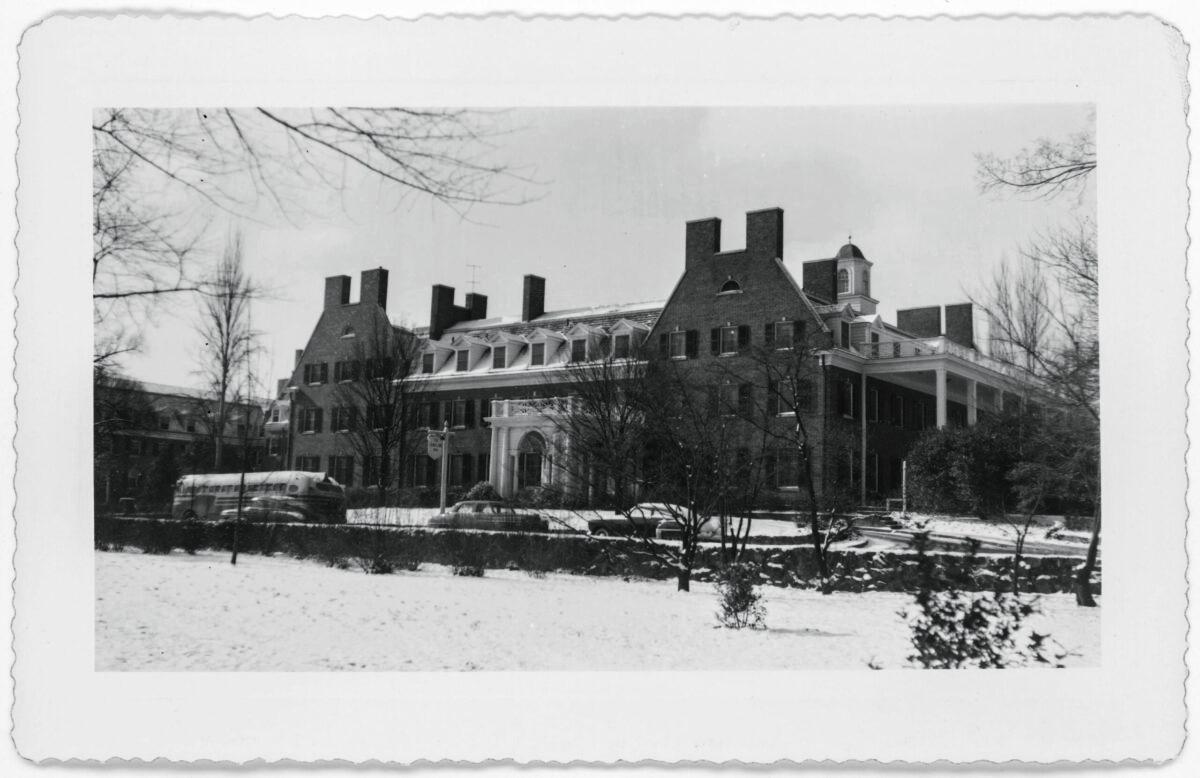
The Inn in 1955
1956 |
The black-and-white terrazzo floor is laid, thanks to acclaimed decorator Otto Zenke of Greensboro. His redecoration and renovations emphasize sophisticated but easygoing “old southern” charm. Air conditioning is installed. The cost: $34,375 ($403,000 in today’s dollars).
1950s |
New custom-made Shenango china graces tables. Engraved in forest green and rimmed with a gold band, it depicts a fanciful Mount Vernon-like inn. This lush Gone With the Wind romanticized image hints that the inn will uphold traditional values in changing times.
In keeping with the nation’s Cold War patriotic mood — and to defend UNC against concerns it might be soft on Communism — Norman Rockwell-style patriotic and religious images embellish the inn’s 1954 menus. “THE OLD SOUTH … God bless it and keep it,” reads accompanying text.
A 1956 promotional brochure strikes a sour note. Its cover illustration shows a smiling Black porter, an image some say perpetuates stereotypes.
A new tradition begins — Thanksgiving dinner is served in the Hill Room while football plays on the lobby TV.
1958 |
An employee-operated elevator is installed. A year later push-button service is introduced.
1960 |
A guest of local clergy and the Carolina Forum, Martin Luther King Jr. dines in the Pine Room before an evening lecture at Hill Hall. The topic: “The Struggle for Racial Justice.” King, then 31, is the first Black person to be served a meal at the inn. Given the era’s racial segregation, he likely sleeps in a private home, according to inn historian Kenneth Zogry ’97 (MA, ’08 PhD). While on campus, King also speaks to two sociology classes.
Julius Chambers ’62 (LLBJD) is inducted into the Order of the Golden Fleece, becoming the first Black student to attend a school event at the inn. He goes on to argue a landmark busing case before the Supreme Court in 1971.
Thanks to soon-to-retire manager L.B. Rogerson, guest room furniture gets protective transparent plastic slip cases, a decision that is literally tacky.
1962 |
Carl Moser takes over as manager, serving 18 years, the longest of any inn manager. “By the mid-1960s, Moser had the Carolina Inn under sail as a tight but friendly ship,” according to the book The University’s Living Room.
1963 |
To honor the 100th anniversary of the Emancipation Proclamation, Gov. Terry Sanford ’39 (’46 LLBJD) shocks some of his Carolina Inn audience, telling them North Carolina must “quit unfair discrimination, and … give the Negro a full chance to earn a decent living for his family and to contribute to the higher standards for himself and all men.”
1964 |
Illustration of a fire suppression systems
A sprinkler system is completed.
1965–72 |
Improvements that cost $2 million spur the inn’s largest ever growth, doubling its footprint. New features designed by Durham architect Archie Royal Davis ’33 include 45 more rooms; a car-friendly main entrance off Pittsboro Street; a larger cafeteria, which becomes the new home for the Circus Bar carvings; and a U-N-C ballroom, so named because it could be divided in thirds. (It has since been reconfigured and renamed the Chancellor’s Ballroom.)
New interior decor mimics the trendy Williamsburg revival style, with autumnal colors green, red and gold. A dispute over whether the inn’s exterior trim should be Georgian white or off-white is resolved in favor of the more Williamsburg-y buff.
Moser for years battles restrictive state purchasing regulations, which called for buying furnishings from in-state suppliers, even if it imposes profit-crippling costs.
UNC personnel director Jack Gunnells ’54 (MBA) slams Moser for classifying Black kitchen staff as temporary workers, saying the decision “does violence to the University’s state Equal Opportunity Policy.” (Moser pens a resignation letter in 1973, writing, “My job has ceased to be fun.” Unwilling to lose the skilled, if uncooperative, innkeeper, UNC backs down, telling him, “You now have the freedom to operate inn personnel matters as you have been requesting.”)
1966 |
The irksome 1956 brochure is reprinted. Public health Professor Robert Kaplan tells Moser and Chancellor J. Carlyle Sitterson ’31 (’32 MA, ’37 PhD) the image of the “smiling servant boy” is in “poor taste.” Criticism later reaches the desk of UNC System President William Friday ’48 (LLB), but the brochure stays in use until 1972.
1969 |
Summarizing Black workers’ complaints, longtime employee Jesse Robert Strowd , a kitchen worker, writes Sitterson and refers to himself as the “ ‘self-appointed’ Ambassador of Good Will among Inn employees.” Strowd writes that their lack of job descriptions means they must perform random menial tasks around the inn, and Black bellmen must take lunch in the basement while white staff dine in the brightly lit cafeteria — “A mighty poor place for a human being to have to eat his meals,” Strowd says. It is uncertain when the inn’s segregated eating policy ended.
1979 |
The Pine Room is converted into a bar. Liquor-by-the-drink becomes legal Oct. 23. After Prohibition began in 1920, the inn had won a special license allowing liquor at private parties, though guests had to “brown bag” it. Booze and wine are now served, but due to a bureaucratic snafu, beer sales are taboo for 18 more months.
A lack of demand forces the dining room to close during the summer. The cafeteria stays open.
1980–84 |
The inn is renovated. “The whole thing is being done in Colonial Williamsburg style, in keeping with the decor of the Inn,” The Chapel Hill Newspaper reports. Carolina blue is heavily featured in guest rooms and public spaces — too heavily for the taste of some, including the inn’s current management, which derides the color scheme as “a less fortunate aspect of the renovation” in a hallway plaque.
Late 1980s |
Competition from newer hotels, reflecting the Triangle’s population growth, cuts into the inn’s profits. Losses double in just one year, from $170,000 in 1989 to $340,000 in 1990. Occupancy rates slide from 80 to 70 percent.
New manager Edward Rehkopf bemoans the inn’s inability to turn a profit and, like Moser, blames it on UNC’s clunky oversight. “The problems of the Carolina Inn were not due to poor management, it really was a symptom of a deeper problem — you cannot run a high-quality, highly responsive hotel operation in the restrictive environments of a state or federal system,” he later says. But under his leadership, the inn in 1991 has its highest occupancy rate in years.
1988 |
The first PlayMakers Ball is held, with 250 guests each paying $150 to support the theater troupe.
“Tough Times Sign In at Carolina Inn,” blares a Chapel Hill Newspaper headline, as new Triangle lodgings continue to eat into the inn’s business. Money woes make it impossible for the inn to transfer funds to the N.C. Collection this year and the next.
1993 |
After years of debate, UNC leases management of the inn to DoubleTree Hotels, ending nearly 70 years of state-run oversight.
1994 |
Alumni House, also known as the Bryan Apartments, is demolished to make way for a $13.5 million makeover, ending the General Alumni Association’s six-decade residency at the inn. The renovation adds 56 rooms and gives public spaces a bright pastel “country house” look. The money-losing cafeteria, no longer appropriate for a luxury hotel, serves its last budget-priced meal, upsetting many. It becomes the John Sprunt Hill Ballroom.
Everything from carpet and chairs to the front desk and office supplies — even stall doors from the women’s restroom by the Old Well Room — are auctioned and raise $100,000 to help pay for the inn’s facelift. The Shenango china is also sold. “Not many food items look attractive on green and white plates,” a consultant sniffs.
1996 |
Lodging Hospitality magazine’s annual competition gives the inn first-place honors for “public space renovation in the upscale category.”
The inn becomes a crisis center and gathering place for grieving parents after five students die in an early-morning fire in the Phi Delta Gamma house across the street. A memorial service in the ballroom attracts many grieving relatives and friends.
1999 |
The inn is listed on the National Register of Historic Places. The National Trust for Historic Preservation had named it a Historic Hotel of America the year before. The inn becomes a Hilton Hotels property, following a merger with DoubleTree.
2002 |
Hilton sells its lease to manage the inn to Aramark.
2008 |
Destination Hotels & Resorts takes over management of the inn.
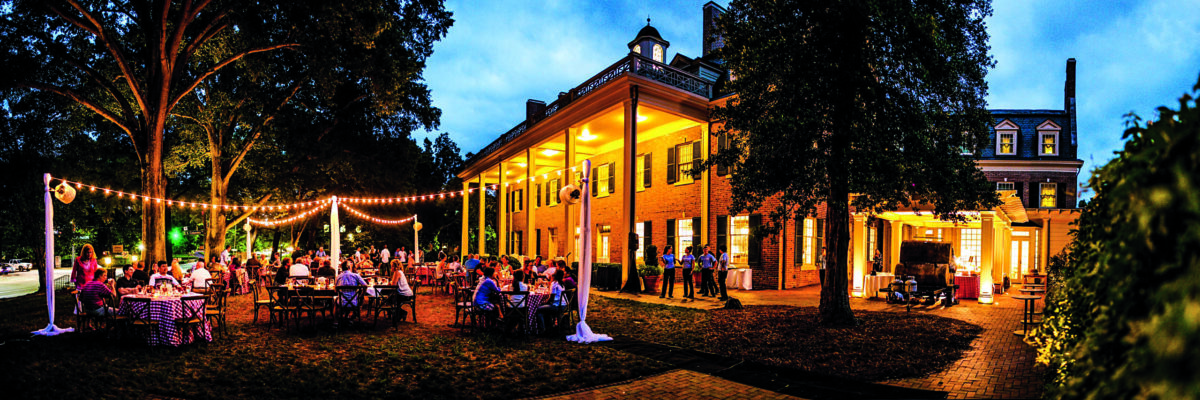
Fridays on the Front Porch
2009 |
The Fridays on the Front Porch free outdoor concert series begins with local bands performing Friday evenings from April through September.
2016 |
AAA gives the inn its Four Diamond rating for the 19th consecutive year. The Crossroads restaurant makes the grade for the 14th year in a row. Forbes Travel Guide gives the upscale spot four stars for the 16th consecutive year.
2018 |
While repaving the porte cochère’s driveway, workers unearth the 170-year-old stone-lined well where occupants of the Mitchell-Graves home retrieved drinking water.
2019 |
Hyatt Hotels & Resorts assumes management of the inn.
2020 |
Occupancy collapses in March 2020 as COVID begins to spread nationwide. Four months later, the inn lays off 217 employees. Fridays on the Front Porch concerts continue but with “socially distanced” seating.
2021 |
Protesters disrupt a meeting of the trustees in the inn’s ballroom, where they would consider tenure for historian Nikole Hannah-Jones ’03 (MA), author of The 1619 Project, which centered slavery and Black people’s contributions in the narrative of U.S. history. After much shoving, campus police remove the protesters. (See Nikole Hannah-Jones ’03: No to UNC, Yes to Howard,” July/August 2021 Review.)
2023 |
The inn kicks off its century-spanning celebrations in September (though its 1924 Centennial Lager debuted in May). “We made it 100 years,” says sales manager Tiffany Jackson. “We made it through changes in decades. We made it through COVID. It’s a time to celebrate that we get to serve our community.”
2020–24 |
The pandemic delays a lavish redecorating effort that would later cement the inn’s luxury status. Fodor’s Travel Guides, U.S. News, Tripadvisor and other travel media routinely continue to rank the inn among the state’s 20 best hotels.
Signs of the Times
Upon opening, the inn’s kitchen leaves a Chapel Hill Weekly reporter awestruck: “A mechanical apparatus washes 3,000 dishes an hour, and potatoes are peeled by machinery. Electric toasters, coffee urns, broilers, rangers, plate-heating cabinets, a ‘century mixer,’ — all these things, pointed out nonchalantly by an expert, mystify and deeply impress the casual wayfarer.”
The reporter also notes, “The waiters will be negro men. … The elevator will probably be run by a negro boy.”
Price of a Meal

Student Waiters at the Carolina Inn circa 1950s
- 1942: 75 Cents
Roast beef, soup, vegetables, salad, rolls, dessert, beverage. ($14 in 2024 dollars) - Mid-1950s: $2.75
Broiled country ham steak with red-eye gravy, potatoes, vegetable, salad. ($33) - 1960: $1.94
Friday fish fry: Shrimp, oysters, scallops, fish filet with potatoes, salad, relish tray and rolls. ($21) - 1978: $6.75
Broiled chicken, potato, vegetable, salad, rolls. ($33) - 2024: $25
Seared rare tuna (Crossroads, lunch menu)
A Roaring Good Time
The atmosphere got wild at the inn in 1948 when the Circus Parade of lions, tigers, elephants and bears was unveiled. The 25-foot-long and 6-foot-high cavalcade of California redwood carvings adorned a wall of the Circus Room snack bar in the Monogram Club.
University carpenter Carl Boettcher, a sculptor by training, crafted the wild beasts, clowns, drumbeaters, horn tooters and the female bareback rider — all based on drawings by illustrator William Meade Prince, a Chapel Hill native.
“If he were older, [Boettcher] would resemble Geppetto, the wood carver in the story of Pinocchio,” wrote a reporter. An emigrant from Germany, Boettcher originally lived in Michigan. He was sensitive about his ancestry, but a friend told him to move to Chapel Hill saying, “There are so many queer people there that you won’t be noticed at all.”
Today the menagerie raises a ruckus on a staircase wall leading to the Carolina Club, adjacent to the George Watts Hill Alumni Center.
Wedding-Bell Blues
Cost of a night in bridal suite in 1953 — $15. Today — $899, as of May 2024. The cost of a wedding at the inn runs between $10,000 and $60,000. That’s up from a high of $35,000 in 2012, according to an inn executive quoted in the Triangle Business Journal.
Rest Your Head
- 1924: 52 rooms
Single — $3.00 to $3.50 a night; Double $7.00 to $9.00.
Private bath included, a luxury at the time. - WWII era: 92 rooms
Single — $3.00 to $5.00 a night.
Graduate student apartments — $37.50 - 1978: 143 rooms
Single — $13.00 to $21.00
Suites — $24.00 - 2024: 185 rooms and seven suites
Room with king bed — $314 a night.
King suite (765 square feet) — $611 a night.
(As of late October.)
Do Not Disturb — Forever
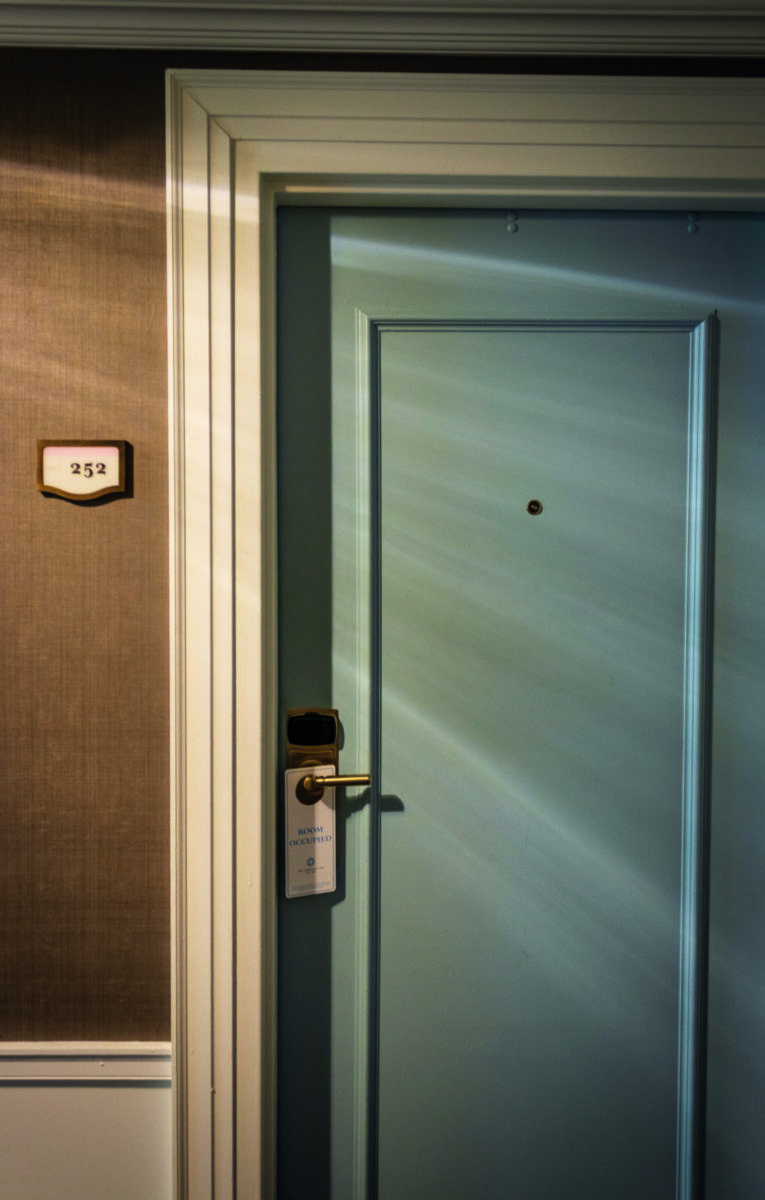
Suite 252
“And … oh, yes — you might be fortunate enough to hear our resident ghost,” warns a decades-old, undated publicity essay from the inn. “Being a gentle spirit and a scholar he never actually appears to our guests.”
The restless soul, according to inn lore, is the late William Jacocks (class of 1904, 1905 MA and 1909 CMED). An illustrious physician, he died at 88 after devoting his career to fighting hookworm in North Carolina, the Caribbean and Asia. After retiring, the Bertie County native lived at the inn from 1948 to 1965. (The inn allowed long-term rentals from 1940 to 1987.)
Bellman Willie Webb said he often heard Jacocks’ ghost crinkle a newspaper at night. And it seems as if the good doctor loved his privacy in the afterlife. On six occasions, Leroy Walker, the inn’s office manager, had to climb a ladder to crawl through a window into Jacocks’ old room so he could unbolt the door from the inside. “We never did figure out what was happening,” he said.
Jacocks’ suite has since been renovated and partitioned. Those seeking a potentially eerie stay should ask for Suite 252.
Southern Classic
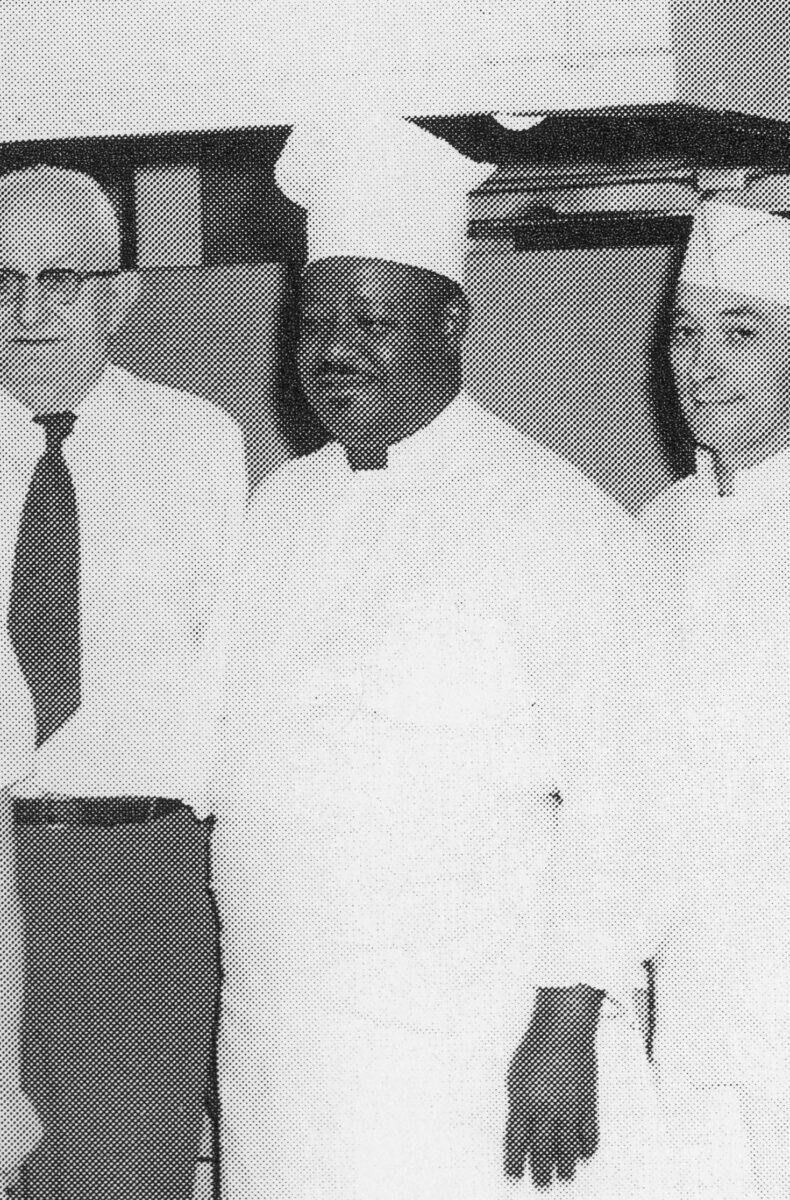
Chef Luke Davis
Self-taught chef Luke Davis, who ruled the inn’s kitchen from 1936 to 1971, said he invented many of his dishes. His fried chicken was a guest favorite. Here’s his finger-lickin’ recipe as printed in Ford Times, a general-interest magazine Ford Motor Co. published:
- 2 two-pound broilers
- 1 cup sweet milk
- 1 heaping tsp. salt
- ¼ tsp. pepper
- ½ cup flour
- 1 lemon, juiced
- Deep fat for frying
- 1 cup chicken stock
Cut chickens in half, discarding wing tips and necks. … Add salt and pepper to milk. Dip chickens in milk, then dredge in flour. Remove excess flour and fry in deep fat at 350° until golden brown. Cover bottom of roasting pan with stock and place chicken in pan. Sprinkle lemon juice over browned chickens and bake in 350° oven for 45 mins. Serves 4.
Famous Faces
A few of the luminaries who have stayed or dined at the inn:
- Tennis champ Arthur Ashe
- NBC anchorman David Brinkley
- President-elect George H.W. Bush
- President Jimmy Carter (as a candidate and ex-president)
- TV heartthrob Richard Chamberlain
- Movie star Bette Davis
- Gone With the Wind star Olivia De Havilland
- Bandleader Tommy Dorsey
- U.S. Senator Sam Ervin (class of 1917) of Watergate fame
- Hoops legend Patrick Ewing
- Poet Robert Frost
- Pollster George Gallup
- Evangelist Billy Graham
- Comedian Bob Hope
- Michael Jordan ’86
- Big-band leader Kay Kyser ’27
- Movie star Charles (Capt. Bly) Laughton
- Cellist Yo-Yo Ma 0 Gen. George Marshall
- Easy-listening conductor Annunzio Mantovani
- Crooner Johnny Mathis
- Starlet Yvette Mimieux
- Golf great Jack Nicklaus
- Beatles guest keyboardist Billy Preston
- Playwright Sam Shepard
- Former New York Yankees owner George Steinbrenner
- James Taylor
- H-bomb mastermind physicist Edward Teller
- Novelist Gore Vidal
- Southern storyteller Eudora Welty
- Novelist Thomas Wolfe (class of 1920)
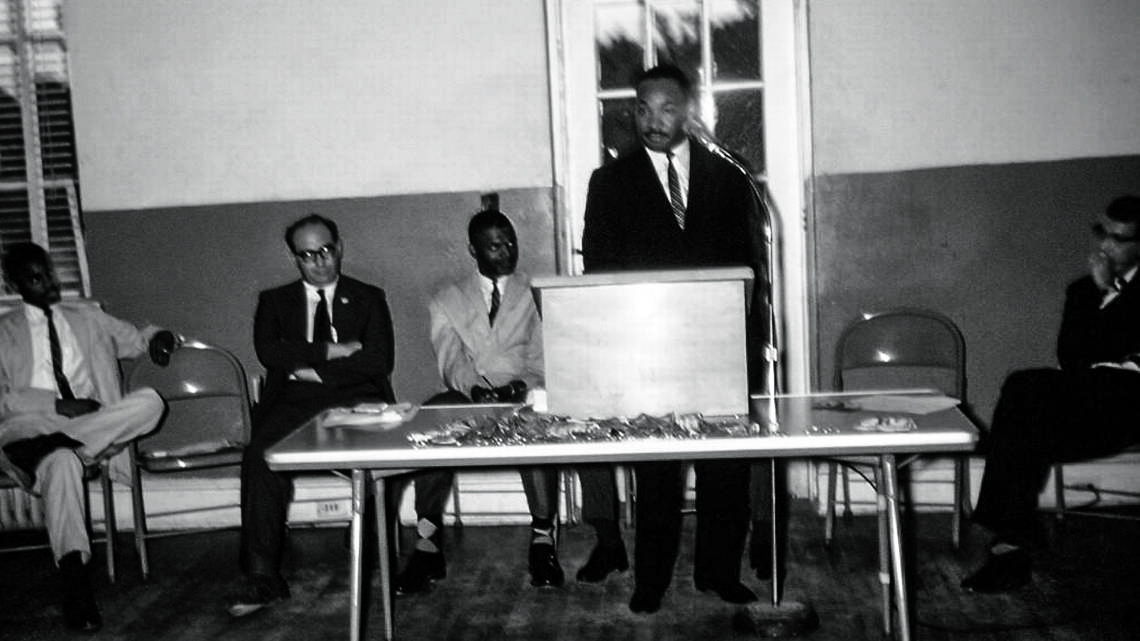
Martin Luther King Jr. speaks in Chapel Hill in 1960
- Countless UNC coaches and athletes, including Charlie “Choo Choo” Justice ’50, who routinely visited the Inn for more than 50 years.
- FDR’s wartime Vice President Henry Wallace, a diet faddist, “delivers a talk on vitamin pills when his audience was expecting to hear some world-shaking utterance,” according to The News & Observer.
- The night after Soviet spy Alger Hiss, a former senior State Department official, checked out of the inn, CIA director William Colby slept in the same bed. Both men came to campus in 1977 for a Carolina Forum event on national security.
- Secret Service agents guarding Joan Mondale, the wife of Vice President Walter Mondale, blocked the main entrance during her stay. Guests had to lug in their bags, upsetting many. “I think Carter-Mondale lost a lot of votes that day,” mused inn historian Al Dawson.
- Eleanor Roosevelt stayed three nights in 1950, one of several campus visits, to deliver a lecture. Her vigor exhausted her chaperone, UNC System President William Friday ’48 (LLB). On the third day he waited for her in the lobby but nodded off gazing at the glowing fireplace. To wake him, the former first lady tapped him on the shoulder and said, “Mr. Friday, it won’t be much longer.” Looking back, Friday remembered her fondness for the inn. “She looked upon it as a country inn,” he said.
- Rose Kennedy, the mother of then presidential candidate John Kennedy, stayed at the inn during a 1960 get-out-the-vote effort. She preferred the cafeteria to the more formal Hill Room, according to cafeteria supervisor Lillie Monroe.
“Stories of the Odd”
Livingston Bertram Rogerson, who left school in the fifth grade, ran the inn from 1948 to 1961. In a farewell interview with The Chapel Hill News, the newspaper described Rogerson as a “small and peppery” accountant who during the interview “toyed idly” with a “husky, glistening” steel pocketknife. “I’m a fighter,” he said. “I won’t turn the other cheek.”
While juggling the knife in his hand, he tells the reporter “stories of the odd, improper, distasteful, pitiful things that happen in the Carolina [Inn]: drunks, wild parties in the dead of night, assignations in rooms and peccadilloes of the aged and the perpetrations of the young, the rampaging of soldiers, sailors, Marines, lone businessmen and others.”
A Different Education
“I started work at the inn as a naïve teenager,” remembered Charles Williams ’59, who worked at the inn the summer before he enrolled as a freshman. “I left a more sensitive and feeling human being.”
Found sleeping on the job in 1956, Williams was assigned by the inn’s management to the “hard labor” detail of ripping out the Old Well Room floor.
Williams changed clothes, ate and rested in the so-called “colored quarters,” a building behind the inn. Black workers let him use their space, which by unspoken rule was off-limits to whites. He got to know them well. “I couldn’t believe the insensitivity of my own race,” Williams told Gretchen Case ’91 (’99 MA) and Maria Karres-Williams ’88 (’99 MA), authors of an unpublished 1992 book on the inn’s history. “I learned something of human kindness there that I carried into the ’60s as an advocate for social change and civil rights.”
Just the Facts
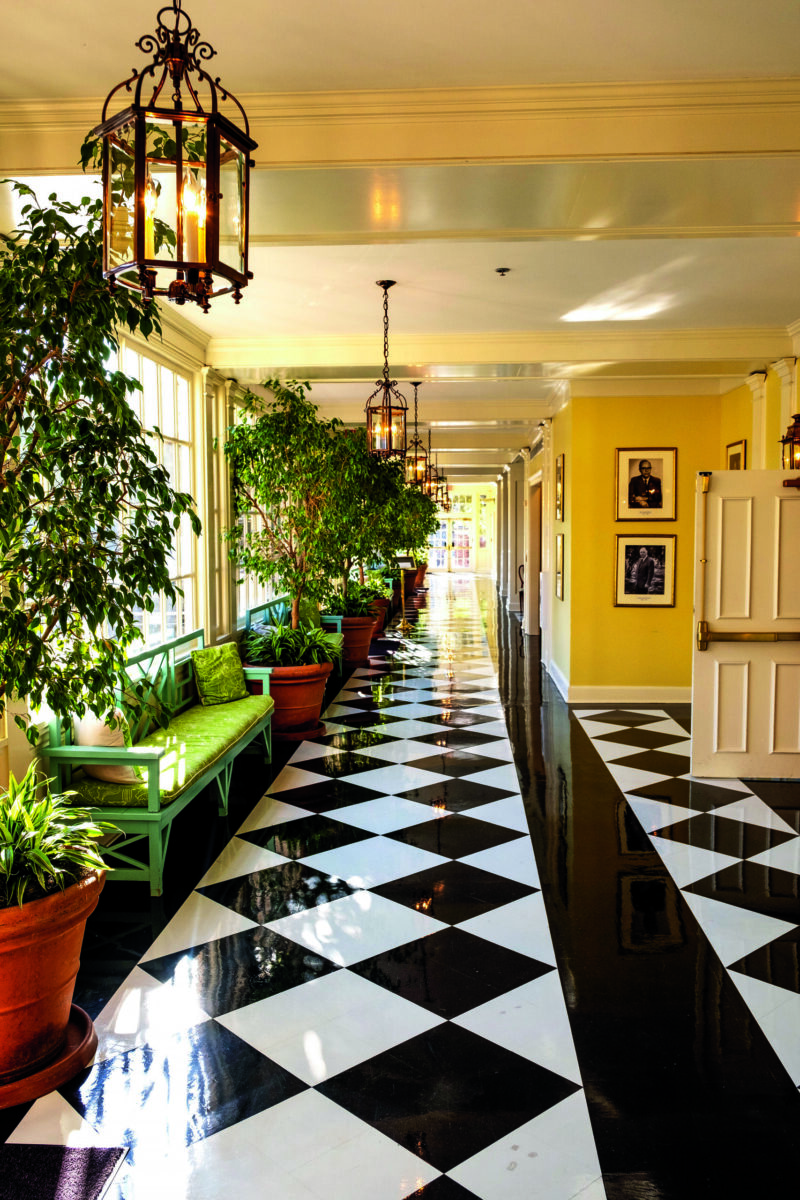
The tiles in this corridor, added in a renovation in the 1990s, evoke the original checkerboard flooring of the Old Well Room. (Photo: UNC/Jon Gardiner ’98)
- In its first decades of operation, the inn forbade locals from renting rooms, except for dire cases when residents were left homeless after a fire. The prohibition arose to keep out rowdy fraternity boys who did mischief at the inn, including stealing rockers from the front porch. During one six-month period in the 1960s, 24 were swiped.
- Student waiters in the 1970s wore spiffy white Eton jackets, black bow ties, cummerbunds and tuxedo pants. During idle moments before the restaurant opened, they flung tip trays like Frisbees around the dining room and hurled forks at the ceiling, which stuck to the tiles where they often dangled above diners’ heads. Manager Carl Moser refused, however, to consider female students for the job. Women were not hired as servers until the 1980s.
- In 1937, Black housekeepers were paid $7 for working six days a week, one-third of what a typical white worker earned.
- Only one woman has managed the inn — Annie Martin, from 1930 to 1935. Of her beloved Christmas parties, The Chapel Hill Weekly wrote in 1933, “Carols will be sung. Games will be played. There will be music and dancing in the Ballroom. And probably the entire company will march into the summer room, as it did last year, by candlelight.”
- The ever-generous Depression-era inn manager Leigh Skinner helped many student workers through hard times by loaning them money if they were unable to afford tuition.
- During the 1960s, run-down rooms sparked many guests’ ire. When the inn swapped out its black-and-white TVs for color sets, complaints plummeted.
- One day, smoke billowed from a second-floor guest room. Fraternity boys rushed to aid the hotel staff and formed a makeshift bucket brigade to squelch the blaze. Repairs cost an estimated $50,000.
- During the late 1980s, night shift clerk John Nelson often saw a curious sight — a town resident walking his “large cougar” on a leash down Pittsboro Street, he told authors Case and Karres. “I called others to come watch to verify that I was not hallucinating,” he said.
- A 1972 expansion gave the inn 123 parking spaces. When it opened in 1924, the inn had only nine parking spots; most guests arrived by train.
Reviews
- 1924:
“Here the guest may have the comforts of a city hotel and at the same time the satisfaction that comes from a wide lawn, spacious porches, and an abundance of sunlight and fresh air.” — The Chapel Hill Weekly - 1956:
“Evenings at the Carolina Inn usually buzz. People checking in, people going out for the evening, after-dinner digesters reading newspapers in the lobby, a quiet bridge game going on in one side-parlor, the small-talk and socializing phase of the ATO pledge dance being chattered out in the other side-parlor, the dance orchestra hitting it up mightily in the ballroom, TV being loyally viewed in the TV room down the corridor. Young talk, old talk, evening clothes, business suits; activity, idleness; the clink of change at the magazine counter, the buzz of house phones at the switchboard, the muffled ‘clump’ of elevator doors.” — The Chapel Hill Weekly - 1965:
The inn is “fairly old and faintly traditional … [with] a slightly unhinged atmosphere of charming chaos.” — The Chapel Hill Weekly - 1978:
“Since the inn’s atmosphere is so comfortable and homelike, it seems a special pity that its décor includes some unnecessary disfigurements. Ugly cigarette, candy, and newspaper machines occupy prominent places in the lobby…And there is piped-in music—not incessant, but bad enough.” — Fortune magazine
–
“All college towns should have an inn with the class and dash of Dartmouth’s Hanover Inn or Chapel Hill’s Carolina Inn. … There’s an established feeling about this inn, a quiet and confident air that no doubt reflects the aura of nonplastic permanence of Chapel Hill.” — Country Inns of the Old South - 1986:
“I have never seen a television like the one in [my] room. Besides having the basic 19” color screen, it came equipped with both an alarm clock and an AM-FM radio. Add 36 channels of cable to all that, and you’ve got something that radiates class.” — The Herald-Sun (Durham) - 2010:
“They may barely do Afternoon Tea in Britain anymore, but they did here, and at 4 pm we made our way down to a chandeliered, rose-strewn lobby, where a pianist tinkled jazz tunes and perfumed matriarchs held court over Devonshire Cream scones and cups of Jasmine Oolong served in heirloom china. … We followed the music outside [and] came across an extraordinary sight: there, sipping mint juleps and dancing to a bluegrass quartet on the lawn, was what appeared to be the entire population of Chapel Hill, out for the hotel’s regular “Fridays on the Front Porch” summer music session. … I marvelled [sic] at the easy community of it all. ‘Hmm … don’t get this at home,’ [my wife] purred.” — Sunday Telegraph of London - 2024:
“Highly recommend this wonderful hotel. … As a Yankee, this hotel fits my picture of Southern charm.”
–
“Sue the renovator: They have ruined the Inn. What was once a Southern charm is now a tacky Marriott.”
–
“Best in Chapel Hill: You cannot top the location, ambience, and quality of the Carolina Inn.”
–
“College tour: Would definitely come back even if my son goes to Wake or Duke.”
— Tripadvisor (various guests)
Thanks for reading the Carolina Alumni Review
Carolina Alumni members, sign in to continue reading.
Not yet a member? Become one today.