Carolina Campaigns for Research
Posted on May 19, 2025 | Updated May 20, 2025
Carolina is launching today what it calls a “research takeover” on social media and campus websites in direct response to proposed changes in research funding coming from the executive branch of the federal government.
University Communications and the Office of Research Communications are leading the weeklong takeover, which is part of a larger ongoing campaign branded as “UNC Research is NC,” featuring “coordinated storytelling” designed to show the breadth, scope and importance of UNC research. Programs across campus ― even University athletics ― are showcasing Carolina research several times a day throughout the week. The campaign will run from May 20 to 27.
The campaign is in conjunction with the Office of Public Affairs’ advocacy work in Raleigh and Washington, D.C., to show state and federal representatives the positive impact of research on the University, the state economy and the lives of North Carolinians. That work is ever-present at Carolina but has taken on a new urgency this year.
In February, the National Institutes of Health announced a plan to drastically decrease the amount in paid research institutions to cover costs associated with conducting research. Other agencies, such as the Department of Energy, followed suit. The courts have halted these plans for now, but universities across the country are still bracing for funding cuts, potentially in the hundreds of millions annually. During the next week, Carolina Alumni Review will highlight on the Carolina Alumni website research stories it has published in past issues of the magazine, starting with a feature on the threat to research funding that will appear in the upcoming May/June issue. Carolina Alumni will also highlight the stories on its social media platforms.
“Our coordinated strategy ensures decision-makers have the evidence they need to champion our research enterprise, while also fostering a deeper understanding among North Carolinians and American taxpayers of the tangible returns on their investment in our work,” Layla Dowdy, director of the Office of Research Communications, said in a statement.
This office, under Vice Chancellor for Research Penny Gordon-Larsen, has been sharing stories and statistics related to Carolina research for years. For instance, Gordon-Larsen’s team created an interactive map of North Carolina to highlight research conducted in every county and the faculty and students from each county involved in research at Carolina. The map includes links to stories related to the research.
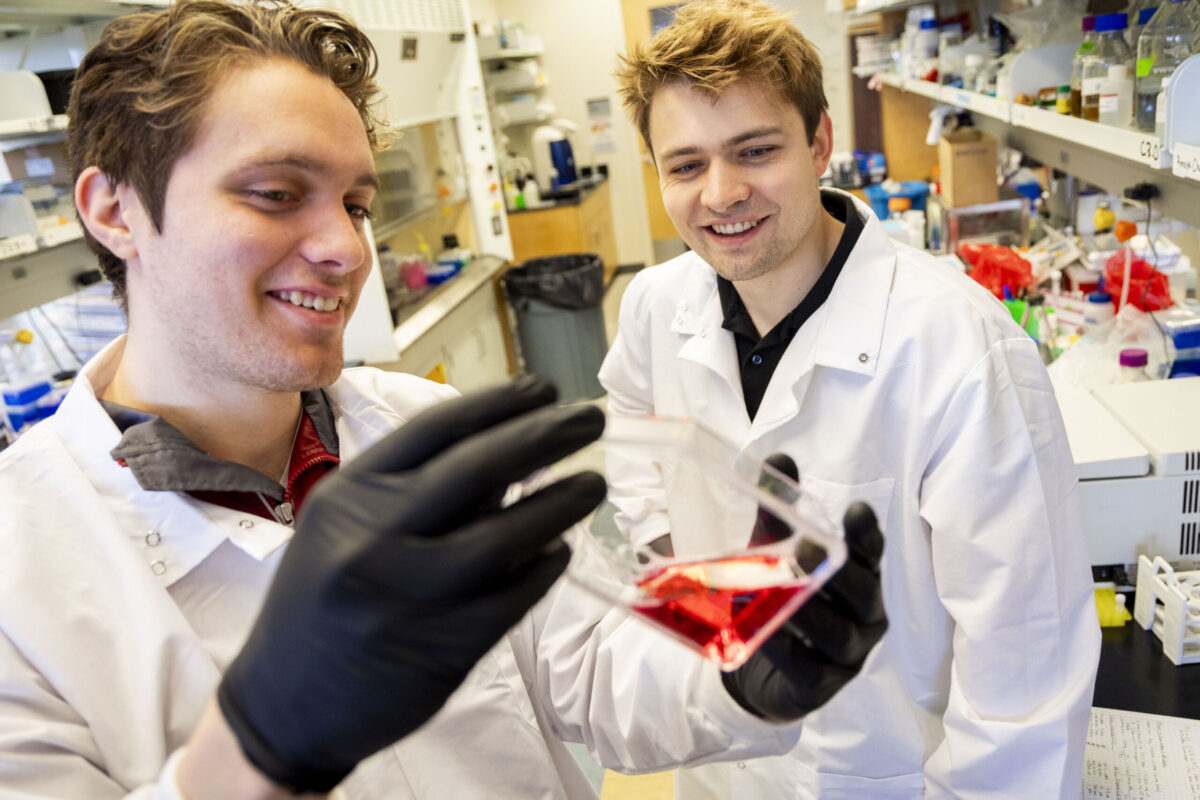
Juliane Nguyen lab (Megan Mendenhall / Office of Research Communications)
In February and March, the Office of Research Communications increased its storytelling and advocacy directly related to the impact of research on the state. “We realize there is opportunity in capitalizing on increased public receptiveness and interest,” Dowdy said. “Our ‘UNC Research is NC’ campaign and the research takeover meet this moment head-on.”
This spring, Gordon-Larsen’s team worked with University Communications to develop a strategy and toolkit to help units across campus spread the word about UNC research’s impact. The toolkit stresses five objectives:
- Showcase the real-world impact of Carolina’s research from breakthroughs in science and medicine to innovations in education, policy and technology;
- Emphasize how research fuels economic growth, supports local businesses and meets the evolving needs of North Carolina communities;
- Highlight the value of continued investment in research, helping audiences understand that funding fuels progress, improves public well-being and strengthens our state;
- Celebrate the people behind the work, from faculty researchers to student scholars gaining hands-on experience in labs, field sites and communities;
- Unify University messaging across diverse accounts while allowing space for each unit to tailor stories to their specific audiences and areas of expertise.
The toolkit also includes a photo library, ready-made social media posts and branding assets, such as logos related to research and the campaign. One post on Instagram stated, “The National Institutes of Health (NIH) is UNC-Chapel Hill’s largest research sponsor, providing nearly $600 million in annual funding. Our NIH research creates 6,000 jobs and $1.4 billion in economic impact for the state. The NIH also invests in other N.C. institutions, providing a total of $2.3 billion in funding across the state. North Carolina ranks 6th in the nation for NIH funding. Link in the @uncresearch bio to learn more about the impact of this funding.”
UNC Research is NC
Read more research stories from the Carolina Alumni Review archives as we salute the importance of inquiry and discovery in campus life.
Last Friday, the University posted a short video titled “Spread the good news of research at Carolina,” featuring Chancellor Lee Roberts and Gordon-Larsen. In it, Roberts said, “This is a critical time, and we see an urgent need to tell the story of Carolina’s research. We have been continuously advocating for the life-changing power of our work, and now we need to harness the collective power of the Tar Heel community.”
To follow the research takeover, check the UNC Research impact website, the new campaign website, UNC Research stories at LinkedIn and Instagram and follow Carolina on all major social media platforms.
— Mark Derewicz