Y it Matters
Posted on June 4, 2025It’s been part of student life and activism for 166 years, but last year the Campus Y and its iconic pink building came under question in the aftermath of contentious protests. A committee concluded, however, the Y deserved its place at the heart of campus, where it can continue to be “a hub for students to gather and grow through community service.”
By Courtney Jones Mitchell ’01
Listen to this story as read by ElevenLabs AI.
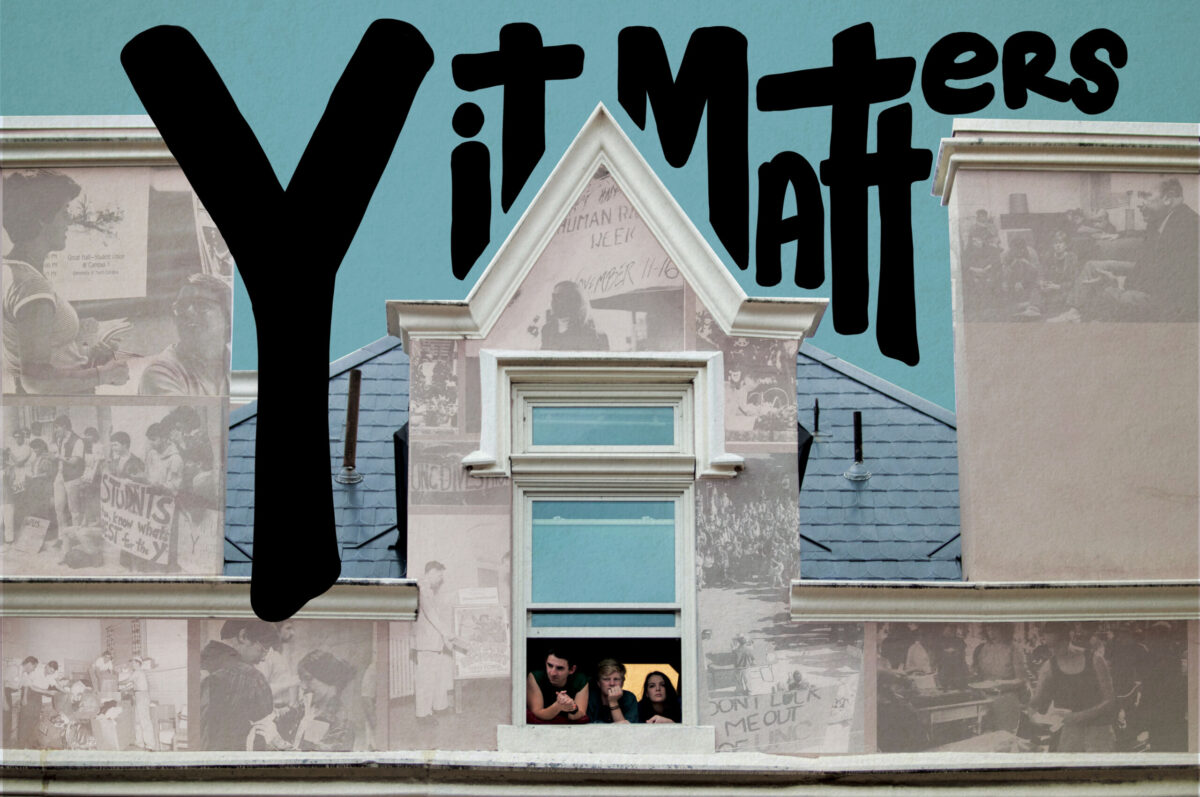
In 1859, the charter forming the Young Men’s Christian Association of the University of North Carolina at Chapel Hill had a directive: to “advance the moral and religious welfare of the Students of this Institution and of others around us,” according to its bylaws. The Young Women’s Christian Association joined the YMCA on campus in 1936 and together formed the Campus Y, without any religious or gender affiliations, in 1963. (Photo illustration: Haley Hodges ’19 Photo: 2018 Yackety Yack/ Haley France ’20)
The Campus Y at Carolina, the beloved pink building where students can snag a coffee and snack between classes and where those dedicated to making positive change in the world can find a place to make their mark, has long been considered the heart of campus. But, for a brief moment, that heart stopped beating when, in the wake of Israeli-Palestinian protests in the adjacent Polk Place in April 2024, the University closed the building for six days for what it said were safety reasons.
The Carolina community met this news with a mix of emotions, including curiosity, concern and outrage. Campus Y alumni flooded social media comment sections and the inboxes of student leaders with support, and a large multigenerational group of alumni quickly gathered via WhatsApp to coordinate responses to University administration. A website to gather comments rapidly drew 700 responses from students and alumni alike.
The Campus Y building reopened a week later with restricted hours, and during the summer Chancellor Lee Roberts formed a committee to examine whether the space met the “highest and best use standard” that the University uses to measure whether a campus facility is being used to best fulfill its purpose. Students, faculty, staff and alumni grew concerned that committee recommendations could fundamentally change how the Campus Y functioned.
Two well-respected UNC dignitaries, former Chancellor James Moeser and former UNC Board of Trustees chair Richard Stevens ’70 (’74 MPA, ’78 JD) co-chaired the committee, which included 13 other notable Carolina community members and alumni (See “Highest and Best,” this page.) Stevens recieved Carolina Alumni’s Distinguished Service Medal in 1994 and its Tony Rand and Tom Lambeth Advocacy Award in 2022
In October, after many interviews and meetings, the committee issued its findings. The six-page report reads, in part, “The Campus Y leaders told us that many students consider this building to be a safe space. A considerable amount of campus and community service is planned and carried out in this facility. Faculty have a convenient lounge in the middle of campus. The entire University community has food and beverages available. And yes, from time to time some activist students pursue causes they feel important.
“While we agree that every facility on campus should be evaluated for its highest and best use on an ongoing basis, after careful review this committee finds that the Campus Y building, with the recommendations made here, meets that highest and best use standard at this time.”
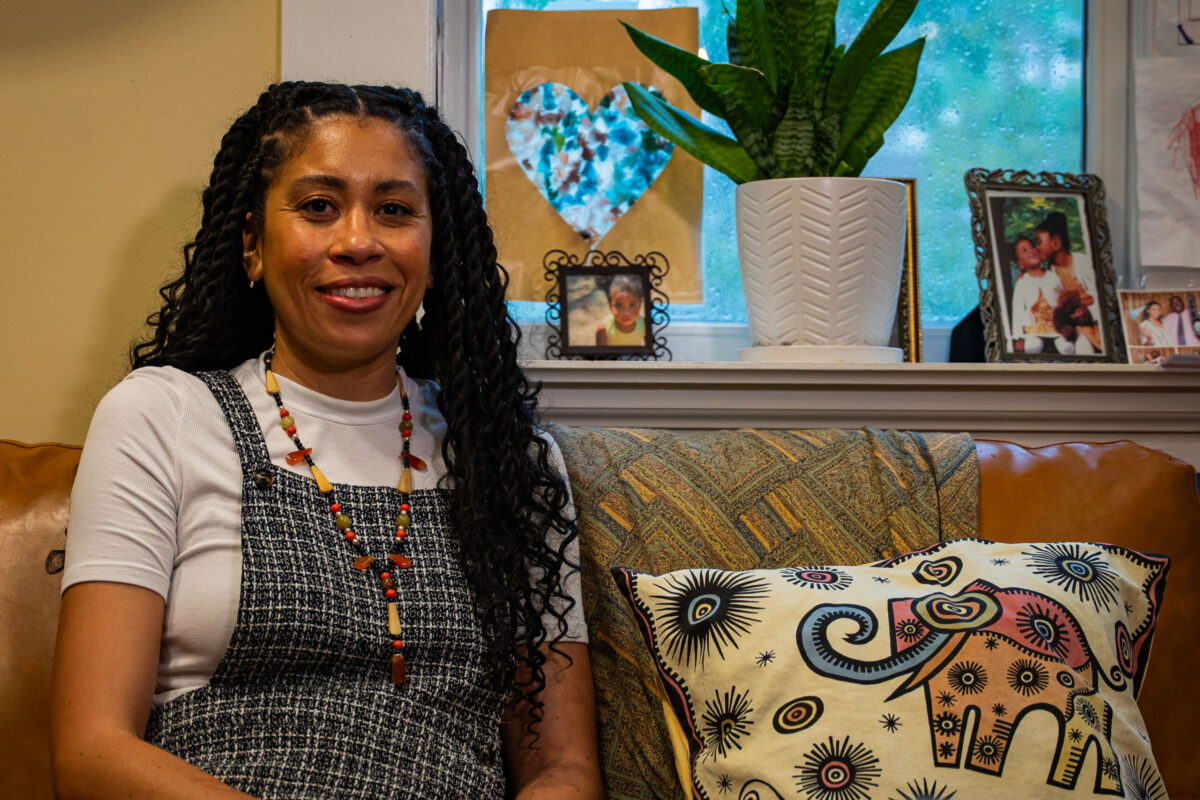
Yalitza Ramos ’05 (’14 MSW), the Y’s current director. (Photo: Carolina Alumni/Cory Dinkel)
The committee’s findings were glowing in their advocacy for the Campus Y — the building and the organization. Yalitza Ramos ’05 (’14 MSW), the Y’s current director, said the report reflected the warmth people had shared with the committee. And it echoed what many students and alumni had told University administration in spring 2024: The organization and the building have a “deep, intertwined history.”
“The Y offers one of the first chances for people to roll up their sleeves and be actors in the adult world. If there was a cause they were interested in, they could get involved on some level. They could look at how things should be different, they could start working to make them different. And that, I think, is hugely valuable as [students] are encountering the world and sorting out who they want to be.”
—Virginia Carson ’71
Former Campus Y Director
Roberts accepted the committee’s recommendations and acknowledged the Campus Y’s long-standing importance. “It operates at the heart of our historic campus as a hub for students to gather and grow through leadership opportunities and community service initiatives,” he said in a statement. “We are grateful to the students and alumni who, throughout our University’s history, have supported its important work.”
History can be messy and uncomfortable, including at Carolina. But supporters of the Y, part of campus life for 166 years, are more than comfortable with their place in it. Many alumni told the Review that their Carolina experience would not have been the same without it.
Former Campus Y Director Virginia Carson ’71, said, “The Y offers one of the first chances for people to roll up their sleeves and be actors in the adult world. If there was a cause they were interested in, they could get involved on some level. They could look at how things should be different, they could start working to make them different. And that, I think, is hugely valuable as [students] are encountering the world and sorting out who they want to be.”
What’s the Y?
In 1859, the charter forming the Young Men’s Christian Association of the University of North Carolina at Chapel Hill had a directive: to “advance the moral and religious welfare of the Students of this Institution and of others around us,” according to its bylaws.
The Young Women’s Christian Association joined the YMCA on campus in 1936 and together formed the Campus Y, without any religious or gender affiliations, in 1963. But for the past 166 years, that center of morality, the call to advance the welfare of not only students but the world around them, has attracted service-minded students each year by the thousands to its committees focused on social change and action.

Former Campus Y Director Virginia Carson ’71
Members of the committees volunteer in schools and homeless shelters, address food insecurity, distribute aid to those affected by natural disasters, foster social entrepreneurship and host speakers from around the world. The Y has been a springboard for social change, moving the needle on integration and racial inequality, LGBTQ+ issues, labor concerns for cafeteria workers and housekeepers, the fight against censorship, the expansion of literacy, global engagement and more. Its halls held the University’s first bookstore and the first freshman orientation, and published the first student handbook. It has been home to the offices of the UNC chapter of the Jewish organization Hillel and The Daily Tar Heel.
Its alumni and students are deeply attached to the organization and the 1907 pink stucco building in the center of campus that houses it.
Today, three different entities make up what is collectively known as The Campus Y. There’s the Campus Y student organization with 20 to 30 community service and social justice committees and close to 2,000 active members each year dedicated to solving problems and bringing ideas into action. They run programs such as Best Buddies, which pairs UNC students with members of the Chapel Hill community who have intellectual and developmental disabilities, and Nourish International, which started at UNC and now is in 45 countries. The APPLES Service-Learning program at UNC, which connects academic learning with public service, was created at the Y. These committees run exclusively on private funding.
“Our students are inspiring. They care a lot. They don’t always get it right, and we don’t always get it right.” But that’s not really the point. The point is to try to understand people better, to try to understand communities better, to try to navigate complex issues that sometimes seem like no one else is talking about,”
—Yalitza Ramos ’05 (’14 MSW)
Current Campus Y Director
There’s the Campus Y building, the 12,800-square-foot facility that houses meeting spaces; a coffee shop; a convenience store; a pantry that provides food and toiletries to students, staff and faculty; classrooms; an office suite for staff; and the Anne Queen Faculty Lounge, named in honor of the former Y director from 1964 to 1975. By the early 2000s, the building had fallen into disrepair, with two floors condemned. Carson, the director at the time, raised more than $3 million in alumni dollars to renovate it, and then-Chancellor Moeser convinced the Board of Trustees to kick in the rest, about $1.3 million. During the renovation, hundreds of alumni purchased memorial bricks printed with their names to lay in the new courtyard that surrounds the building.
And there’s the UNC Y Department, an arm of UNC Student Affairs. UNC staff — Ramos and Assistant Director Sarah Smith ’10 — serve as advisers for the student organization and lead operations, student-development programming and resources such as the Bonner Leaders Program, a national initiative that uses federal work-study funds earmarked for community service to support students’ growth over four years; the Global Gap Year Fellowship; CUBE (Creating University Born Entrepreneurs); and the Democracy & Dialogue Fellowship, a yearlong initiative designed to build community, promote dialogue and foster civic engagement among students and community members.
Ramos described the staff role as a backseat support to foster student connections and assist them in creating a space for conversations about the issues students observe playing out on campus, across the state and around the world.
Ramos said she feels lucky to work at the center of a campus dedicated to students addressing the issues of the day. “It’s the reason why I show up every day,” she said. “Our students are inspiring. They care a lot. They don’t always get it right, and we don’t always get it right.” But that’s not really the point, she said.
“The point is to try to understand people better, to try to understand communities better, to try to navigate complex issues that sometimes seem like no one else is talking about,” Ramos said.
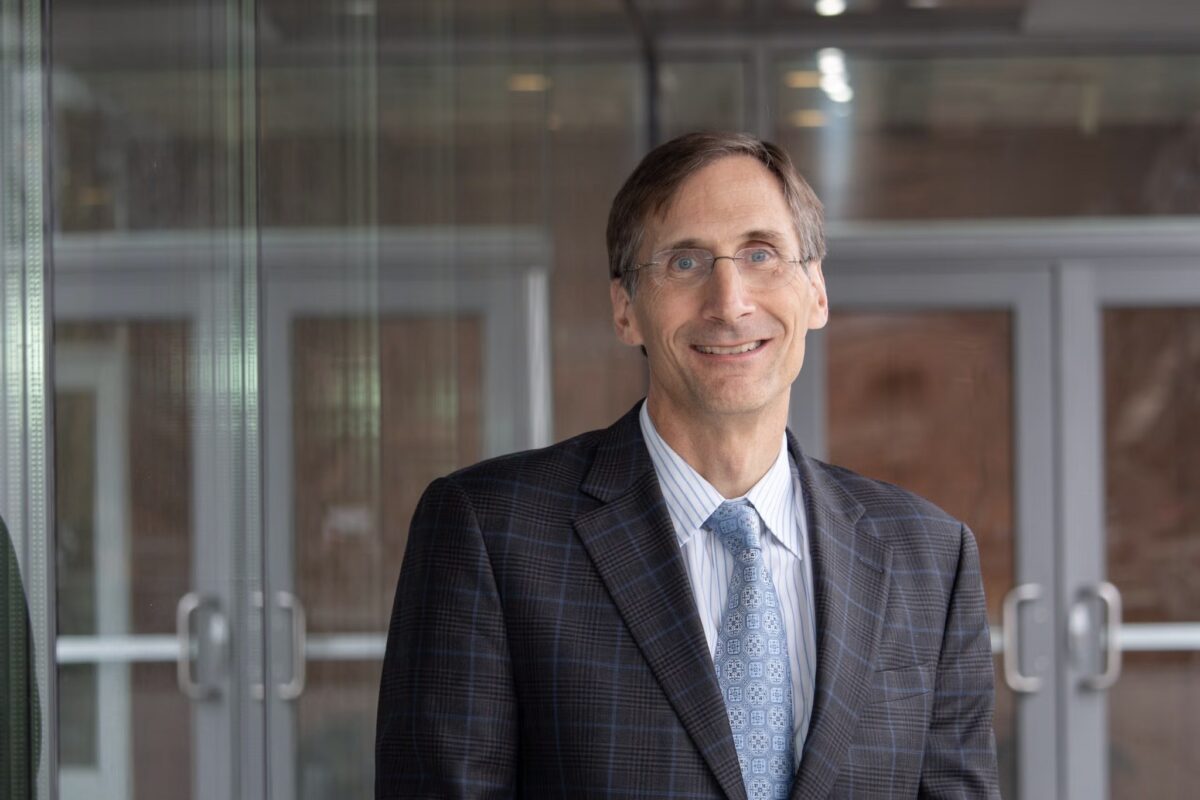
Though UNC’s Student Affairs website neatly divides these entities on its homepage, it’s tricky trying to untangle the mission and values of the student organization from the building where their work has taken place. To the students and alumni who spent so much of their time there while at Carolina, the building has been home. The building and the values of the Campus Y student organization have been one and the same, said Clay Thorp ’90, a social entrepreneur and co-founder of multiple companies, who sat on the building-use committee. “It’s the building and the location of the building; it’s the people and the aggregation of the people,” he said. “It’s those things together that make it special. It’s why the report was so passionate about why it should continue.”
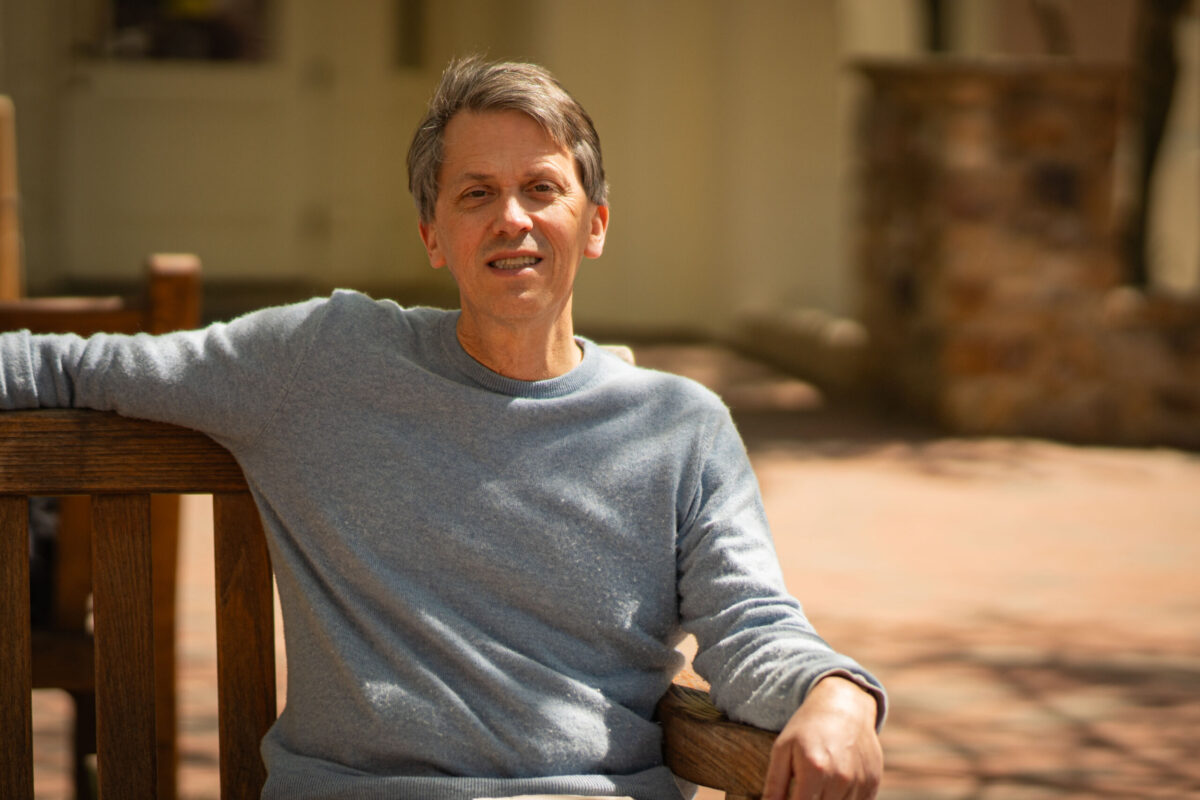
Clay Thorp ’90, a social entrepreneur and co-founder of multiple companies, who sat on the building-use committee (Photo: Carolina Alumni/Cory Dinkel)
Years before Thorp was dreaming up ideas for companies, he was a UNC student with an idea for a project. It was 1988, and he’d learned that not all Carolina Housing employees could read. He called the Orange County Literacy Council to float an idea for a program in which UNC students could boost literacy in the community. This was an idea, the council told him, it had heard from another UNC student that same week.
That’s how Thorp met Lisa Madry ’90, and how Project Literacy, now the nationally known Student Coalition for Action in Literacy Education, was born. Over breakfast at Ye Olde Waffle Shop, Madry told Thorp they should take their idea to the Campus Y. They walked up the main quad from Franklin Street, marched into the Campus Y office and asked to see Zenobia Hatcher-Wilson, who was the director at the time. “She sat down with us and listened to what we wanted to do,” Thorp said. “And she said, ‘You know, this might be the place to do this.’ ”
By fall, more than 150 students had volunteered, and by the next year, other campuses had adopted the model. “What the Y provided for us was a common place where people like us, who cared about things like that, could be together,” Thorp said. “What I do in my work now, and much of what I learned about starting things and translating a good idea into an organization, I learned right there.”
Ramos frequently hears similar sentiments in her office on the first floor of the Y. She said UNC alumni who had served on Y committees, or who had grabbed their daily coffee at the student-run Meantime Coffee Co., or who had considered the Y part of their UNC landscape seek her out and tell her their stories. They come through to show their children where they had spent so much of their time. They tell her why, in the hierarchy of their Carolina memories, the Campus Y lives at the top.
The connective tissue
The Highest and Best
Members of the Campus Y Committee who reviewed the
use of the Y building
- Aaron Bachenheimer, associate vice chancellor for student engagement
- Virginia Carson ’71, retired director of the Campus Y
- Rudi Colloredo-Mansfeld ’87, professor of anthropology
- Sari Ghirmay-Morgan ’24, then a senior
- Wendy Halsey, associate vice chancellor for facilities services
- Lilah Krueger, then a junior
- Lauryn Lovett, alumna
- Jill Moore ’85 (’88 MPH, ’96 JD), secretary of the faculty
- Kara Simmons ’97, associate vice chancellor, Office of University Counsel
- Ken Smith, alumnus
- Lauryn Taylor, then a junior
- Clay Thorp ’90
- Yalitza Ramos ’05(’14 MSW), director of UNC Y, ex-officio
Venerated Tar Heels such as former UNC System President Frank Porter Graham, class of 1909, served as Campus Y presidents or were vocal supporters, including his cousin and fellow former UNC System President Edward Kidder Graham, class of 1898. William “Bill” Friday ’48 (LLB), who led the UNC System for 30 years, shared a close and collaborative relationship with Campus Y Director Anne Queen, who received an honorary doctor of laws in 1992 from UNC, as the campus weathered the tumultuous social progress of the 1960s and 1970s.
Campus Y students have taken strong public positions in historical movements that played out on campus: the Speaker Ban of the 1960s, the Vietnam War, the establishment of a freestanding Black Culture Center, apartheid in South Africa and the confederate monument known as Silent Sam that stood over McCorkle Place until 2018.
Marjorie Betubiza ’11 stumbled upon the Campus Y at Fall Fest in 2007 and saw a place for herself immediately. She’d developed a sense of social justice from her family, who were from East Africa and had taken her to the continent to visit. Learning about the economic disparities in Africa shaped her world view, as did her all-girls Catholic school, run by an order of nuns called the Society of the Sacred Heart, which adheres to five goals. Betubiza felt aligned to one in particular — a social awareness that impels action. “If you’re aware enough of what’s going on in a society, action is the only logical consequence,” she said.
For three years, Betubiza was on the Y’s Advocates for Human Rights Committee, highlighting human rights issues worldwide, particularly in Uganda and Darfur in Sudan. They hosted lectures, movie nights and Human Rights Week, and they brought Ugandan politician Betty Bigombe to speak.
Betubiza became a Campus Y co-president her senior year when the organization celebrated its 150th anniversary, bringing generations of Y alumni back to campus to celebrate the organization’s history of innovation in social justice.
Because of the Y, Betubiza said she is part of a “connective tissue” that reaches far back into the history of the University. It’s this kinship among alumni that fueled their concern when the University closed the Campus Y building and three months later formed a committee to be sure the building met a “best and highest use” standard.
This was the place where Betubiza and many others had spent most of their time while on campus. They had stayed there into the late hours over many days for cabinet meetings, finding connections in one another’s work, whether that was planning the Catalyst Conference to empower high school students to make positive change or discussing food insecurity on campus. It was the place where she and other students considered big questions about the world and did on-the-ground work many students would continue after college.
One of the primary reasons the University said it closed the Campus Y during the spring 2024 protests was it allowed seemingly unfettered access to the building.
“The Campus Y building, along with other nearby buildings and parking lots, was closed on April 30 for safety reasons,” UNC Media Relations said in a statement. “Campus Y building hours were not observed and the doors were repeatedly propped open when the building was closed, despite multiple requests to ensure the doors were closed and locked, which posed a serious safety concern.”
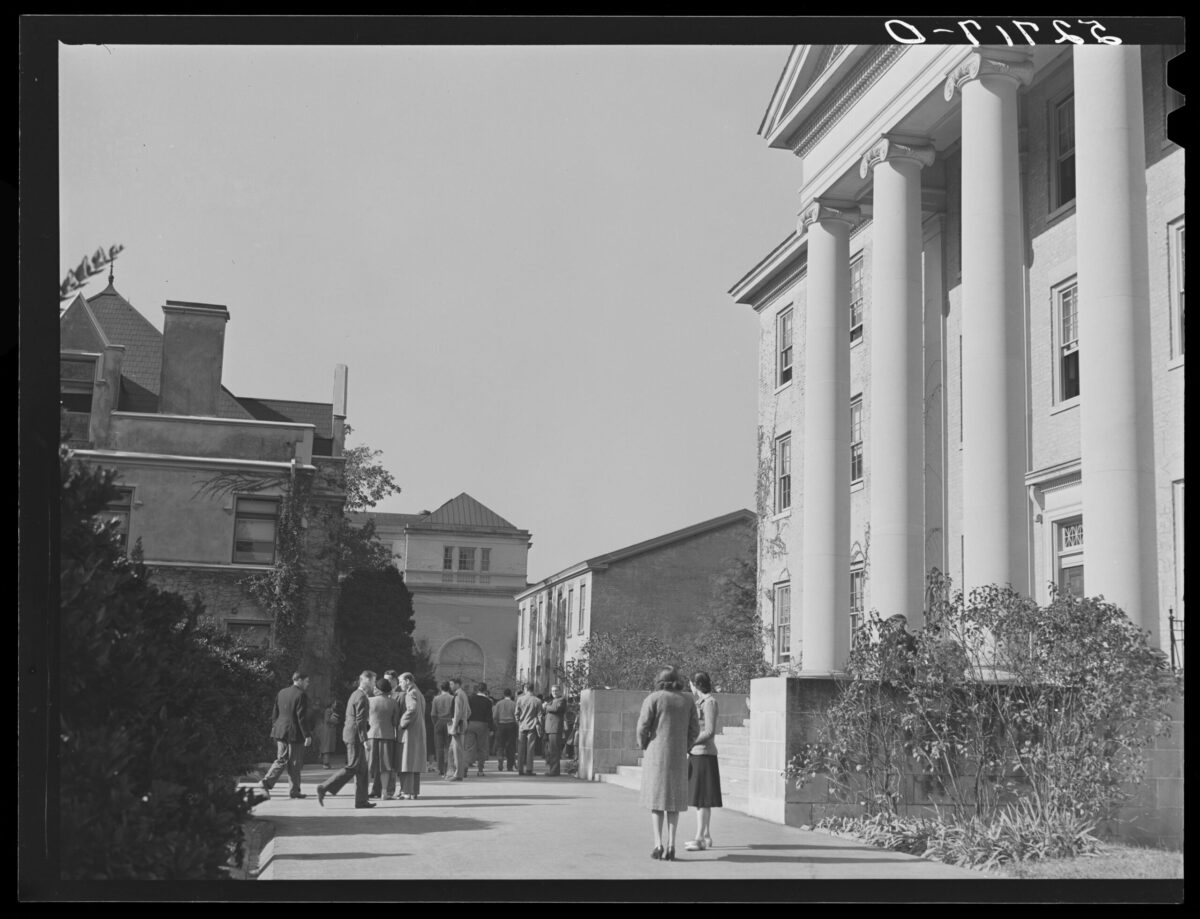
Campus scene. University of North Carolina, Chapel Hill, Orange County, North Carolina. Sourced from the Library of Congress.
Betubiza said she understood that the administration didn’t want nonstudents to have access to the building during the protests, but she didn’t think closing the Y addressed what she thought concerned the University most — prolonged demonstrations that cast UNC in an unwanted spotlight.
But the Y hadn’t planned the protests, she said. Still, students within organizations that use the Campus Y building have a long history of supporting social justice movements and activism during turbulent local, national and global flashpoints.
Students and alumni said there’s a heritage grounded in the past that compels them to try to enact positive change. For Betubiza, and many of her peers, the closure and the confusion around it felt like a threat to those ideals. She said some people do not understand or accept the role of college campuses and student movements in society, “just as [college students] did with protests around Vietnam or apartheid in South Africa.”
“Headquarters of idealism”
Moeser, who served as chancellor from 2000 to 2008, has seen both sides of the Campus Y, and not just at UNC. During his undergraduate days at the University of Texas at Austin, he was involved in the Civil Rights Movement through the Y on campus there. As UNC’s chancellor, aside from leading the building’s renovation, he said he considered the building to be “the headquarters of idealism on campus for social justice and civil rights.”
During his tenure as chancellor, the biggest social justice issue was sweatshop labor used to produce Nike Inc. apparel for athletic teams, including those at UNC. He said he met with student activists to hear their concerns and find a solution that all parties could agree to. Activism is often at odds with the administration, but Moeser said he viewed that division as creative tension. “It’s a critical balance,” said Moeser, who recieved Carolina Alumni’s Distinguished Service Medal in 2008. “Academic leaders and student leaders need to talk to one another in a framework of mutuality.”
“Part of why the building matters, honestly, is because that’s the tangible presence of the Y as an organization in the lives of so many diverse efforts. It’s the crossroads of deeply committed students at work in the world. And it’s really to the great credit of this University to have given that space, to students who have that spirit, at the very heart of the campus.”
—Rudi Colloredo-Mansfeld ’87
Former Campus Y co-president
The contract the University signed with Nike in 2001 included “extensive provisions for fair labor standards and practices at Nike manufacturing plants, in part a result of students having kept a harsh light on working conditions in non-American plants,” the Review reported then. (See “Nike Swoosh Expands in $28.3 million Contract,” November/December 2001 Review.)
In 1986, when UNC students erected a shantytown near the steps of South Building to protest South African apartheid and UNC’s investments in South Africa, Rudi Colloredo-Mansfeld ’87 was Campus Y co-president. (Photo: UNC)
When the former Y Director Virginia Carson was an undergraduate in the 1970s, she was part of the activism Y students are often known for. The issues of her day were the cafeteria workers’ strike to raise pay, the Vietnam War and women’s rights, broadly and on campus. When she came back to lead the Y in 2000, she could see it through a different lens. She said to some, the Y represented “scruffy, long-haired kids unrealistically demanding that the world change.” But to her the building and organization are important parts of a state flagship university’s commitment to nurturing the inquiring mind.
In 1986, when UNC students erected a shantytown near the steps of South Building to protest South African apartheid and UNC’s investments in South Africa, Rudi Colloredo-Mansfeld ’87 was Campus Y co-president. Though the Y hadn’t led those protests, either, he said there was “crossover and support,” and there were tangible results. The University divested from its holdings in South Africa in 1987 and created the South African Scholarship Fund, which raised money to establish an endowment fund to provide four scholarships for South African students. The fund was housed at the Campus Y with University support.
Now, as senior associate dean for social sciences and global programs at Carolina, Colloredo-Mansfeld has stayed close to the Y, helping oversee the entrepreneurship program, including the development of Meantime Coffee and a program through the College of Arts & Sciences called the Countering Hate initiative to address racism, antisemitism and Islamophobia. He said he was worried by the Campus Y building closing and what he believed to be the lack of clear communication. But Colloredo-Mansfeld said he was relieved when he was asked to be part of the building-use committee. He thought he could add to the conversation about what the building meant to him and the students he has mentored.
“Part of why the building matters, honestly, is because that’s the tangible presence of the Y as an organization in the lives of so many diverse efforts,” Colloredo-Mansfeld said. “It’s the crossroads of deeply committed students at work in the world. And it’s really to the great credit of this University to have given that space, to students who have that spirit, at the very heart of the campus.”
Courtney Jones Mitchell ’01 is a former general manager of The Daily Tar Heel and a freelance journalist based in Chapel Hill.
Thanks for reading the Carolina Alumni Review
Carolina Alumni members, sign in to continue reading.
Not yet a member? Become one today.