- Membership
- Perks
- Things To Do
- Resources
- News
- About
- Shop
Related Content
Two Alumni Earn Davie Awards
Nov. 19, 2026
The UNC Board of Trustees selected four recipients of the 2026 William Richardson Davie Award,...
Read MoreArrogance Enters Hall of Fame
Nov. 17, 2026
The North Carolina Music Hall of Fame just got an infusion of Tar Heel talent....
Read MoreChoosing Love
Oct. 19, 2026
Emmy Award-winning director Luchina Fisher ’88 learned the power of storytelling as a student at...
Read More-
2026
-
2025
-
2024
-
2023
-
2022
-
2021
-
2020
-
2019
-
2018
-
2017
-
2016
-
2015
-
2014
-
2013
-
2012
-
2011
-
2010
-
2009
-
2008
-
2007
-
2006
-
2005
-
2004
- Academics and Athletics
- Admissions
- Alumni Profiles
- Alumni Recognition
- Around Town
- Arts
- Books
- Campus Profile
- Campus Safety
- Carolina Alumni Awards
- Carolina Alumni Leadership
- Carolina Alumni Programs and Outreach
- Carolina Alumni Reunions
- Carolina Alumni Review
- Celebrations
- Championships
- College and Costs
- Commencement
- Coronavirus
- Discovery
- Extracurricular
- Faculty
- Faculty Awards
- For the People
- Go Heels
- Greek Life
- Hark the Sounds
- Higher Education
- Homecoming
- In Class
- In Memoriam
- Innovation and Technology
- Issues
- Object Lesson
- On View
- Philanthropy
- Podcast
- Public Service
- Race and Reckoning
- Research
- Serving Our State
- Sexual Assault
- Silent Sam
- Sports
- Structures
- Student Achievement
- Students
- Timelines
- Tuition and Financial Aid
- UNC Libraries
- UNC’s History
- Undergraduate Spotlight
- University Achievements
- University Awards
- University Budget Issues
- University Development
- University Leadership
- University News
- University Rankings
- What We Do
- Who We Are
- Young Alumni
- Yours at Carolina
First Black Male, Female Morehead Scholars Honored With Portrait
Posted on Nov. 14, 2025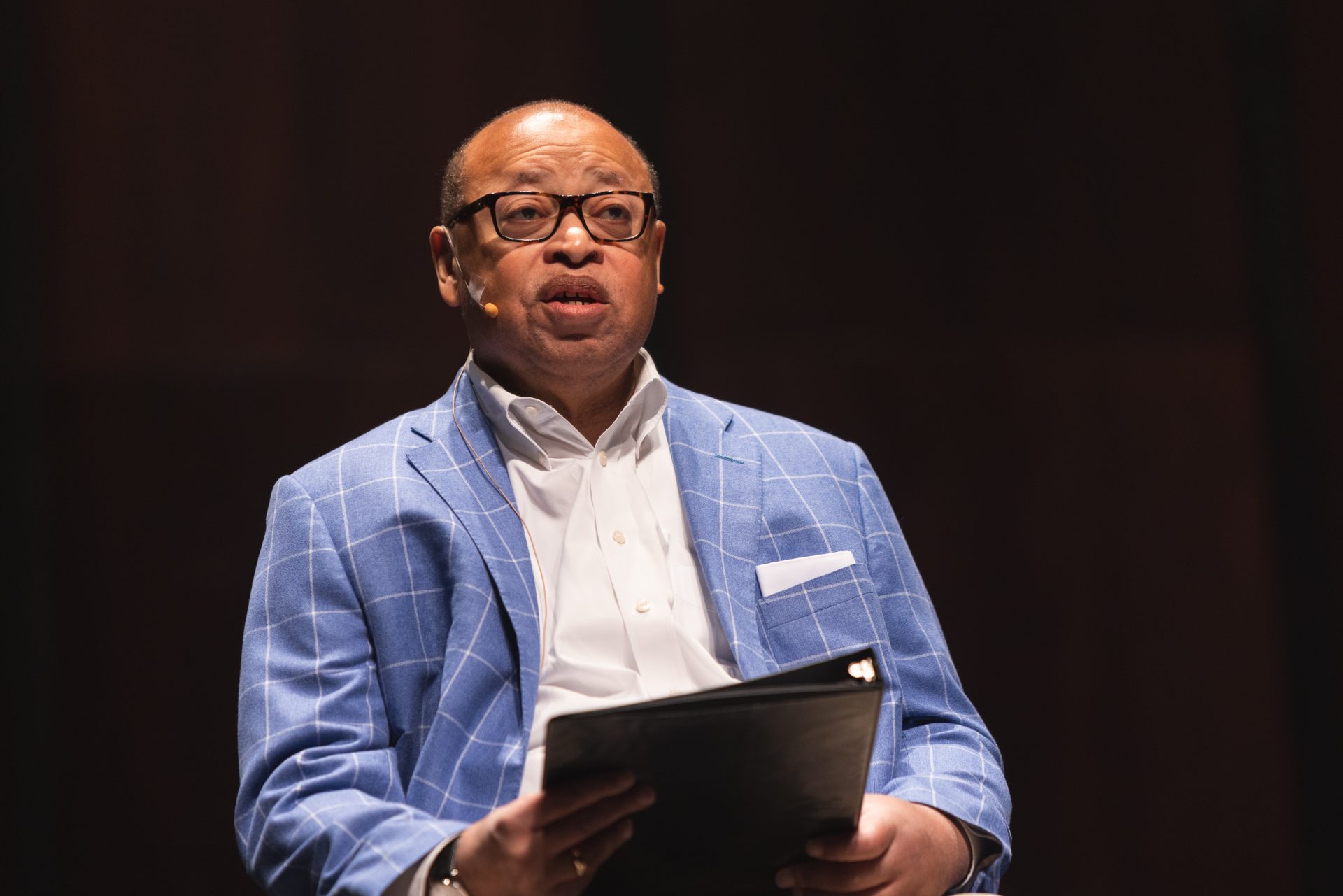
Harvey Kennedy ’74 (Photo: Morehead-Cain)
The University began admitting Black undergraduate students in 1955, but it wasn’t until 1968 that the Morehead-Cain Foundation (then the John Motley Morehead Foundation) offered a scholarship to a Black student — the first of whom turned down the scholarship to attend Harvard.
Harvey Kennedy ’74 would become the program’s first Black graduate. In 1975, the program began accepting women, and Karen Stevenson ’79 became the first African American woman to receive the scholarship.
In October, at the foundation’s triennial alumni forum, a newly unveiled portrait, which is displayed in the foundation’s central gathering space, honored the two trailblazers. The double portrait was painted by Durham-based artist William Paul Thomas ’13 (MFA).
While at Carolina, Kennedy was a member of the debate team and served in the student legislature as the representative for Granville Towers, even when less than 1 percent of its residents were Black. Kennedy went on to earn his juris doctorate from Harvard Law before embarking on a long career practicing law at the firm Kennedy, Kennedy, Kennedy & Kennedy LLP in Winston-Salem. He was also honored in October 2024 at the foundation’s Black Alumni Reunion, at which more than 100 Black Morehead-Cain alumni celebrated the 50th anniversary of Kennedy’s graduation.
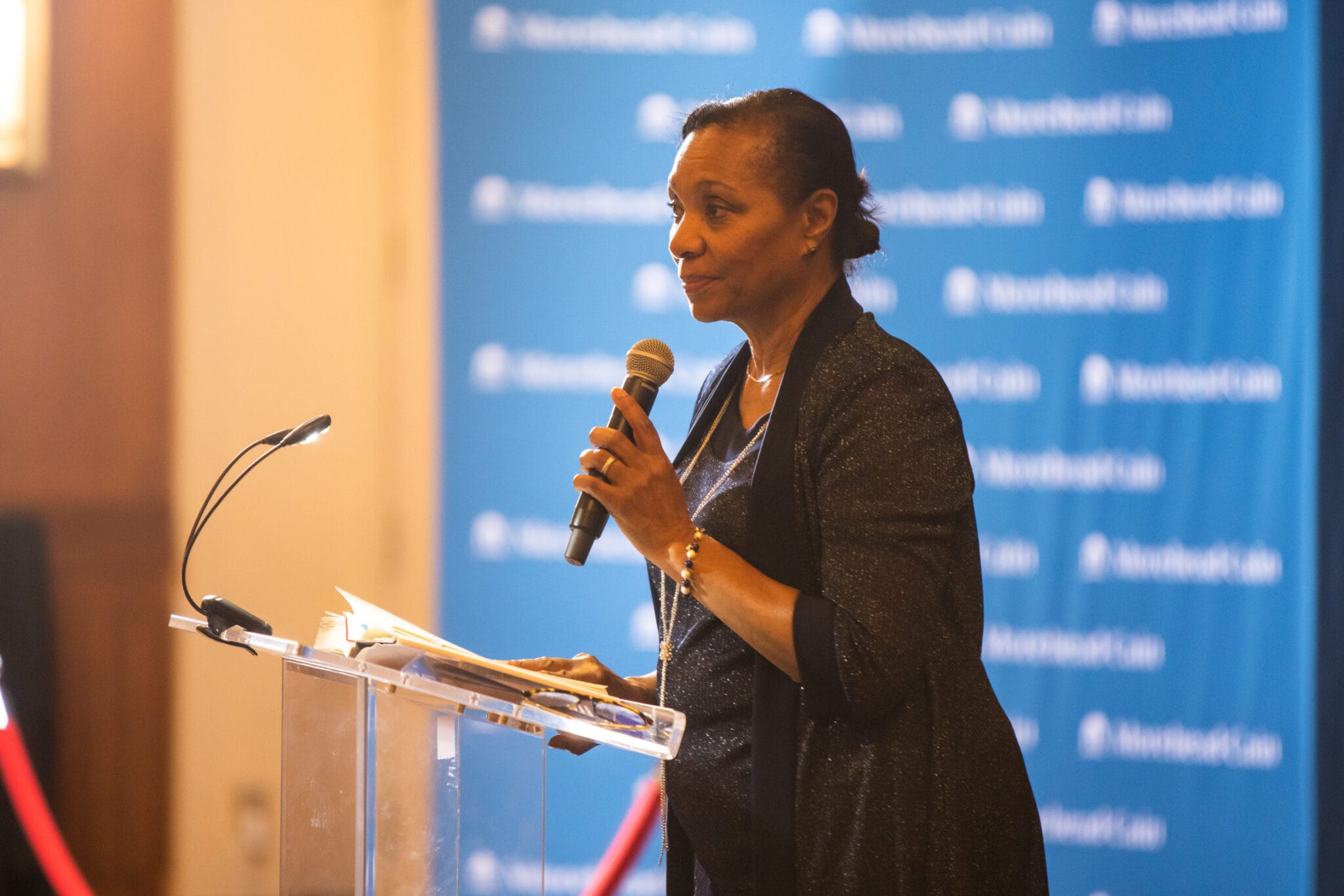
Karen Stevenson ’79 (Photo: Morehead-Cain)
While at Carolina, Stevenson broke more than a dozen records as a track team captain, including the state record for the 400-meter dash. She was the first woman from the University and the first Black woman in the country to receive the prestigious Rhodes Scholarship, which allowed her to earn her master’s degree in European history at Magdalen College at Oxford free of charge. She then graduated with highest honors from Stanford Law School before beginning a four-decade career in law, most recently as a U.S. magistrate judge for the Central District of California. She is an elected member of the American Law Institute and a fellow of the American Bar Foundation.
Stevenson said in a University news story in 2021 that her many “firsts” are only valuable to the degree they “allow younger people, particularly younger women and younger women of color, to believe that they can achieve their dreams and aspire to the highest levels of excellence.” This year, she served as the keynote speaker at the alumni forum dinner. She urged the audience not to wait on others to enact change.
“There’s no one coming,” she said. “It’s just us.”
© 2026 Carolina Alumni