Trailglazer
Posted on April 10, 2026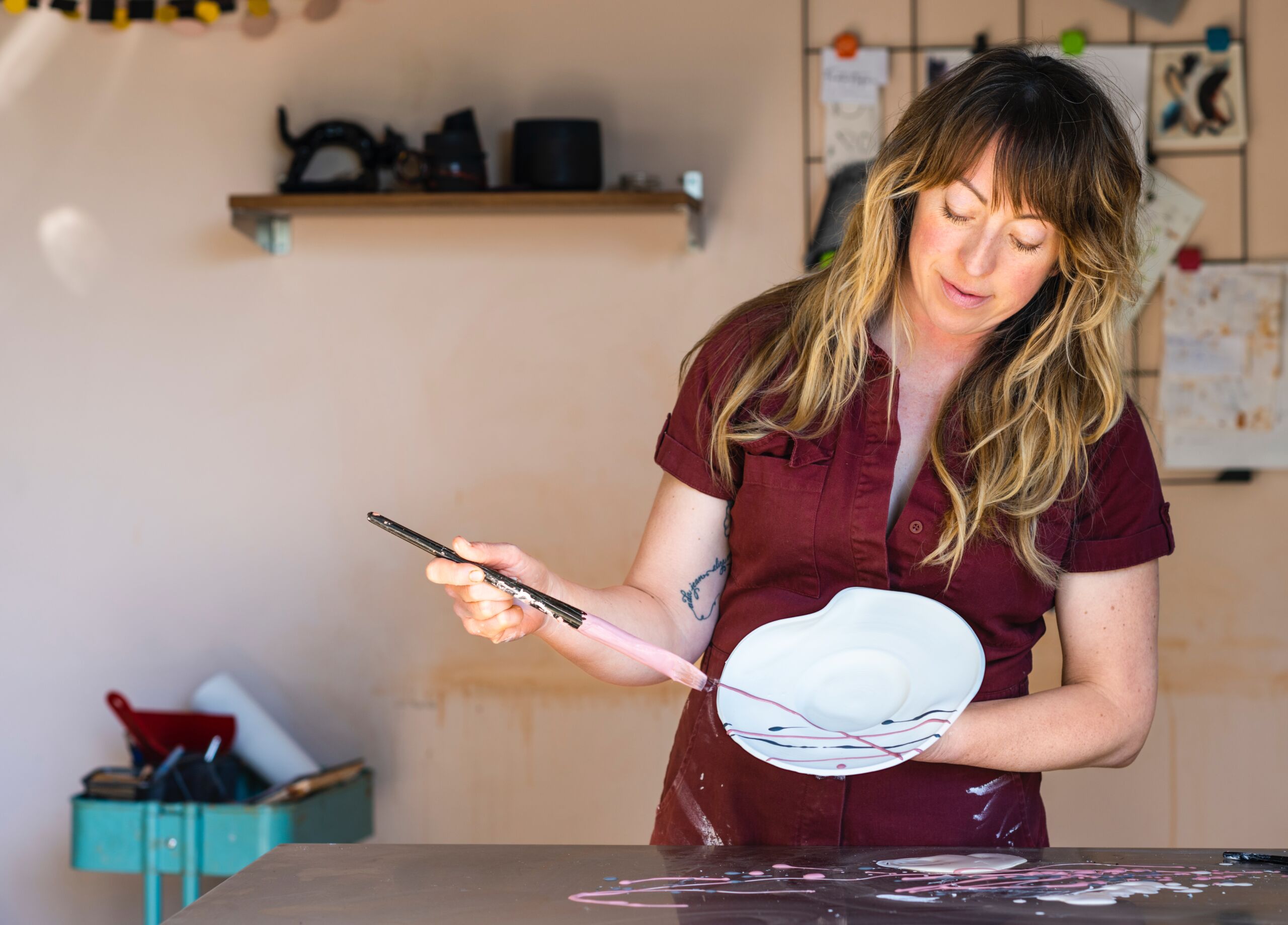
Once an attorney, potter Erin Hupp ’08 (MA, ’08 JD) now collaborates with chefs who want to create a visual feast when their food is plated. (Photo: Adahlia Cole)
Erin Hupp ’08 (MA, ’08 JD) makes it look easy when she sits down at the potter’s wheel. Whether she’s creating a set of distinctive ceramic dishes for one of San Francisco’s top restaurants or customized lighting fixtures for an interior designer, Hupp is clearly in her element in the studio behind her house in Oakland, California. She’s often asked how quickly she can make a dish or a bowl.
“It takes me 25 years of experience — plus four minutes,” she said. “I am incredibly fast, but that speed doesn’t come without years and years of practice.”
For most of those 25 years, though, pottery was essentially a hobby and perhaps a form of therapy. She’s been making a living at it for about ten years, after abandoning a successful career as an attorney. But she scoffs at the notion her career change was some sort of midlife crisis. “I see it as a midlife opportunity,” she said with a soft chuckle.
Hupp discovered the joys of pottery when she was in high school in Milwaukee. She was “an art room junkie,” she said, and fondly recalled the week she spent in art class getting her first lessons in how to use the potter’s wheel. As an undergraduate majoring in international relations at the University of Wisconsin, Hupp continued to feel the pull of the wheel and the chance to “throw” a lump of clay on it. “It became my social life,” she said. “We would get a six-pack of beer, hang out in the studio all night and just throw and throw and throw.”
Hupp was drawn to both the complexities and simplicities of working with clay. “You could live seven lifetimes and never get all of the facets that are ceramics,” she said. She also loved the end result — what she calls “art without pretense.” She was able to make something that was not just beautiful but useful as well, be it a mug or a plate.
“You could live seven lifetimes and never get all of the facets that are ceramics,” Hupp said. She also loves the end result — what she calls “art without pretense.”
While she was still a student, Hupp worked part time at a studio teaching pottery classes, keeping the studio clean and learning “production pottery” — churning out the same item over and over again to exact specifications. It helped improve her skills but wasn’t particularly satisfying.
Hupp considered pursuing a master of fine arts after earning her undergraduate degree, but first she spent a gap year traveling to places such as Australia and focusing on environmental issues. She envisioned herself as an urban and regional planner and was drawn to UNC’s acclaimed planning program (even turning down a substantial scholarship offer from Cornell).
Once in Chapel Hill, it didn’t take Hupp long to grasp that any work she would do as a city planner would be only as an adviser to city leaders. She wanted to do something with “more teeth” as she worked on environmental issues, such as curbing greenhouse gases and constructing green buildings. So, she decided to take advantage of a dual-degree program offered by the UNC School of Law and the department of city and regional planning, earning both degrees in 2008. “I would be going from an advisory role to an enforcer,” she said.
Despite her loaded academic schedule, Hupp continued to make time for pottery. She even worked as a ceramics counselor at a camp one summer. “It was my constant,” she said, “my meditation, my everything.”
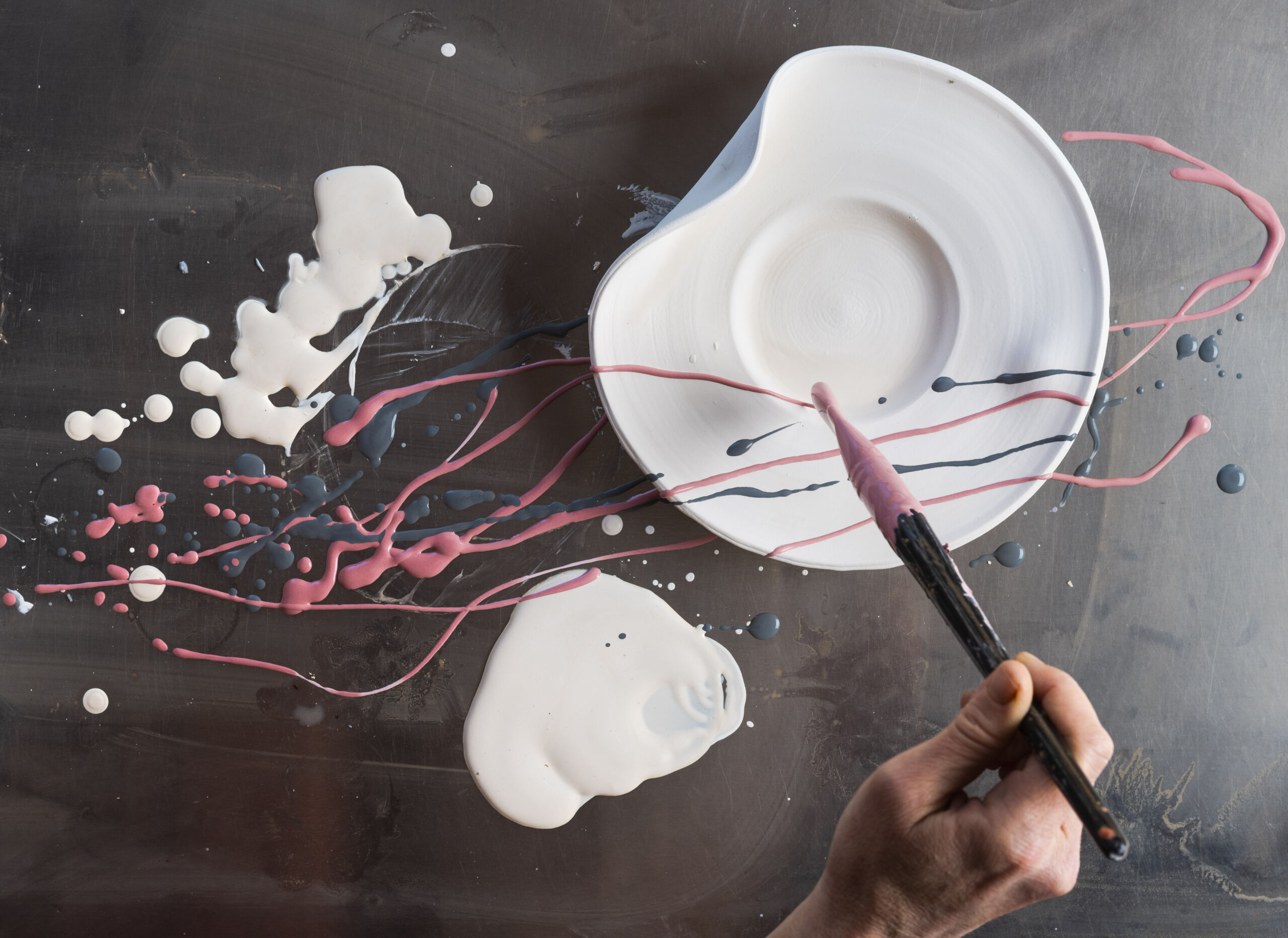
Rather than simply create pottery and hope someone would buy it, Hupp wanted to devise a collaborative arrangement with businesses where people would appreciate functional art. (Photo: Adahlia Cole)
Following graduation, Hupp worked for nearly nine years as an attorney, initially focusing on land use and redevelopment law. Following a 10-month break in her law career to care for her children in London, where her husband was opening a new office for Facebook, Hupp made a dramatic shift in her law career. Instead of dealing with real estate and the environment, she started working on behalf of children in California’s foster care system. It was rewarding, but the work took a toll on Hupp as she and her husband raised three kids.
“It felt so good to take on an overburdened system, to work in the best interests of children who had experienced a lot of trauma,” she said. “But we had the worst cases, and it was just too much, emotionally.”
Hupp decided to get out, but not just from working on child welfare cases. She was no longer interested in being a lawyer of any kind. “I was like a cat with nine lives,” she said, “and another life was coming up.”
Not surprisingly, her first thoughts turned to pottery. Hupp talked it over with her husband, and they agreed that they were doing well enough financially for her to pursue a career in ceramics for a couple years. Rather than simply create pottery and hope someone would buy it, Hupp wanted to devise a collaborative arrangement with businesses where people would appreciate functional art.
She turned to some favorite high-end restaurants in the Bay area. There she could collaborate with chefs who wanted to tell stories with their food and create a visual feast when the food was put on a plate.
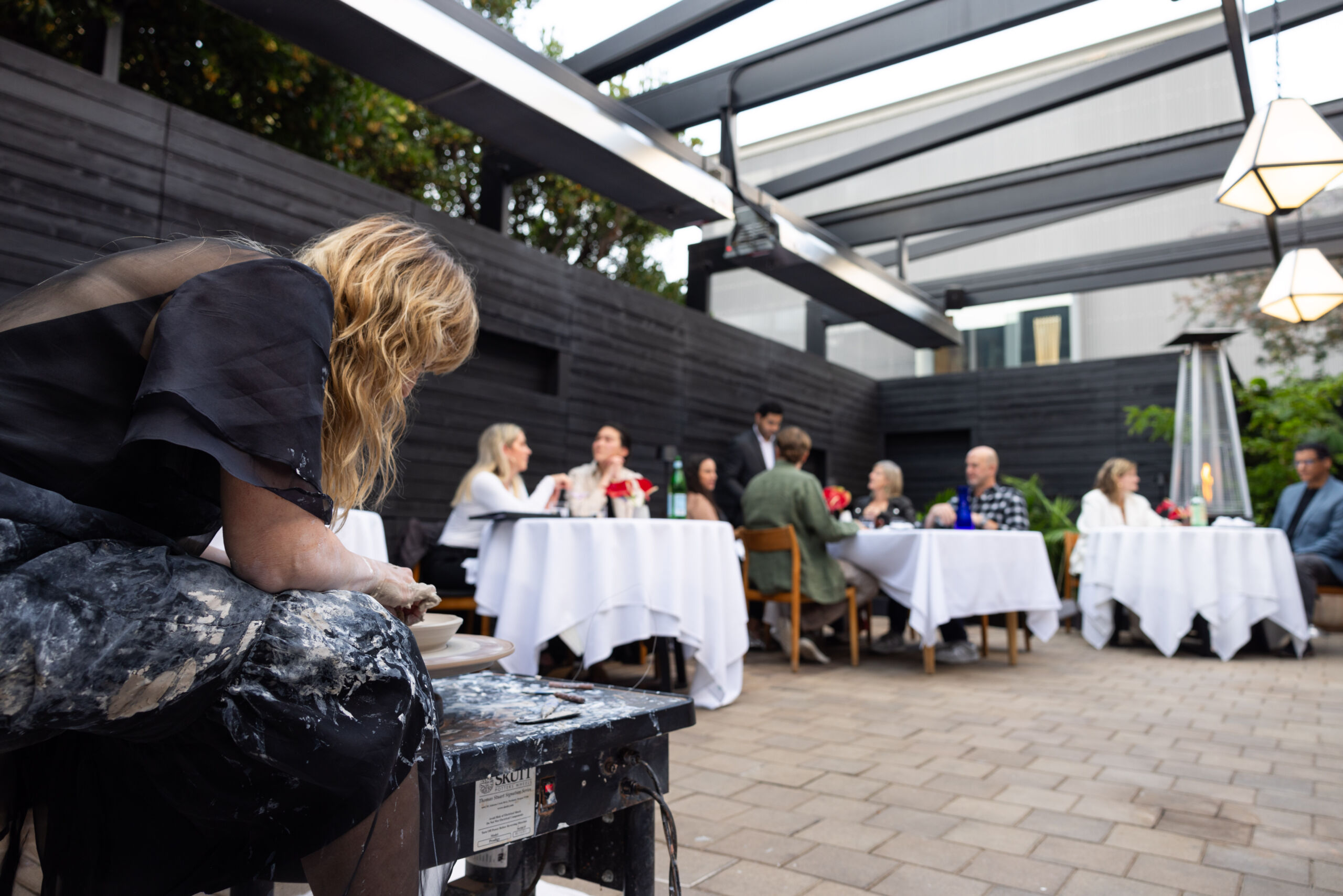
At the restaurant Californios in San Francisco, Hupp has thrown pieces while guests dine on the plates she’s made over a 14-course meal. (Photo: Californios)
Her first call was to Californios, a contemporary Mexican restaurant in San Francisco that has earned two Michelin stars. Her proposal was simple: She and the chef would talk about how he wanted to present his food to diners. They would discuss colors, shapes and texture, and she would create three prototypes for the chef to pick from. Val Cantu, the longtime chef and owner at Californios, was intrigued by the idea. He knew what sort of dishware and dining aesthetic he wanted. “She’s always got things going through her head,” Cantu said. “She takes it and runs with it.”
Cantu knew that he was onto something when he started to see diners flip their plate over following their meal to see who had made it. “Her works stand on their own as very beautiful works of clay,” he said.
It didn’t take long for chefs at other restaurants to hear about Hupp’s work, and soon she couldn’t keep up with all the inquiries. Hupp now works with about a dozen top-rated restaurants and a winery in the Bay area, including Nightbird, Sons & Daughters, and Hilda and Jesse. She also works with Pasta Bar restaurants in Austin, Texas, and Los Angeles, and Ikigai, a not-for-profit Japanese restaurant in Brooklyn, New York, that donates proceeds to food-insecure communities. The dishware she creates is unique for each.
Hupp enjoys the process of coming up with something creative while still being practical. But she also said the work is only half done when she delivers the plates and bowls to the restaurants. “My art isn’t really finished,” she said, “until the food is on it.”
—Bill Krueger
Thanks for reading the Carolina Alumni Review
Carolina Alumni members, sign in to continue reading.
Not yet a member? Become one today.