A Sporting Life
Posted on Oct. 19, 2026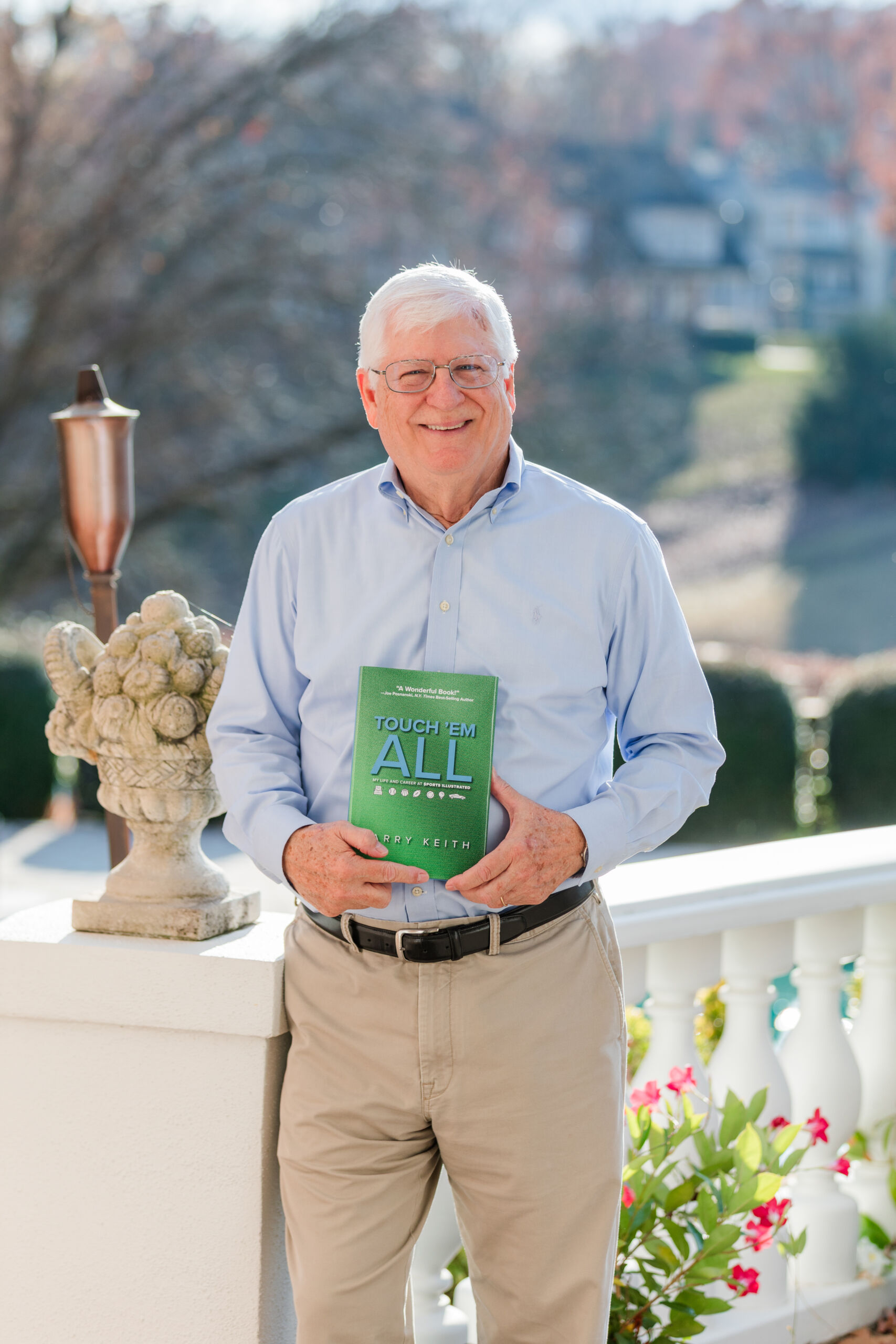
“I wanted to take the reader inside the magazine I loved and show how it worked in both the editorial and publishing domains during our extravagant, golden era,” said Larry Keith ’69. (Photo: Tim Souza)
When Larry Keith ’69 was 14, he listened to a Carolina basketball game on the radio and wrote a game summary for the heck of it, scrawling his observations in a spiral notebook. That was 1961, and he’s been hooked ever since, not just on sports but on writing about games, players, coaches and legends in the making. In describing his storied, award-winning, 34-year career at Sports Illustrated, when the magazine was the industry leader in sports journalism, the word Keith uses is “lucky.” Others would use words such as “talented,” “hardworking” and “creative.”
He rubbed elbows with legends such as Los Angeles Lakers point guard Magic Johnson and some of Major League Baseball’s most prolific personalities, such as Pete Rose, Tom Seaver, Reggie Jackson, Billy Martin and Tommy Lasorda. In 2004, he retired and sat on a treasure trove of stories he hadn’t codified in the pages of SI until he published Touch ’Em All: My Life and Career at $ports Illustrated in 2025. The following Q&A with Keith is edited for clarity and length.
Why did you choose Carolina, and how would you characterize the influence UNC had on your career?
While interning at The Charlotte News, starting in my junior year of high school, I encountered several Carolina grads who were rhapsodic about their Daily Tar Heel experiences. I attended two high school journalism conferences in Chapel Hill, and Carolina accepted my enrollment application in 1965. I knew that was the place to be for a prospective sports journalist, but I wound up attending UNC-Charlotte in its first two years as a separate branch of the University system. I would read The Daily Tar Heel every day in the campus library. Mine was an unrequited love until my father asked me if I was still interested in attending Chapel Hill while we were watching the Tar Heels lose to Dayton in the 1967 Final Four. I enrolled for my junior year and came to campus early to help produce the DTH orientation issue. The resume I built there as DTH sports editor and sports director of WCHL — plus several writing awards and knowing two Sports Illustrated hires from Carolina — helped me gain a job interview. Without experiencing those two years at Carolina and being exposed to college sports at the highest level, I don’t know if I would have even aspired to apply to Sports Illustrated.
You have the shortest CV in LinkedIn history: Time Inc., Sports Illustrated 1970–2004. How did you land a job at SI immediately after college, and why did you stay for 34 years?
Goodness! For some reason — I don’t know why — I didn’t include my nine post-graduation months as a newsman at WAYS in Charlotte. I certainly should have. While working there, I won a National Headliner Club Award in 1970 that provided a trip to the weekend awards banquet in Atlantic City, New Jersey. This paid for the plane ride that I couldn’t afford when SI first approached me in the spring of my senior year. On Sunday, I took a bus into Manhattan for my interview and received an offer — $160 per week! — a few days later.
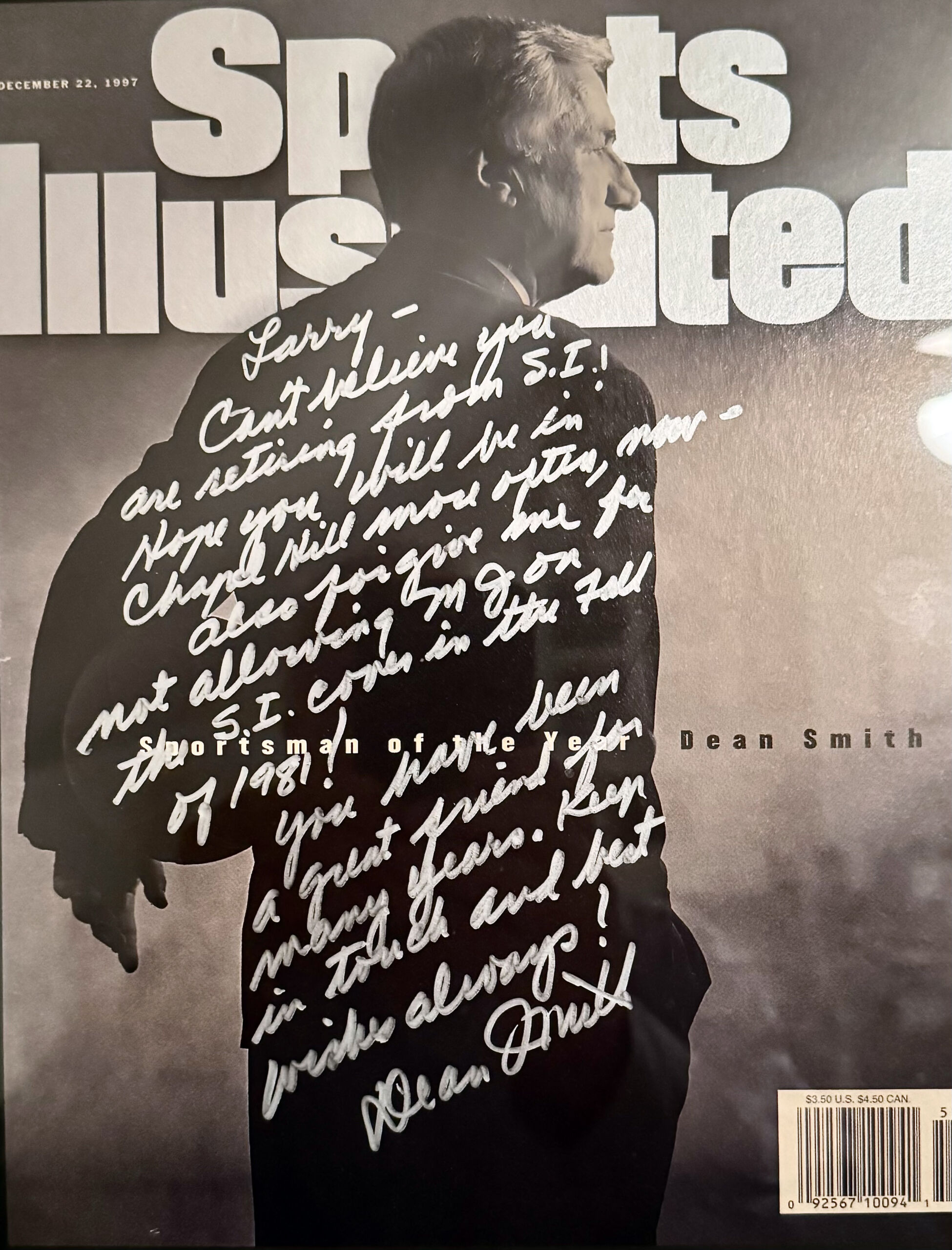
Dean Smith, who was Sports Illustrated’s Sportsman of the Year in 1997, signed this magazine cover for Keith: “Larry — Can’t believe you are retiring from SI! Hope you will be in Chapel Hill more often now — also forgive me for not allowing MJ on the SI cover in the fall of 1981!”
Aside from writing 19 cover stories and many other articles and being an editor for years, you developed several editorial projects. Which are you proudest of and why?
Well, it’s definitely not the 1984 swimsuit issue. And it’s not the two development projects I led that didn’t launch. It might be the work I did on the title that is still alive, Sports Illustrated for Kids. But I’ll say the three Official Olympic Souvenir Programs for 1996 Atlanta, 2000 Sydney and 2002 Salt Lake City, because each one was a massive, comprehensive undertaking, whipped up from scratch with major contributors. Atlanta and Sydney even had multiple international editions.
You taught a Columbia University graduate-level sports journalism course. How did that come to be, and why did that not continue?
I thought the best graduate journalism program in the country owed it to the profession to create a sports-related course. In 1984, it did, inviting leading sports journalists in the New York area to submit ideas. The invitees included SI managing editor Mark Mulvoy, who passed along the opportunity to me. This was an opportunity not to be missed. I taught four spring semesters from 1985 to 1988 … and stepped away because my new job as SI editorial projects director did not allow the time I needed to continue. To succeed me, I recommended SI senior editor Sandy Padwe, who became Columbia’s associate dean for academic affairs and then the acting dean of the journalism school.
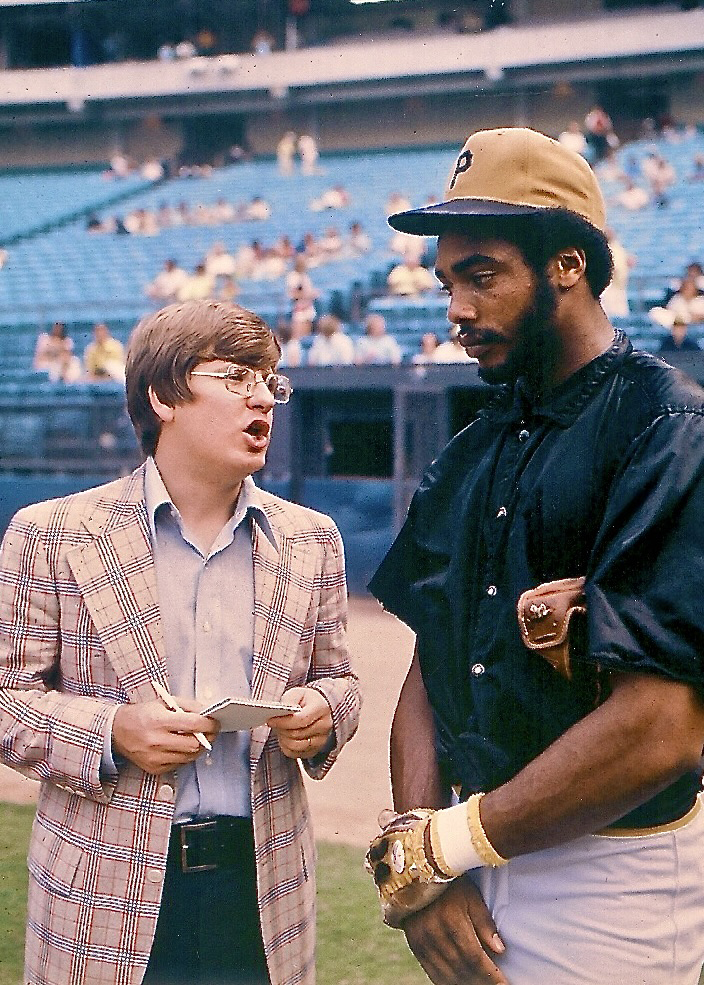
Keith interviewing Pittsburgh Pirates right fielder Dave Parker in 1978
You were on the Carolina Alumni board when this Review was not quite a magazine. Did you play a role in its current incarnation?
Yes, from 1990 to 1993. At the time we were producing two insufficient publications, and I argued we could do much better in design and content. Alumni head Doug Dibbert ’70 conducted a formal poll of the association about creating a new classy glossy. They were all for it. The Carolina Alumni Review, as we know it now, was born, and it has been an award-winning magazine worthy of its heritage ever since.
You’ve given back to the University on many occasions. Why, and which mean the most to you?
Well, it’s been both highly rewarding and incredible fun. I never thought of it as “giving” but as “receiving” the great opportunity to serve an institution I’ve loved since long before I enrolled. I’m proud to have been on the alumni board, the journalism school board, the NYC Carolina Club board and the National Development Council. I’ve raised money for the school at the late, lamented Time Inc., the Class of ’69 25th reunion and the Memorial Hall renovation. I created with [former] journalism dean Richard Cole a short-lived scholarship and internship for minority students at Time Inc. My wife and I established the Larry and Carolyn Keith Awards in Sports Journalism. I’ve written multiple stories about the Tar Heels for Sports Illustrated special issues and Carolina-related publications, including this magazine. I’m in the North Carolina Journalism Hall of Fame and successfully nominated numerous others. As a new member of the Hall of Fame nomination board, I’m hoping to push through a few more worthies!
You retired 22 years before you published Touch ’Em All in 2025. Why the wait?
As I thought about it, it seemed like too much work. Who would care? Five decades earlier I had written a fairly successful book, A Coach’s World, with Notre Dame basketball coach Digger Phelps. But then in 2021 my daughter gave me a book for Father’s Day with questions that would lead to a biography if they were answered. At her and my wife Carolyn’s insistence, I complied, following the Q&A format but making appropriate substitutions. When some friends read it, they suggested I do a book for public consumption, making it much less personal and much more professional and career-oriented. So I dug into my voluminous personal files — I’m a bit of a pack rat — and had at it. In Touch ’Em All: My Life and Career at $ports Illustrated, I showcase many of my era’s famous athletes and events, examine the professionalism of college sports and confess to SI’s lavish lifestyle. I wanted to take the reader inside the magazine I loved and show how it worked in both the editorial and publishing domains during our extravagant, golden era. I also pointedly detail my own traumatic rise, fall and rise again, and the editor who was both a booster and a bête noire. It was cathartic.
Keith’s book is available HERE.
— Mark Derewicz
Thanks for reading the Carolina Alumni Review
Carolina Alumni members, sign in to continue reading.
Not yet a member? Become one today.