Balance of Power
Posted on July 29, 2025The campus needs energy. The University wants to lower carbon emissions.
What’s the solution?
by Ira Wilder ’24
Listen to this story as read by ElevenLabs AI.
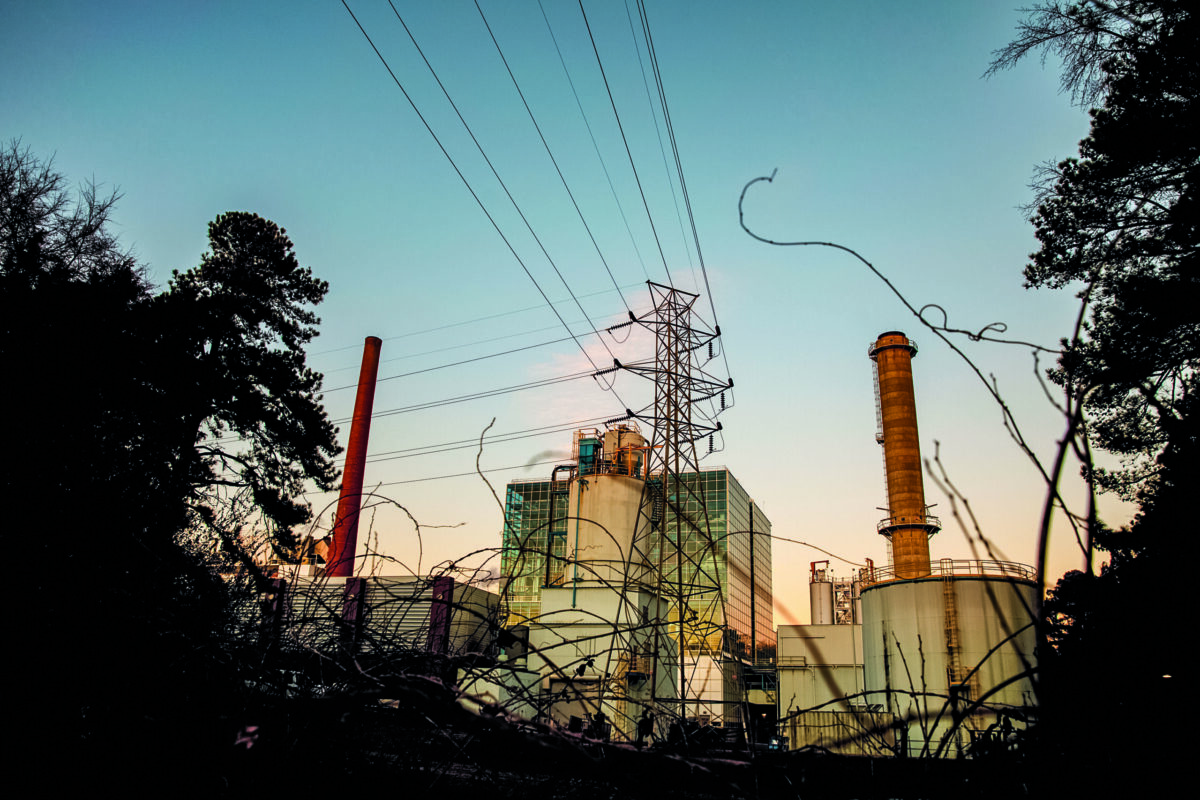
UNC is now at a crossroads. It has substantially reduced the amount of coal burned at the plant during the past three decades. But the plant, which supplies about 20 percent of the University’s electricity and provides steam heat to more than 175 buildings, is an integral part of powering the campus. (Photo: Carolina Alumni/ Ira Wilder ’24)
“Excitement reigned supreme on the campus Thursday afternoon when the ‘Black Horse’ of the Chapel Hill Branch of the Southern Railway puffed its way down the track and over the trestle into the campus for the first time,” The Daily Tar Heel reported in January 1922.
The train rolled on newly replaced tracks as it carried loads of coal to the University power plant. “The train of three cars was received with mighty applause from the many students who gathered around the spectacle.”
More than a century later, the train is greeted with no such fanfare. Students, Chapel Hill residents and even the University want to stop burning coal at the plant. It was described as the “top problem” to solve by the University’s sustainability officer in 2019, and Mike Piehler ’90 (’94 MSPH, ’97 PhD), the current chief sustainability officer, told the Review the cogeneration facility is the “central piece” of his office’s work. The administration has been hunting for solutions, such as alternative fuels, but after decades of analyses and missed self-imposed deadlines to do so, it hasn’t yet figured out how it can meet the goal affordably.
Over the past year, UNC tried to put a plan in place to test an alternate fuel source at the plant on West Cameron Avenue, only to pull its permit application in March when it determined the plan was unfeasible.
UNC is now at a crossroads. It has substantially reduced the amount of coal burned at the plant during the past three decades, and the administration said it is determined to pursue more reductions. But the plant, which supplies about 20 percent of the University’s electricity and provides steam heat to more than 175 buildings on campus, is still an integral part of powering the steam-driven campus. Steam also heats water for drinking, cooking, sanitation and sterilization of medical equipment at UNC Hospitals. There is currently no regulated utility in North Carolina that supplies steam in the same way that Enbridge Gas North Carolina, formerly Dominion Energy Inc., supplies gas or Duke Energy Corp. produces electricity for North Carolina and five other states. UNC makes its own steam at its power plant, and many universities do the same.
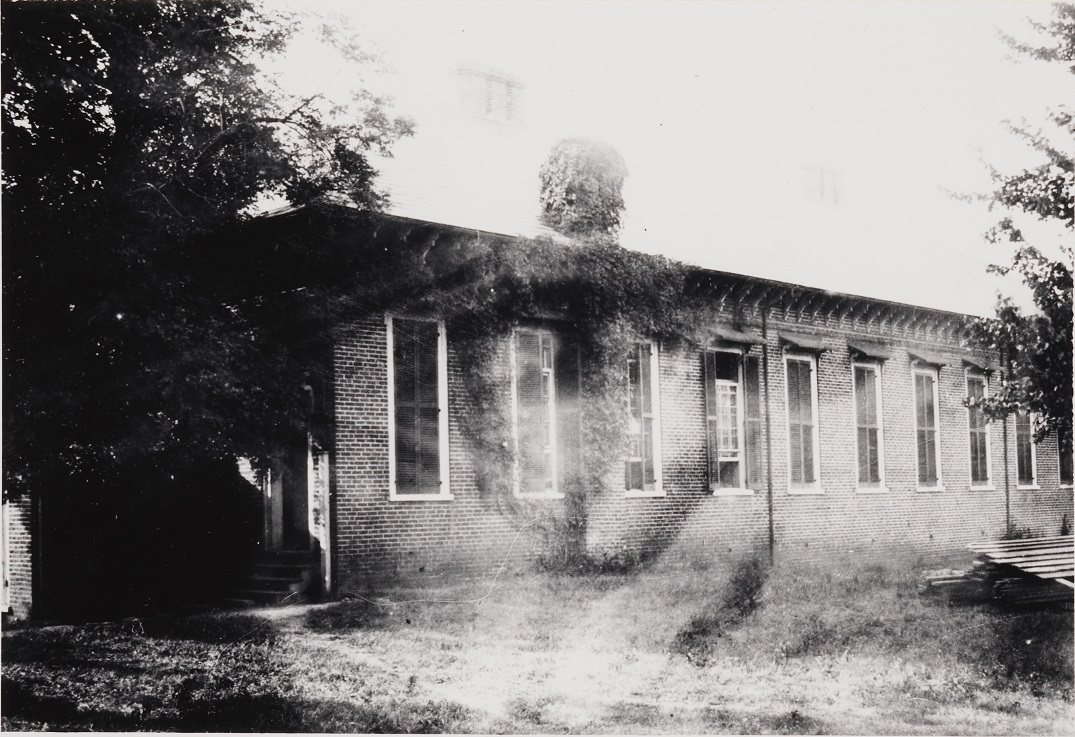
Carolina’s first power plant, shown above as it appeared in 1895, was situated where Phillips Hall is today. It was designed by Joshua Gore (inset), who taught philosophy, physics and engineering at the University beginning in 1882. (Image: UNC Image Collection P0004, N.C. Collection, UNC)
“Our cogeneration facility has been vital in the development of UNC-Chapel Hill as a major R1 research university,” UNC Media Relations said in a statement, referring to UNC’s ranking among the nation’s universities with the highest level of research activity. The plant provides “efficient, reliable energy while supporting labs and UNC Hospital.”
Put simply, it cannot be taken offline, unplugged or replaced easily (or cheaply).
“Ragged spot”
The current plant is named after Joshua Gore, who taught philosophy, physics and engineering at the University beginning in 1882. University historians credit Gore with installing the first electrical outlets on campus in Person Hall in 1890. He designed the campus’s first electrical steam generation plant in 1895 and oversaw its operation, where Phillips Hall is today, until his death in 1908. The plant was the sole provider of electricity, light and water for Chapel Hill, both on campus and in town.
After the first boiler plant fell into disrepair and one of its boilers blew up in 1917, a second plant came online in 1925 near where Carroll Hall is today, immediately south of the original, which the University turned into a “steam and gas laboratory” to teach students about power plant operation. The DTH reported that the 1925 power plant was “new and thoroughly modern” — “well lighted, well ventilated, and in every way fireproof.” A third plant opened on Cameron Avenue in 1940 (operated by the town) and a fourth in 1993 at the same location (operated by the University). UNC built a fifth, smaller plant on Manning Drive in 2004 to bolster the steam supply to the health campus.
Like many other college campuses, Carolina uses a district energy system, which produces steam, chilled water and electricity at a central location and then distributes the energy along a network to nearby buildings. District energy systems are considered highly efficient means of producing energy, and the University has been using the system since 1939. It includes more than 45 miles of steam pipes and 22 miles of chilled water pipes to heat, cool and humidify every building on campus. As a result, individual buildings do not need their own furnaces, boilers or air conditioners, thereby lowering capital and maintenance costs.
Building the fourth installment on Cameron Avenue, which is the main cogeneration facility, was three times more expensive than building the Dean Dome, The DTH reported. (Cogeneration refers to the production of electricity and heat from a single source.) The plant has grown in the shadow of Carolina’s expanding campus, adding silos and replacing boilers over the decades to keep up with the construction of new residence halls.

Carolina’s first power plant, shown above as it appeared in 1895, was situated where Phillips Hall is today. It was designed by Joshua Gore (inset), who taught philosophy, physics and engineering at the University beginning in 1882. (Image: UNC Image Collection P0004, N.C. Collection, UNC)
The plant, which is surrounded almost entirely by student renters and low-income communities — two of which are historically Black neighborhoods — produces about 20,000 tons of coal ash per year, according to a recycling and waste reduction report from 2019. The ash is trucked to a pit 60 miles north, in South Boston, Virginia. UNC is required to continually monitor for sulfur dioxide, nitrogen oxides and particulate matter emitted from the plant, which has caused more than environmental headaches. A resident told The DTH in 1947 that if he left his windows open for a while, he could feel the ash crunch under his feet as he walked across the floor. In 1952, a faculty committee deemed the power plant “a ragged spot.” The DTH reported in 1976 that it took six years of community advocacy to secure funding to add an anti-pollution filter to the plant’s smokestack. The University installed sound barriers in 1993 to appease neighbors who had complained since at least 1978 about endless “washing machine sounds” of the coal conveyor belt, dust deposits and bright lights shining throughout the night. One of its silos caught fire in 1993.
Doing something about the “ragged spot” has been high on several chancellors’ to-do lists. In 1994, the University was experimenting to see whether the coal ash produced by the plant could be reused as fertilizer. Then in 2007, Chancellor James Moeser signed the American College and University Presidents’ Climate Commitment, pledging to reduce the University’s greenhouse gas emissions. Stephen Senter, then the University’s greenhouse gas specialist, told The DTH in 2015, “Honestly, in 2007, when this commitment was made by Chancellor James Moeser, it was the thing to do for forward-thinking universities. A lot of universities have backed off that commitment in the years since then.”
In 2010, Chancellor Holden Thorp ’86 thought there was a solution in the near future. He stood at a lectern on the lawn of the Rams Head Center, flanked by climate policy experts, and held a press conference. He listed the University’s environmental accolades and announced the plant would begin testing alternative fuels to reduce greenhouse emissions, with the goal to “stop using coal on campus by May 2020.”
Five years later, when Carol Folt was chancellor, the University publicly moved away from Thorp’s 2020 deadline, but Carolina said it was still committed to working toward cleaner energy production. In 2016, Folt announced the Three Zeros Initiative, which eventually became Sustainable Carolina. Its goal was to achieve net-zero water usage, zero waste to landfills and net-zero greenhouse gas emissions, but the initiative did not include a deadline. A central component of the initiative included reducing coal consumption at the cogeneration facility.
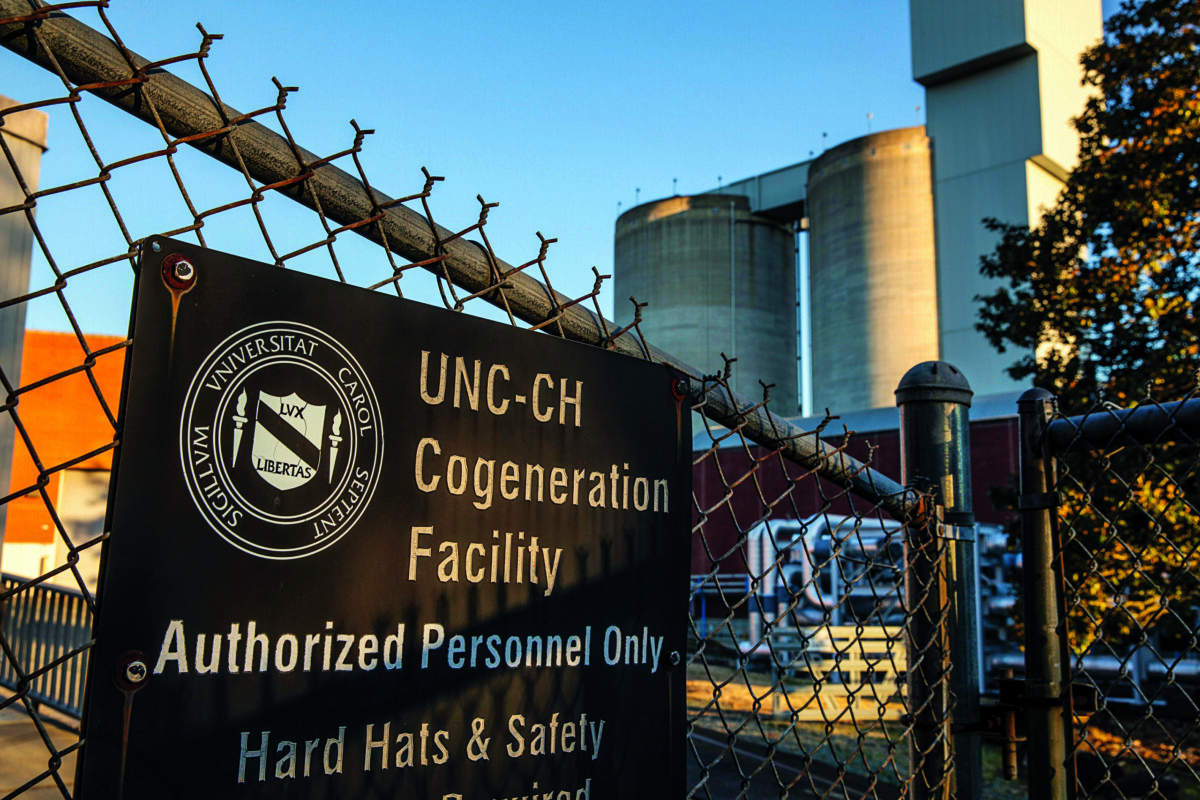
The University said the plant has safety processes to minimize local exposure to emissions. It has special boilers that operate up to 1,000 degrees Fahrenheit lower than typical utility boilers, which significantly reduces air emissions, according to a UNC Media Relations statement. Using limestone sorbents in the combustion process captures sulfur, chlorine and other acid gas compounds. Filtration systems control particulate matter. Continuous air quality monitoring ensures the plant meets or exceeds regulatory emission limits, the University said. (Photo: Carolina Alumni/Ira Wilder ’24)
In 2020, then-Chancellor Kevin Guskiewicz wrote in a letter to The DTH that climate action was a priority of his administration. Under his leadership, the University completed a project that allowed the plant to burn more natural gas to decrease coal use, reducing greenhouse gas emissions by 5 percent. In a 2021 update to its Climate Action Plan, the University acknowledged it had missed Thorp’s goal to end coal use by 2020 and restated its intent to end coal use “as quickly as is technically and financially feasible.” The plan set a target of achieving net-zero greenhouse gas emissions by 2040, a decade earlier than originally planned in its original Climate Action Plan, primarily by phasing out coal. The plan stated the University aimed to reduce its carbon emissions from energy production by 60 percent by 2025, with the ultimate goal of eliminating fossil fuels from the facility entirely. It didn’t say how it would achieve the goal, though Piehler said the plant was a priority. He also said Chancellor Lee Roberts’ administration has been supportive of his office’s sustainability efforts at the power plant, across campus and beyond. Today, the Cameron Avenue plant annually burns the lowest amount of coal it has in more than three decades despite campus growth.
The Climate Action Plan also included significant energy efficiency upgrades to campus buildings, transitioning to renewable energy sources, such as on-site solar systems, adding electric vehicles to the campus fleet and reducing the University’s waste.
Alternative fuel search
The latest effort to reduce the plant’s reliance on coal occurred July 2024, when the University proposed a plan to state regulators for permission to burn up to 22,000 tons of engineered pellets made from hard-to-recycle materials such as diapers, dust cloths, surgical gowns, adhesive labels and laminated paper — over a yearlong trial period.
Burning paper and plastic for power has been legal since 2011. Executives at Wisconsin-based Convergen Energy, which planned to produce the pellets, said their product emits less pollution than coal. A draft air permit indicated the pellets would have mixed consequences and could increase the volatile organic compounds associated with health problems, according to the Environmental Protection Agency. Convergen disputed burning pellets released such compounds.
At a public hearing in January led by the N.C. Department of Environmental Quality’s Division of Air Quality, some speakers were alarmed by the ambiguity of the pellet’s potential effects. Fifty-four community members — including high school and college students, residents, council members and scientists — spoke against the University’s permit application. No one spoke in favor of it.
After the hearing, while processing the University’s application to burn the pellets, the Department of Air Quality in late February asked the University for more information about emissions estimates. On March 10, the University withdrew its application. The University’s Chief of Staff Christi Hurt ’93 (’98 MPA, ’21 DRPH) said in an email to the Department of Air Quality that the University determined the pellets “cannot meet fuel requirements (transportation, availability, consistency) set by UNC-Chapel Hill for [the power plant].”
Finding alternatives to coal has been a difficult search. The application to burn engineered pellets was the first time Carolina made concrete steps to test coal alternatives since 2012 when it tested burning wood pellets. It abandoned that initiative when “certain assumptions about wood pellet technologies failed to materialize,” according to the University.
As for its latest attempt, Piehler said “the university was wise and took actions based on the information they had, and as more information was gained and weighted the way that the decision should be made, the decision was changed. So, I think that is learning as you go.”
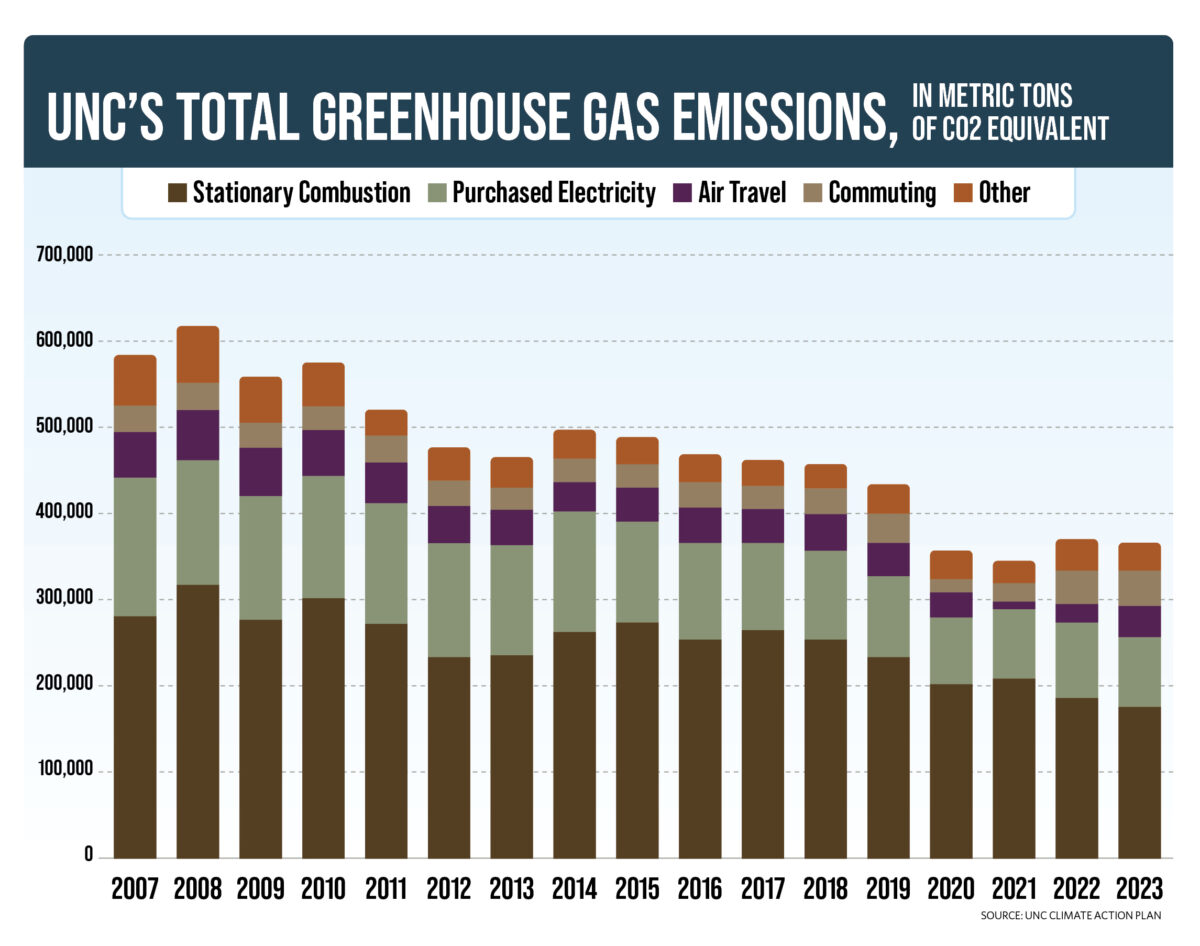
Progress has been made. The plant burned about 64 percent less coal between 2007 and 2022, relying more heavily on natural gas. Between 2007 and 2023, the University had a 37 percent decrease in greenhouse gas emissions. … The plant has received multiple accolades from the EPA for superior environmental performance.
Today, the plant still burns coal and natural gas, which accounts for 60 percent of the University’s fuel consumption. UNC estimates it will increase its reliance on natural gas as it reduces the use of coal and it explores the use of alternative fuels.
Progress has been made. The plant burned about 64 percent less coal between 2007 and 2022, relying more heavily on natural gas. Between 2007 and 2023, the University had a 37 percent decrease in greenhouse gas emissions, according to its greenhouse gas inventory report.
The University said the plant has safety processes to minimize local exposure to emissions. It has special boilers that operate up to 1,000 degrees Fahrenheit lower than typical utility boilers, which significantly reduces air emissions, according to a UNC Media Relations statement. Using limestone sorbents in the combustion process captures sulfur, chlorine and other acid gas compounds. Filtration systems control particulate matter. Also, continuous air quality monitoring ensures the plant meets or exceeds regulatory emission limits, the University said.
The plant received multiple accolades from the EPA for superior environmental performance. In January, Carolina became the first large research university to earn a gold rating from the Association for the Advancement of Sustainability in Higher Education in sustainability tracking, assessment and rating. It is one of 177 schools with a gold rating. Fourteen schools have earned the higher platinum rating, and each of the platinum universities in the United States has a cogeneration plant on campus.
As early as 1992, UNC conducted numerous analyses of switching to natural gas, and all concluded the change would be either cost prohibitive or not feasible due to inconsistent supplies of gas.
Piehler said gas suppliers can, and most likely will, curtail the availability of gas due to market conditions, making the fuel unreliable as a sole fuel source. Still, natural gas is part of the University’s alternative fuel analysis it announced after withdrawing the pellet application in March, he said, but the University still doesn’t know how it will move completely away from coal. “Getting rid of coal is definitely the interim goal, but the big goal is carbon neutrality,” Piehler said.
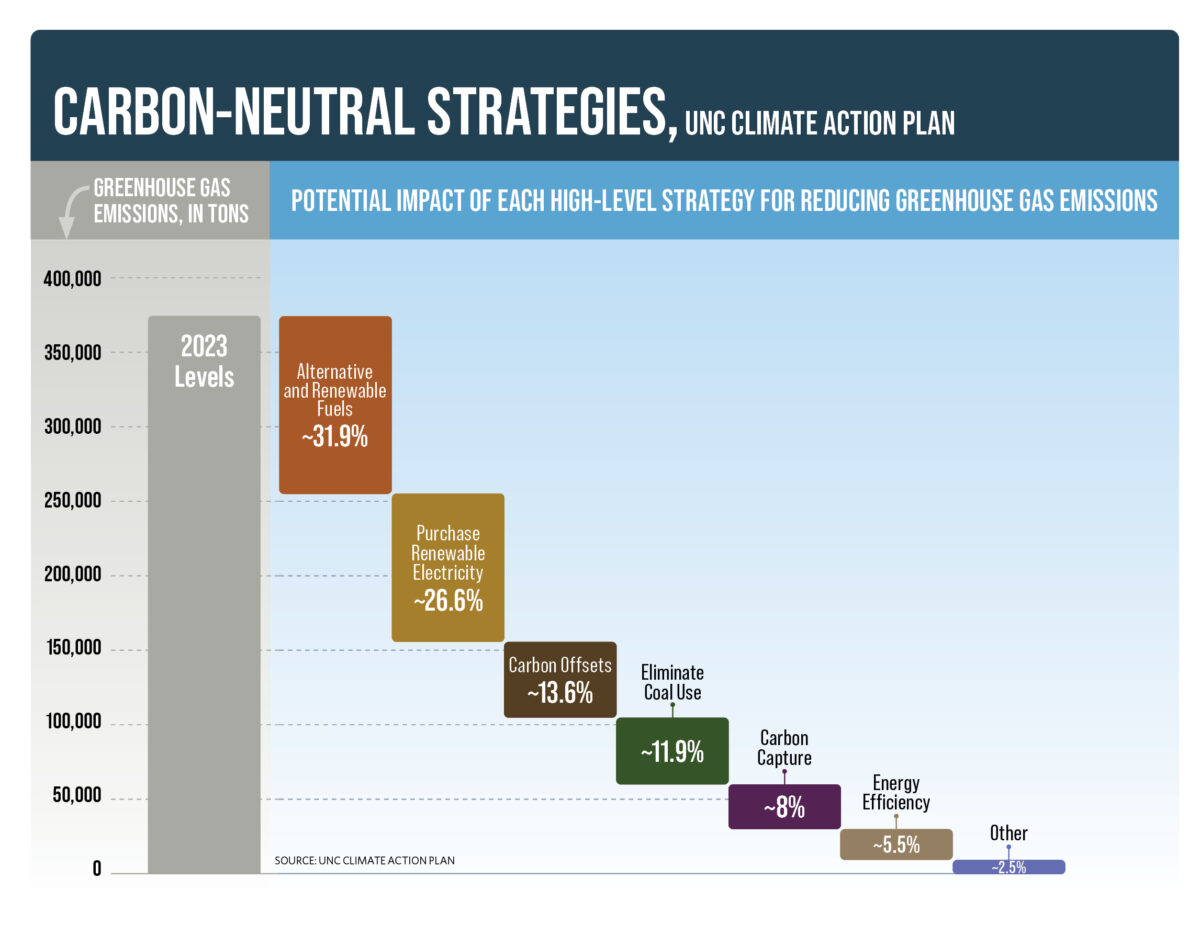
The University updated its Climate Action Plan in 2021, amending the original version that guided the University’s environmental policy since 2009. The plan was more aggressive than its predecessor, declaring a strategy to reduce the University’s greenhouse gas emissions and reach carbon neutrality by 2040, a decade earlier than the original goal. Chief Sustainability Officer Mike Piehler ‘90 told The Daily Tar Heel in 2021 that the remaining emissions will be the most difficult to eliminate, but the campus sustainability initiative is continuously planning ways to reduce emissions as soon as possible, at the cogeneration facility, on campus and beyond.
UNC has pursued other means to meet the emission neutrality goal, including decreasing commuter emissions by investing in local transit systems and reducing air travel emissions. Piehler said the chancellor’s office funded a feasibility study to evaluate the costs and benefits of developing a shuttle bus system to replace or reduce the University’s frequent flights to Washington, D.C. Solar power is another option, though not a total solution. Covering every University rooftop with solar panels would provide less than 5 percent of the electricity main campus requires, according to Piehler. In December, the University opened its first solar farm, spanning 3.7 acres of the former Horace Williams Airport. That meets about half of the energy demand of the Carolina North campus, which for now, is mostly maintenance and operations facilities. The University said the solar farm is helping campus avoid burning about 349,000 pounds of coal annually, and to Piehler, any coal reduction is a welcome one. “There are a lot of things that we’re doing really well, and we’re making good progress,” he said. “I’m excited to have support across the University to really look for what the next technological solution is going to be. We can continue to improve, we hope, with the infrastructure we have.”
The University said it is working on an “energy roadmap” to meet sustainability targets and identify potential alternative energy sources. It expects to complete the report early next year.
The plant’s next steps remain unclear, but it continues to operate under its existing air quality permit. The fuel sources for power plants are finite — coal, natural gas, hydrogen gas, biomass (such as pellets), hydropower, wind, solar and nuclear — and each has its own varying costs and effectiveness to address the University’s needs. Piehler said finding alternative fuels “can be a bit of a challenge” because many stakeholders have varying opinions.
That challenge was succinctly summed up by former Provost Chris Clemens, who appeared at a student panel in 2023 to discuss the future of the University. A student asked Clemens whether the University would commit to being fossil-fuel free by 2050, according to The DTH. Clemens responded by asking the student to provide a roadmap that would get the University to that goal — “without breaking the laws of physics.”
The roadmap has yet to reveal itself.
Hearing the Community
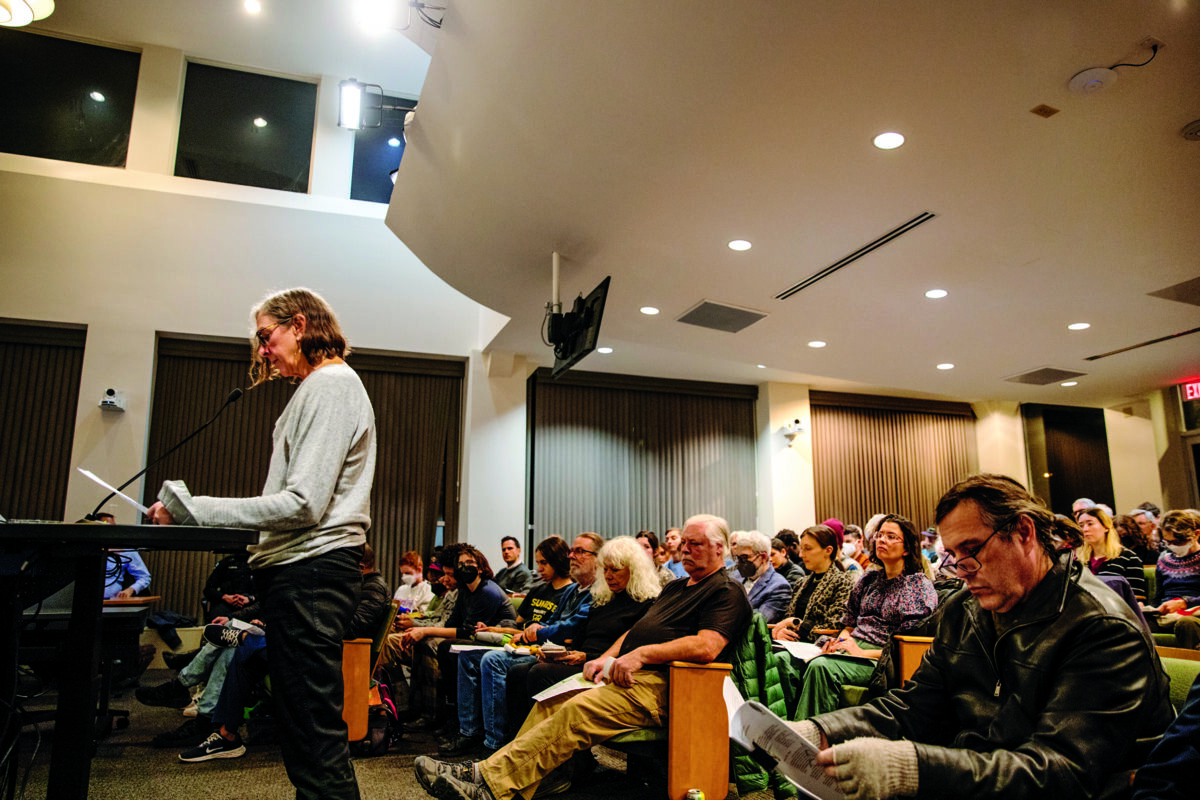
At a public hearing in January led by the N.C. Department of Environmental Quality, 54 community members — including high school and college students, residents, council members and scientists — spoke against the University’s application for a permit to burn engineered pellets made from hard-to-recycle materials such as diapers, dust cloths, surgical gowns, adhesive labels and laminated paper. No one spoke in favor of the plan. (Photo: Carolina Alumni/Ira Wilder ’24)
Finding alternative fuels to coal has proven to be a difficult task. Each alternative has its pros and cons. That was evident at a public hearing held in Chapel Hill in January to discuss UNC’s plan to burn pellets made of hard-to-recycle waste at the University’s cogeneration plant. One alleged drawback dominated the conversation: PFAS, or perfluoroalkyl or polyfluoroalkyl substances, often referred to as “forever chemicals.” The compounds don’t easily break down and can contaminate water sources.
Exposure to PFAS emissions could pose a public health risk, according to the Environmental Protection Agency. The N.C. Department of Environmental Quality reported that the cogeneration plant would emit no more than 1.2 pounds of PFAS per year by burning the pellets.
Jennifer Hoponick Redmon, a senior director of environmental health and water quality at RTI International based in Research Triangle Park, said at the hearing 1.2 pounds of PFAS emitted annually could contaminate 14 trillion liters of water, or about 6 million Olympic-sized swimming pools. “This is a short-sighted plan at the cost of public health that doesn’t address the long-term need for sustainable and safe energy,” she said.
Steven Brooks, chief financial officer for Convergen Energy, the company that would have manufactured the pellets for UNC, told Inside Climate News the company does not use plastics containing PFAS, though data from a study in Wisconsin showed that out of 26 types of PFAS, four were found in water after Convergen pellets were burned. Brooks attributed that to “the greater environment,” not the burned pellets.
After the University told the state it was no longer pursuing the plan, Kym Meyer, a staff attorney with the Southern Environmental Law Center, told The News & Observer, “We’re delighted that they made this decision and listened to the community. It’s very heartening.”
— Ira Wilder ’24
Thanks for reading the Carolina Alumni Review
Carolina Alumni members, sign in to continue reading.
Not yet a member? Become one today.