Bird-Dogging Life
Posted on June 4, 2025On the trail of Erica Heller ’13
by Eric Johnson ’08
Listen to this story as read by ElevenLabs AI.

Erica Heller ’13 (Photo: Nigel Perry)
People find Erica Heller ’13 a little hard to believe.
I got to see this firsthand last October in the parking lot of the community center in Froid, Montana, a town in the far northeastern corner of the state, tucked in near the Canadian and North Dakota borders.
It was the night before hunting season kicked off, and Heller had driven the nearly 2,000 miles from her home in Richmond, Virginia, to be here. A small crowd had gathered in the chilly evening air outside after the annual Pheasant Opener Dinner. Dedicated bird hunters from across the country had just finished a $20 steak-and-potato meal, along with a raffle for booze and shotguns. Heller was outside tending to a pair of hungry dogs in the backseat of her Toyota 4Runner. An older man named Kurt meandered over and commenced a cheerful interrogation.
“What are you doing out here?” he asked.
“Hunting,” Heller told him.
“With who?” Kurt wanted to know.
“Myself,” Heller retorted.
Kurt looked in Heller’s 4Runner and saw water jugs, a sleeping bag, cooking supplies and hunting gear. He asked about guns, about different species of game, about the kinds of places Heller liked to hunt. She had ready answers.
“You have dogs?” Kurt finally asked. “Yes,” Heller said. She hunts with English setters.
Kurt leaned back a bit and stuck his hands in his pockets, taking all of this in as he surveyed Heller, pleasantly defiant, and contemplated a young woman who spends weeks at a time roaming the sparsely populated counties on Montana’s eastern edge, living out of an aging SUV and blasting pheasants out of the early morning sky.
“You’re kind of an adventurous person, then.” Kurt ventured. “That’s good. I like to see women hunters. And people who run dogs are different kinds of hunters.”
On that, at least, Heller and Kurt agreed.
An allergy to 9-to-5
There have been a lot of conversations like that over the years. Before the skeptical Montana hunters, there were the guys in taxidermy school, confused why a glamorous-looking Carolina alumna was enrolled at a community college in Troy, North Carolina, learning to preserve and mount dead birds. There are clients who scrutinize Heller’s work, incredulous that a young woman working from a home studio back east has become a sought-after taxidermist. And Heller’s own family wonders whether she might one day adopt a more conventional life and career, one that involves less blood and alone time in the wilderness far from home.
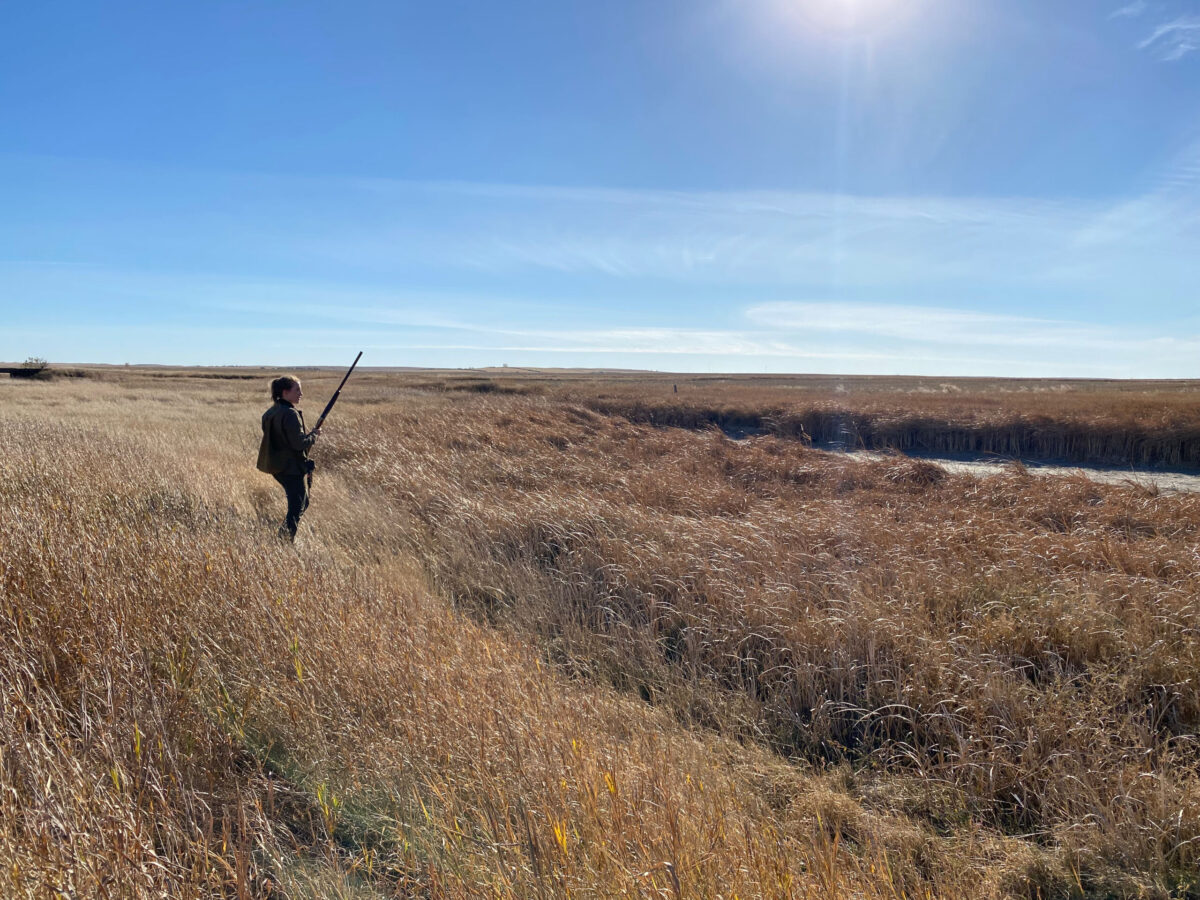
Before the skeptical Montana hunters, there were the guys in taxidermy school, confused why a glamorous-looking Carolina alumna was enrolled at a community college in Troy, Montana, learning to preserve and mount dead birds. (Eric Johnson ’08)
But Heller has tried convention and found it lacking. “There’s so much more to do in life,” she told me in Montana, explaining her allergy to any sort of 9-to-5 existence. “I don’t want to be in some building all day.”
Her parents worked in real estate and logistics, and she grew up in what she described as a comfortable suburban home in Greensboro. Heller started college at N.C. State University, intrigued by a program in bio-archeology she figured would put her on the path to becoming Jane Goodall. But she transferred to Carolina “because it looked cooler,” majored in journalism and then landed an internship at the N.C. Museum of Natural Sciences. While working in the collections department — studying animal skins and cleaning an elephant skull, among other oddities — she became hooked on the artistry of animal preservation. “I’m not interested in deer heads and hunting trophies,” she said. “I think of good taxidermy as a 3D painting — something beautiful, something that captures life and nature in a realistic way.”
She likes birds because of the detail and delicacy, the feathers and fine bone structure making them especially difficult to fashion well. Creating a taxidermied bird involves carefully removing the skin and feathers, building an anatomically accurate manikin, or synthetic skeleton, and placing the skin and feathers back in a way that looks true to life. And that’s before creating a mount, which is often designed to mimic a bird’s typical habitat, and which can become another detailed artistic project. A single specimen can take several days to complete.
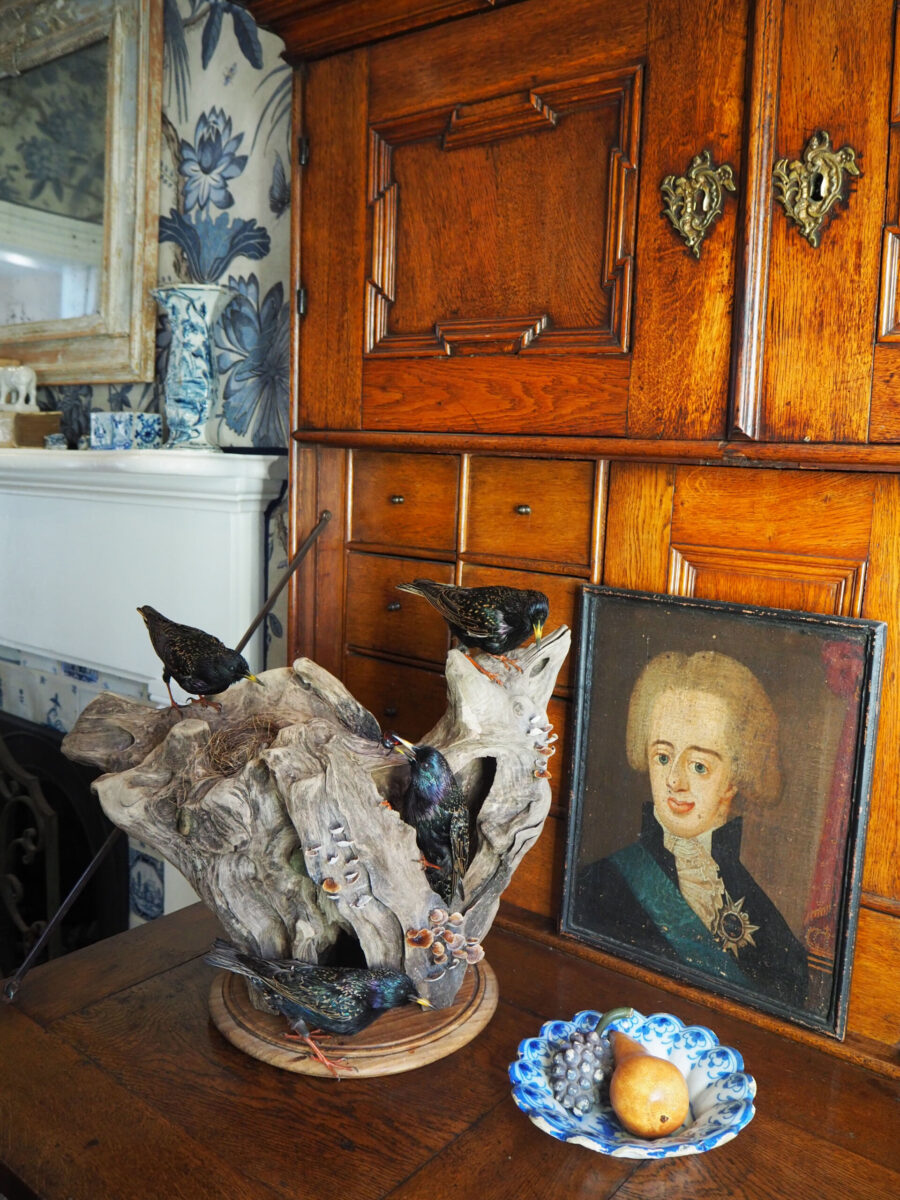
“I’m not interested in deer heads and hunting trophies,” Heller said. “I think of good taxidermy as a 3D painting — something beautiful, something that captures life and nature in a realistic way.” (Photo: Erica Heller ’13)
After Heller finished taxidermy coursework at Montgomery Community College (UNC lacks a taxidermy program, amazingly enough), she apprenticed with a taxidermist in New Orleans who later referred her to Dale Manning, a renowned Montana artist and winner of multiple awards at the World Taxidermy Championships. These competitions are serious business, with 18 separate categories — including game birds, non-game birds and waterfowl — and awards for habitat design and “interpretive taxidermy,” which puts a premium on creative displays.
Spending time in Montana taught Heller the importance of observing live birds in their habitat before trying to represent them well in death. The way a duck moves across the water, or the stretch of a pheasant’s neck when it flushes from the grass, or how feathers change color through the seasons — all these subtleties are what separates a stuffed animal from a compelling piece of realistic art.
Before long, she was accompanying friends and clients on hunts, then venturing out on her own. She now splits her time between taxidermy work in Richmond, which puts her closer to family and friends, and meandering across Big Sky Country, hunting and observing for several months of the year. During pheasant season, that means waking up before dawn in the roof tent on her 4Runner along some remote dirt road and gearing up to walk the brush lines with her dogs, Arrow and Minnow.
Sometimes she gets to take a shot or two, sometimes not. “I’m just happy to get out, to get the dogs out, to let them get a good run in,” Heller said after a long morning hunt that resulted in a few gun blasts but no hits. “My life revolves around my dogs, pretty much.”
Canine actualization
After a few days with Heller, it became clear how true that is. Heller doesn’t hunt because she wants the birds; taxidermy clients almost always supply their own. She hunts because she loves her dogs. Her attitude toward her English setters is both warm and philosophical. The purpose of a bird dog is to hunt, and, therefore, the purpose of a bird-dog owner is to provide ample opportunities to hunt. She is aiming for canine actualization. “Helping my dogs develop their own natural ability, that’s all I want,” Heller told me, stepping lightly through the Montana dawn as Arrow bounded ahead. “When I got her, she gave me more purpose. It kind of connected everything together.”
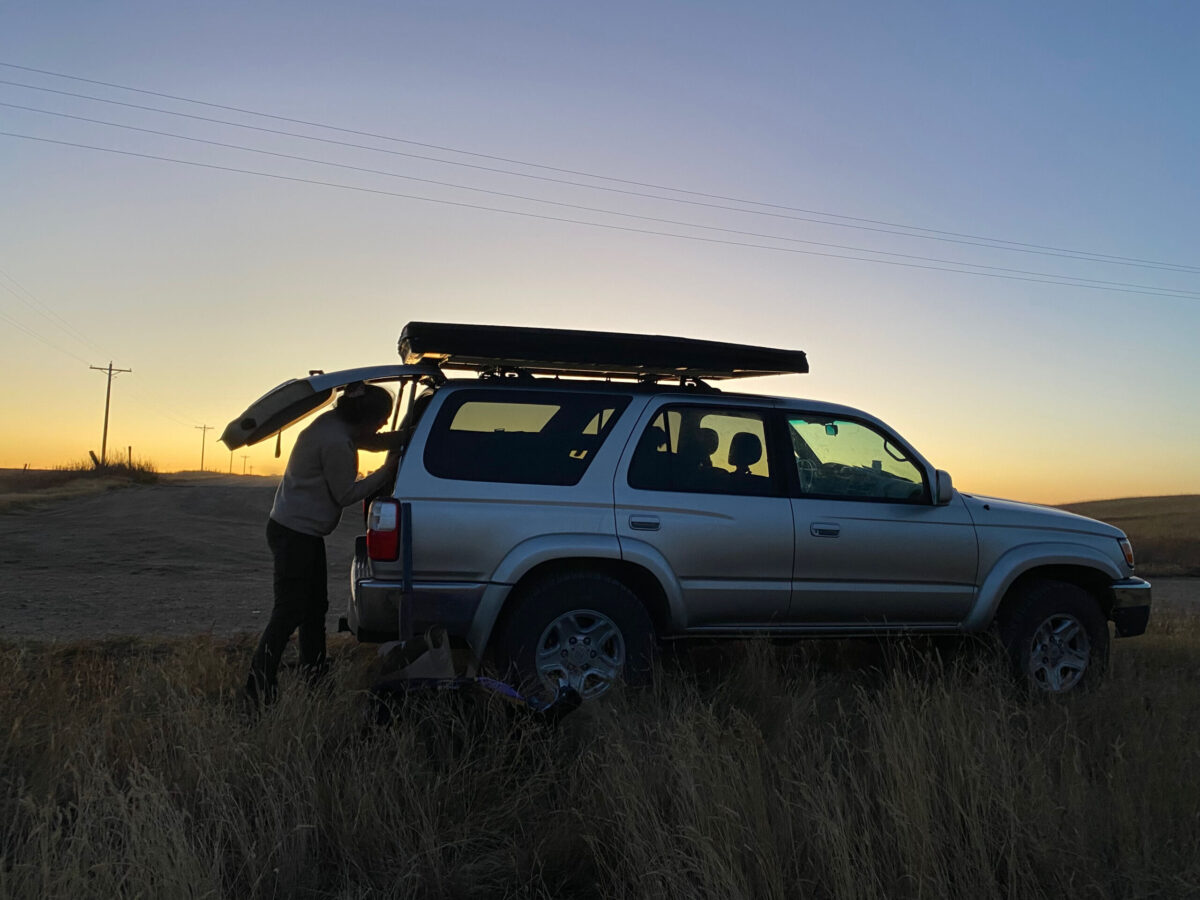
During pheasant season, Heller wakes up before dawn in the roof tent on her 4Runner along some remote dirt road. Sometimes she gets to take a shot or two, sometimes not. “I’m just happy to get out, to get the dogs out, to let them get a good run in,” she said. (Eric Johnson ’08)
Birds, taxidermy, slow time in sweeping landscapes — the dogs became the cornerstone of a lifestyle Heller had been angling toward for a long time. “It’s like an Andrew Wyeth painting, like something out of a storybook,” she said, gesturing to the morning light breaking over endless golden fields, “This — this is what I wanted. There’s no therapy in the world as good as this for me. Some people need therapists; I need this.”
More than once, Heller alluded to an over-revving mind that craves openness and quiet. She drives her old 4Runner confidently across rutted tracks through the Montana wilderness, but she finds it nerve-wracking to navigate traffic back in Richmond. She connects easily with strangers — even incredulous ones — but relishes long hours of silence, walking for miles along a dry creek bed or a brush line without another person in sight, and no sounds but the rush of wind over cattails and the crunch of dried grass underfoot. “I think I’m a little more independent than most people,” she ventured at one point. “Like, I could easily keep doing this for the rest of the year.”
There’s certainly a meditative quality to the hunting grounds Heller likes to frequent, vast expanses of prairie with nothing on the horizon except more. Much of eastern Montana feels like a place out of time, with rail crossings and grain silos and weathered wooden buildings that seem unchanged for a century. Roosevelt County, where the town of Froid is located, is twice the size of Rhode Island with a population that could fit in the lower half of the Dean Dome. When I stopped at a gas station, the clerk said it was one of the busiest days she could remember, with all the people visiting for the start of hunting season. I saw not a single other human during the 15 minutes it took to pump gas and drink a cup of coffee.
Interior design with feathers
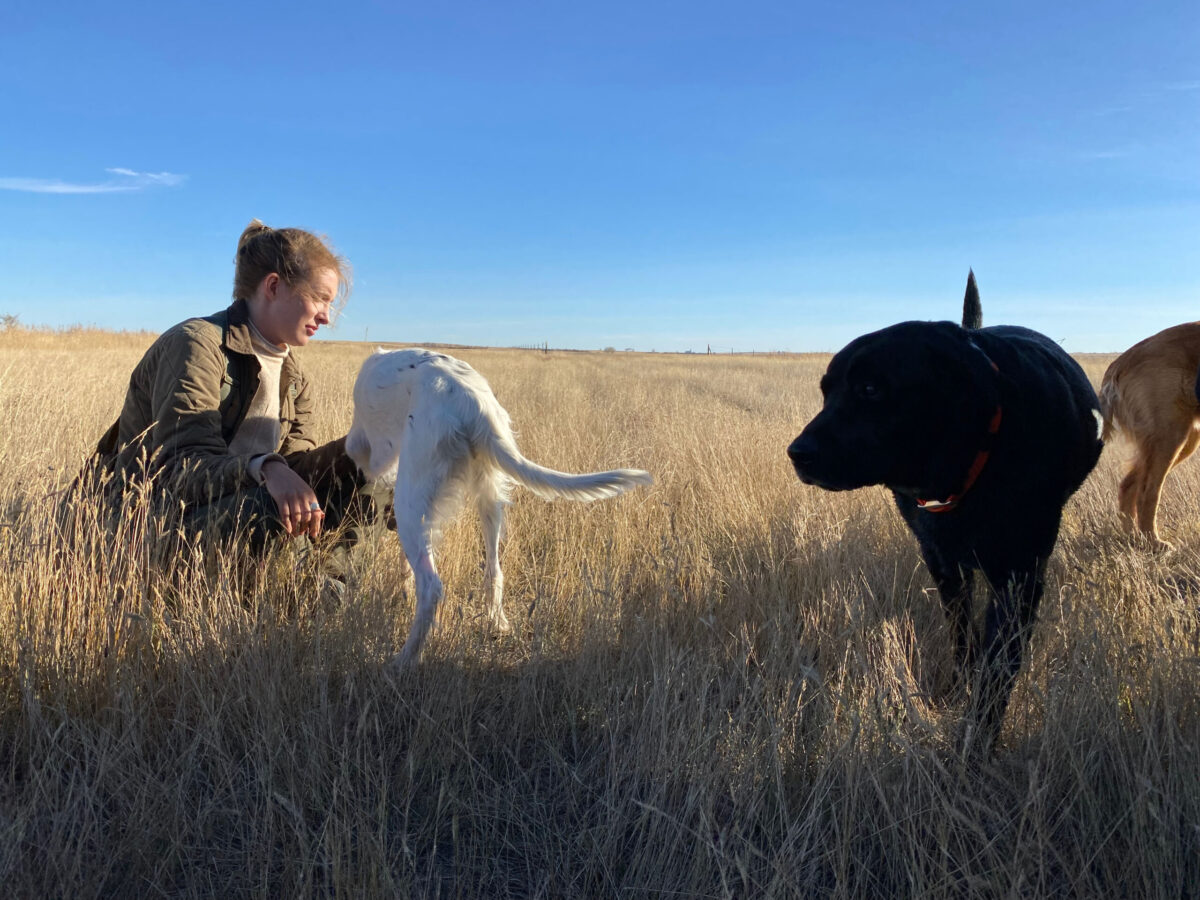
Heller’s dogs became the cornerstone of a lifestyle she had been angling toward for a long time. “It’s like an Andrew Wyeth painting, like something out of a storybook,” she said, gesturing to the morning light breaking over endless golden fields, “This — this is what I wanted. There’s no therapy in the world as good as this for me. Some people need therapists; I need this.” (Eric Johnson ’08)
After a long morning of hunting, Heller was back at base camp in Froid, leaning against the front tire of someone else’s camper van and explaining where she wants to take her carefully cultivated talent in the taxidermy world. She showed me a photo on her phone of a Victorian-style taxidermy cabinet, a big display with several different birds mounted across a natural-looking burl of wood. During Britain’s imperial heyday, it was common for wealthy homes to feature dioramas or cabinets of extraordinary specimens from across the world, with well-crafted taxidermy serving as a marker of status and taste.
Heller envisions a modern take on that era. “Interior designers,” she said. “That’s who I study the most, because I want to apply my work to that realm.” That’s why she comes back from her hunting expeditions not just with bird carcasses, but with collections of feathers, piles of beautiful rocks and pebbles, gnarls of fallen wood and photographs of sun-bleached barns crumbling into the prairie. She hunts for an aesthetic alongside the game.
Heller’s goal isn’t to serve elite hunters or even specialized museums, which are the traditional markets for realistic bird taxidermy. She wants to conquer high-end hotels, boutiques and art galleries. She wants to take the art of animal preservation away from its creepy or redneck connotations — “guys in camo hats with dead mammals in their basements,” she said — and bring it back to the realm of high art. “I want to be able to do taxidermy to an extremely advanced level, where it’s perfect and it’s going to last a very long time,” she said. “And you can use it to make a space beautiful.”
In some ways, whether or not Heller manages that ambitious melding of art, architecture, design and dead animals is just a detail to her. She wants to be good at what she does, but she has also come to see taxidermy as the bill-paying part of a freer lifestyle. “I work really hard so I can do this,” she said, referring to the long stretches of time wandering the wide-open West. “This is the work-life balance. I work crazy hours back in Richmond. I get things done, then I pack up and go back to Montana.”
As she talked, Heller’s hands moved carefully and methodically across the grass, sweeping up dry clippings. Within a few minutes, she had sculpted a perfect little bird’s nest, which she left resting on the ground.
Eric Johnson ’08 is a writer based in Chapel Hill. He works for the College Board, the UNC System and occasionally for UNC.
Thanks for reading the Carolina Alumni Review
Carolina Alumni members, sign in to continue reading.
Not yet a member? Become one today.