Professor and Team Unearth Ancient Coins in Israel
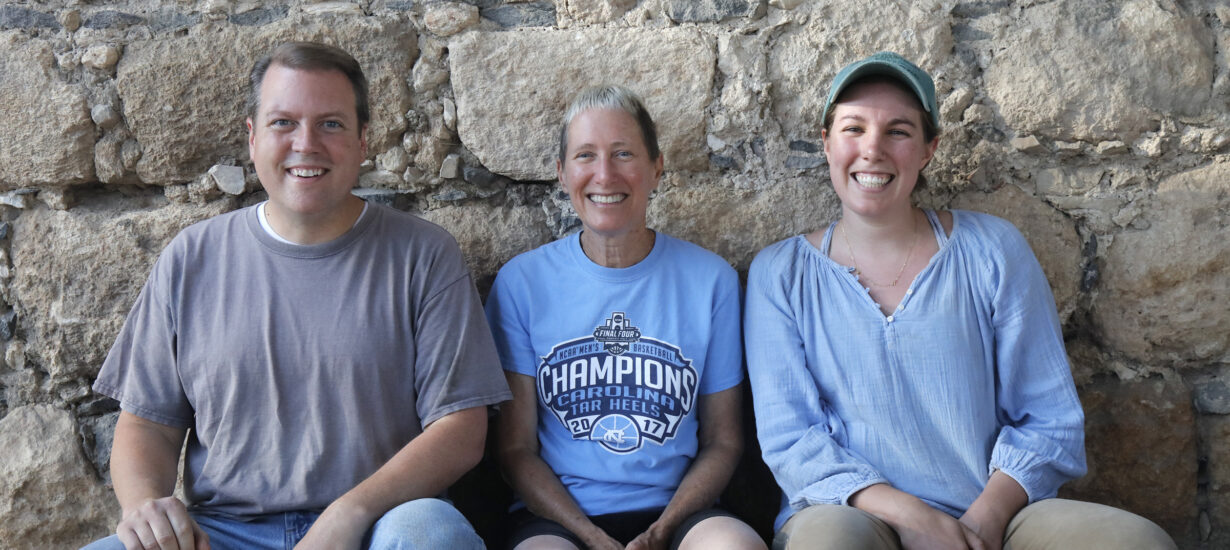

(From left) Matthew Grey, Jodi Magness, and Jocelyn Burney at the Huqoq excavations in Israel in 2023.
(Photo: Jim Haberman)
In 2012, UNC professor Jodi Magness was in her second summer of a UNC-led archaeological dig at Huqoq, an ancient Jewish village in Israel’s Lower Galilee, when she sent an email to a colleague: “Mosaics 911 Emergency. Need You Here.” That initial discovery was followed by years of excavations, until the dig ended in summer 2023. (See “Answers Unearthed in Israel,” September/October 2023 Review).
Researchers are now beginning to publish their findings, including the discovery of a hoard of gold and silver coins. “The goal of archaeology is not excavation; it’s publication,” Magness said in a University news story. “I have two shipping containers of excavated materials that need to be analyzed. My team and I will be coming back for years in the summers to Jerusalem to work on that material for publication.”
Magness, Kenan Distinguished Professor for Teaching Excellence in Early Judaism in UNC’s College of Arts and Sciences and a faculty member in the Carolina Center for Jewish Studies, has been at Carolina since 2002 and has participated in more than 20 excavations in Israel and Greece.
Hundreds of students from Carolina and other participating schools have helped on the site, atop a rocky hill, about four miles northwest of the Sea of Galilee. After more than a decade of careful digging, the remains of two synagogues, artifacts and multiple 1,600-year-old mosaics were unearthed, including a colorful mosaic depicting two female faces with a Hebrew inscription (see “Digging for Clues: How Did Jews and Early Christians Coexist?” January/February 2014 Review) and one depicting the first non-biblical story ever discovered in an ancient synagogue, a depiction of the meeting between Alexander the Great and the Jewish high priest. (See “Unearthing an Episode in Ancient Jewish Art,” September/October 2022 Review).
The findings often make headlines, and in 2021, National Geographic named the Huqoq mosaics among its list of “100 Archaeological Treasures of the Past.” The University said the findings are “revolutionizing our understanding of Jewish religious and cultural life.”
Researchers revealed earlier this year they discovered a hoard of 364 silver and gold coins and a silver ring, hidden for centuries in two ceramic jugs under fallen walls. “The discovery of so many valuable coins (plus jewelry) in a small rural village in Galilee is unparalleled and puzzling,” Magness told the University in a statement. “It shows that in the late medieval period, Huqoq/Yaquq was connected much more to the outside world than we knew previously.”
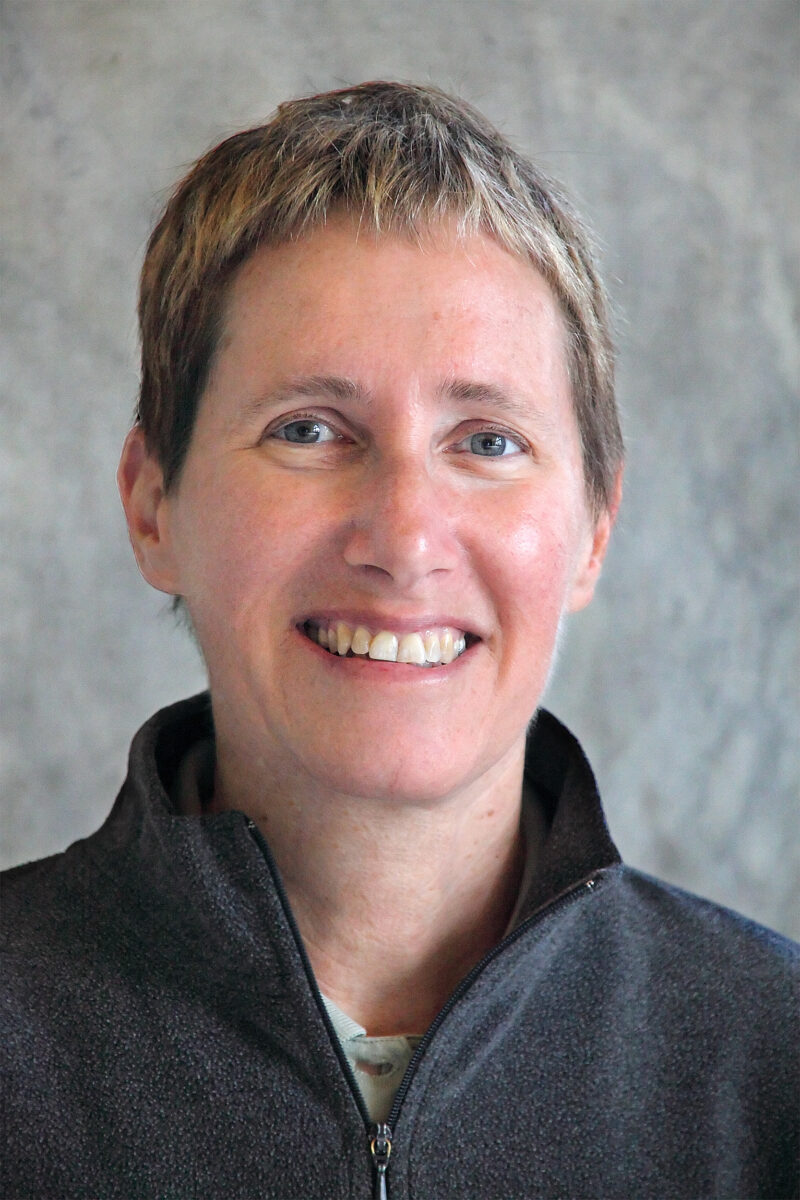
The findings also included a silver Merovingian (a French dynasty of kings) architectural ring depicting a miniature domed building. Magness said it was originally made in Western Europe in the 6th to 8th centuries and may have been used later as a Jewish wedding ring.
Archaeologists, like Magness, her colleagues and her students, use the findings to contextualize life centuries ago. For example, Magness said Huqoq’s late 4th- to early 5th-century synagogue is significant “because if these buildings were built in the earlier period, they were built in a pagan Roman context. Our synagogue was built when the Roman Empire was under Christian rule, a period that scholars believed was oppressive to Jews and during which Jewish settlements were declining, yet clearly this village was flourishing and prospering.”
Specialists are preparing to publish information about the most recently discovered mosaics. Magness said researchers are also preparing to publish the results of radiocarbon dating of organic samples relating to the construction of the late Roman and late medieval synagogues, and a team of scientists in Europe are examining rat bones from the excavations to see if there are signs of the Justinianic plague. If successful, it will be the first time archaeological evidence has identified the plague, which according to written sources ravaged the eastern Mediterranean in the mid-6th century.
In addition to coins and mosaics, researchers also discovered pottery and other artifacts, which help researchers date their findings. Pottery also helps researchers understand what people ate and how they prepared their food. The absence of pig bones is typical of Jewish and Muslim populations.
“If we combine the information that we get from all the different types of finds,” Magness said, “we can reconstruct a fairly complete picture of ancient life in the village.”