Purpose for the People
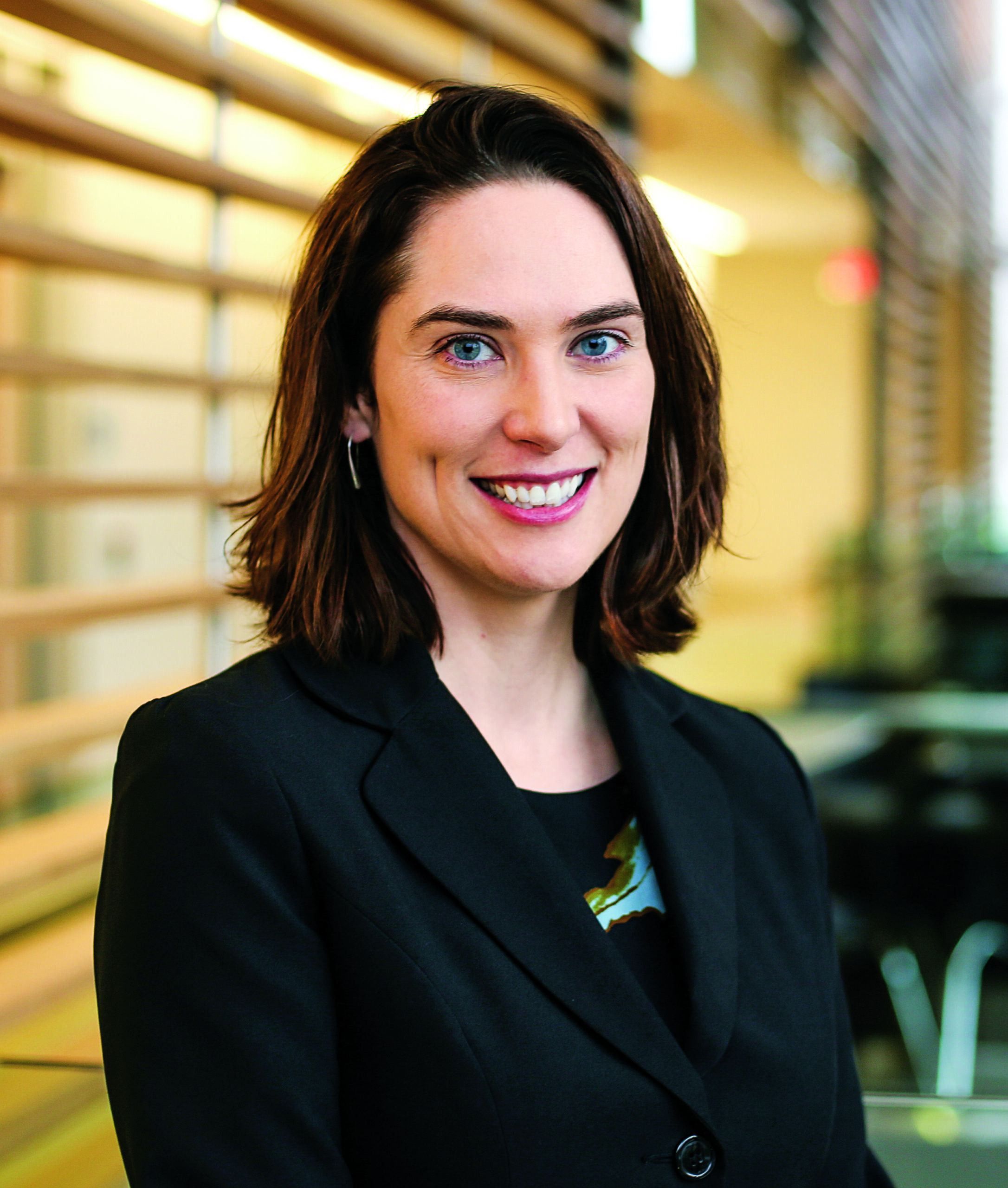
Heather Aldersey ’07 is a professor in the School of Rehabilitation Therapy at Queen’s University in Kingston, Ontario, Canada. (Photo: Heather Aldersey ’07)
If it weren’t for the Morehead Scholarship, Heather Aldersey ’07 might have never delved into a research area that has motivated her for two decades — improving support systems for individuals with disabilities.
While in high school in Port McNeill, a quaint city at the northern tip of Vancouver Island in British Columbia, Aldersey applied for several scholarships, including the Morehead (now the Morehead-Cain Scholarship). She applied to Canadian schools and learned she got a full scholarship for several of them, but she wasn’t swayed. While she didn’t know much about UNC, or North Carolina for that matter, when Carolina informed her that she was awarded the scholarship, it was too good an offer to pass up.
Aldersey majored in international studies and French, and she wrote her honors thesis under the mentorship of Bereket Habte Selassie, now a professor emeritus of African studies and law. Selassie helped Aldersey land a senior-year internship with a United Nations peacekeeping mission in the Republic of the Congo.
Her experience there exposed her to the struggles of the disabled. “I saw how people with disabilities were often the most marginalized,” said Aldersey, now a professor at the School of Rehabilitation Therapy at Queen’s University in Kingston, Ontario. “I spoke to the families of those with disabilities, folks who were caring and strong advocates and were struggling with supports and resources to do the best they could for their family members with disabilities.”
Aldersey was inspired to explore an under-recognized nuance of disability research: How can families, support groups and community partners best meet the needs of people with intellectual and physical disabilities? It’s a mission the government of Canada has recognized with a distinguished honor: the Canada Research Chair in Disability-Inclusive Development, which Aldersey has held since 2018. “I really want to work to support people with disabilities around the world,” she said. And she’s convinced the best way to do this is through working closely with families that have the most at stake.
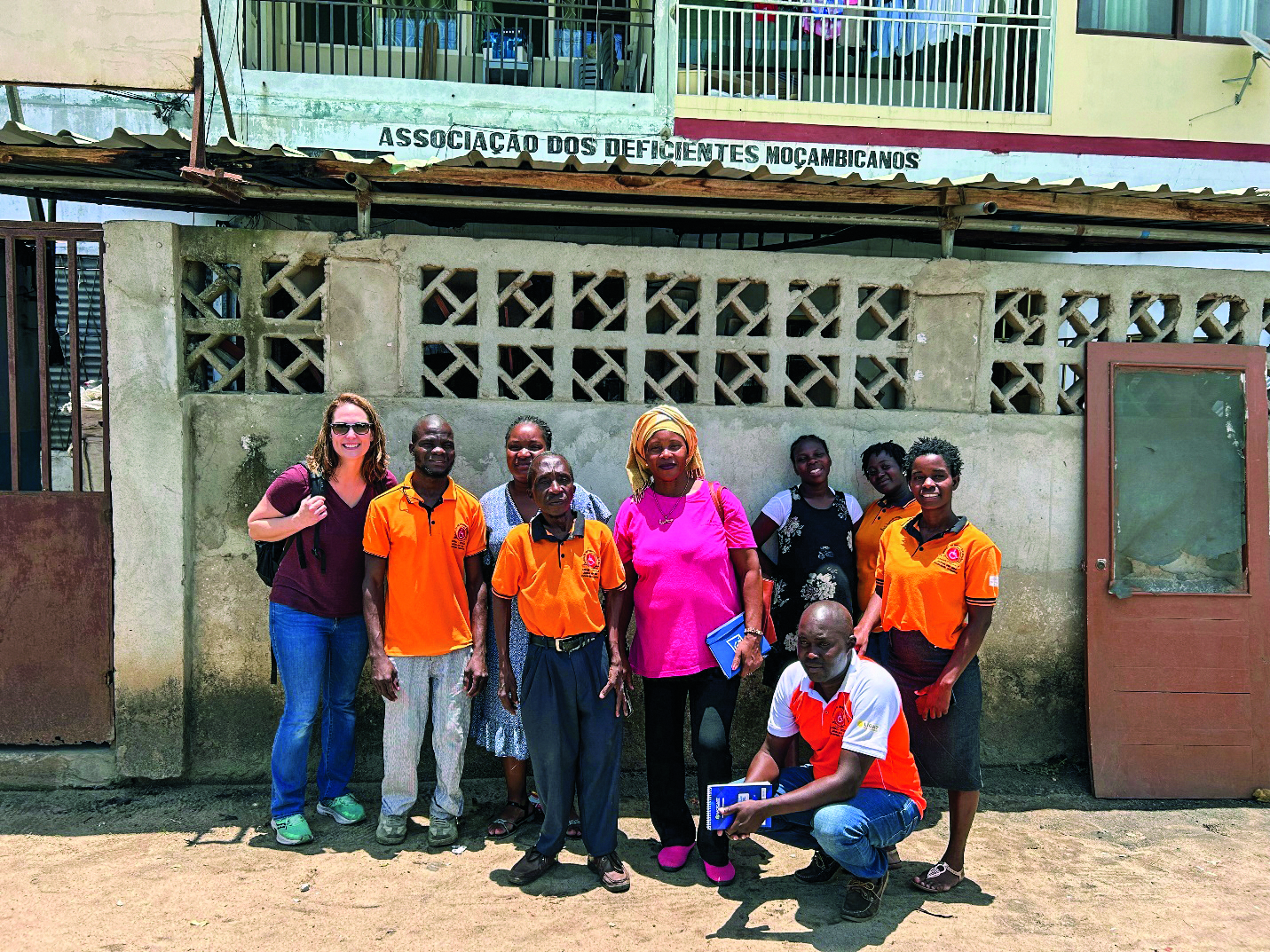
Aldersey with community partners in Mozambique.
While at Queen’s, she’s led dozens of studies and published reports, including several on disability policies in Africa, access to government-led support for children in Bangladesh and barriers for students to succeed in elementary schools in Ethiopia.
Her dissertation thesis led her to focus on Africa while completing her PhD at the University of Kansas. Several professors told Aldersey they either didn’t do that kind of disabilities research or they didn’t want to go to Africa, but she found willing advisers in professors Ann and Rud Turnbull, both former UNC faculty. They encouraged her to research how support systems rallied around (or failed to help) those with disabilities in Africa.
“Those were truly some of the best years of my life,” Aldersey said. She’s worked in Africa ever since. She helped create the first undergraduate occupational therapy program at the University of Gondar in Ethiopia in collaboration with Queen’s University.
“They didn’t have that as a profession in Ethiopia, and now they do,” she said. “I’ve seen how occupational therapists can impact so many families, and it’s great to see how this sector will be folded into the wider health care system in Ethiopia.”
Her most recent research project, funded through the Canadian government, focuses on how several countries balance natural supports (families, friends and communities) and formal services (payment-focused programs led by professional or government-based organizations). She will use case studies from Canada, the U.K., Bangladesh, Mozambique, Ethiopia, Guatemala and the United States.
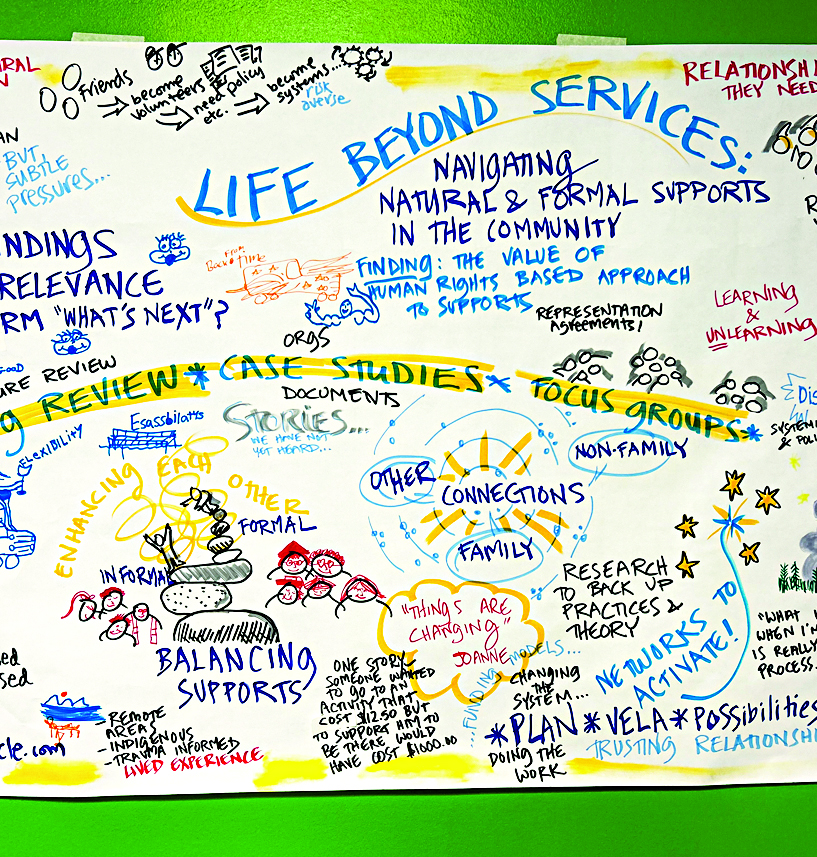
When Aldersey presented research on disability support in Canada, a team made up of one person with an intellectual disability and one without a disability did sketchnoting to share the findings.
For instance, she’s studying a U.K. organization that connects family members in peer support circles, whether those include pub nights for fathers, breakfast clubs or choir evenings. “Whatever the program, they enable conversations about their children so they can all help support each other,” she said.
Her team will attempt to answer questions such as: How does this programming function? What’s the impact on families? What are its unique features? And what can we learn to replicate the model?
The study riffs off what Aldersey and her colleagues have unearthed within several Canadian organizations, which led her to recognize how “this programming reduces isolation for parents and gives them both informational and emotional support.”
In March 2025, she received a fellowship to undertake the project, releasing her from her teaching obligations at Queen’s and allowing her to focus on making sure the research is relevant to the communities she works with.
“When I learn families have different opportunities or support systems for their children,” she said, “that really fills my cup.”
— David Silverberg
Thanks for reading the Carolina Alumni Review
Carolina Alumni members, sign in to continue reading.
Not yet a member? Become one today.