Take It to the Mat
Posted on May 29, 2026Josh Lee ’04 leads an underdog, all-girls freestyle wrestling team in the Bronx.
by Ira Wilder ’24
photos by Calli Westra ’24
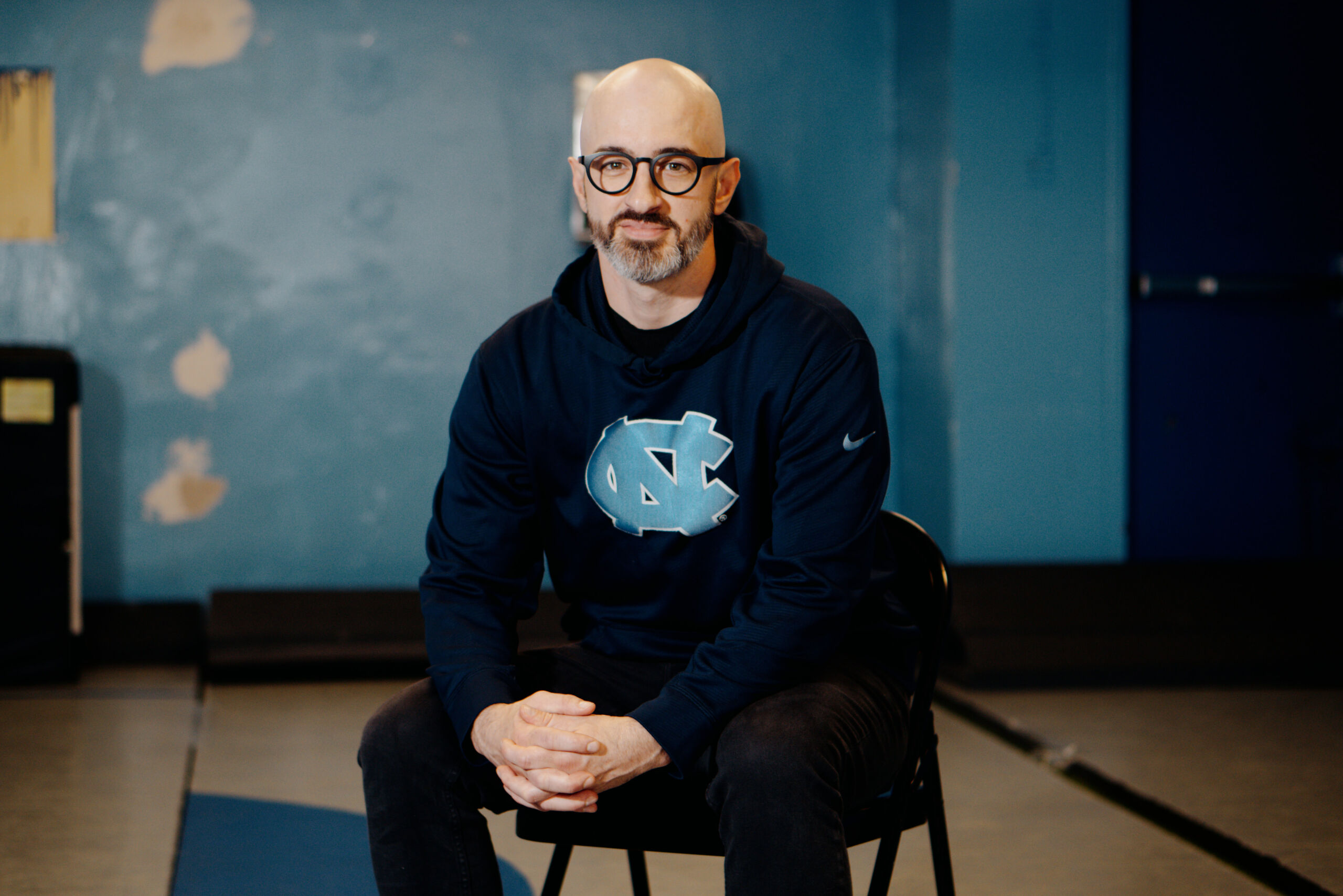
“Teaching in the South Bronx feels like you’re pushing a boulder up a hill in a rainstorm, and you just keep sliding back no matter how hard you work,” Lee said. “It feels like the odds are stacked against you, and no matter how hard it feels for you, it’s way harder for the kids.”.
Josh Lee ’04 found his purpose in the Bronx, but he grew up in a trailer on a dirt road in Johnston County.
“We eventually moved up to a double-wide,” Lee said. “We lived in the country, so we had a garden. My uncles would hunt deer and rabbits, so we always had food.”
As a kid, he felt destined to work the land like the four generations of farmers that preceded him, but he excelled academically in high school and decided to pursue college. He was a lifelong Duke fan until the first time he visited Carolina. “The energy, the people, the campus, I mean, what’s not to love,” Lee said. “I felt there was unlimited opportunity at UNC. My curiosity was piqued 100 percent. I wanted to stay.”
He had never stayed in a hotel before he interviewed for the Morehead Scholarship in Chapel Hill. He received the scholarship, enrolled at Carolina and walked on to the wrestling team.
Off the mat and outside of class, Lee spent most of his time volunteering for Nourish International, a nonprofit he co-founded with teammate Tommy Thekkekandam ’04 and Thekkekandam’s future wife, Sindhura Citineni ’04 (’10 DDS), to fight poverty.
Today, he’s still helping his community, and he’s still on the mat nearly every day, leading New York City’s first and only all-girls freestyle wrestling club, the subject of an award-winning documentary released last year.
Purpose in the city
After graduating from Carolina, Lee floundered among office jobs. “I would work, make some money and travel,” he said. He felt purposeless.
Chuck Lovelace ’77 (’79 MA), who for decades led the Morehead-Cain Foundation, told Lee, “A ship without sail will never reach port.”
Lee thought maybe he would become an outdoor retreat instructor. Maybe he’d join the Peace Corps. Maybe he’d teach English abroad. Instead, he applied for a spot in the New York City Teaching Fellows program and wound up teaching special education at Taft Educational Complex in the South Bronx, the poorest congressional district in the United States. Taft was one of the first schools in the country to use metal detectors to uncover guns and other weapons.
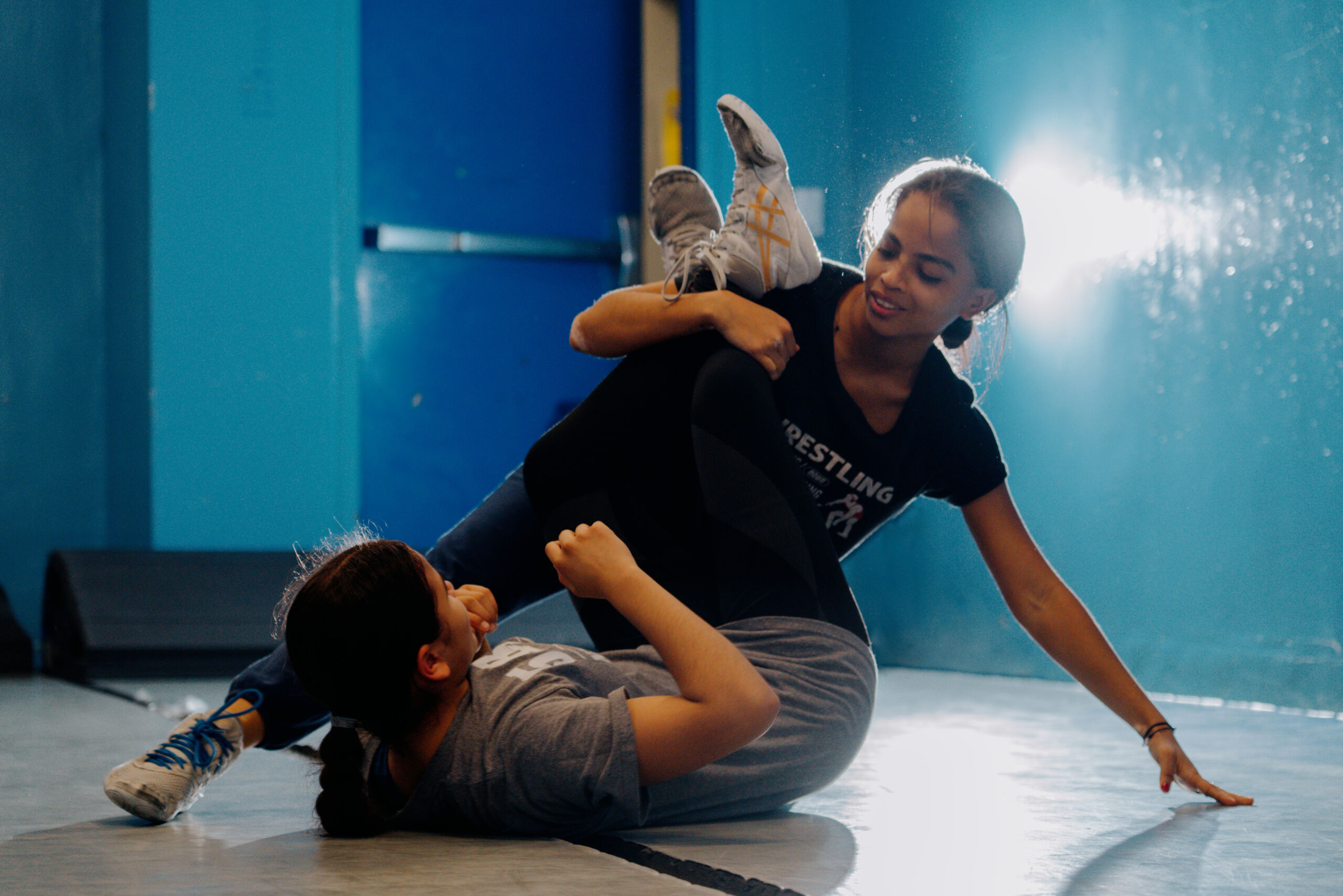
When Lee floated the idea of starting a wrestling team at Taft Educational Complex, he was told the school wasn’t the right place, that the kids didn’t care, that the parents and the administration wouldn’t support it.” If you know anybody who wrestles, you tell them they can’t do something,” Lee said. “Well, now you double-dog dared them, and they have to do it.”
“Anywhere you teach is hard,” Lee said. “Teaching in the inner city is very hard. Teaching in the South Bronx feels like you’re pushing a boulder up a hill in a rainstorm, and you just keep sliding back no matter how hard you work. It feels like the odds are stacked against you, and no matter how hard it feels for you, it’s way harder for the kids.”
It often takes teachers decades to learn they changed someone’s life for the better, and Lee felt like he wasn’t making a difference. He taught teenagers who didn’t know how to read. He got used to being cursed out and kids going through emotional breakdowns. All that made sense to him. But he could never wrap his head around the fact that there were kids in his classes who ate only five times a week — at school lunch, Monday through Friday.
“What if I didn’t know when I was gonna get my next meal?” Lee said. “How would that affect my psyche? When you start looking at it like that, then you start looking at the kids like, ‘I can’t believe you’re doing this well despite your circumstances.’ You learn about a kid who’s coming to school and then going home to a shelter, and that’s why they have to leave practice at 5:00 and not 5:30, because if they’re not in the shelter in time, their parents get in trouble. That’s something I could not get used to.”
During his last year of teaching as a fellow in 2014, Lee — along with Thekkekandam — opened Green Top Farms, a farm-to-table food service company based in New York City that relies on local supply chains to provide healthier meals to schools and community centers. The service has delivered more than 11 million pounds of local produce throughout the city and more than 3 million meals to homebound elderly New Yorkers and agencies, such as World Central Kitchen, that provide meals to those who are food insecure.
“I had been hungry when I was cutting weight for wrestling, but that was completely voluntary,” Lee said. “I just started thinking to myself, ‘Man, what if? What if that wasn’t voluntary?’ ”
When his students found out he had been a wrestler, they asked him to start a team for the school.
“I did not know there were kids going hungry in America until I was a teacher, and then it was smack dab in my face every single day. I was not good at leaving work at work, especially when it came to that stuff.” — Josh Lee ’04
The city, however, wasn’t interested in adding a boys’ sport as it battled a Title IX lawsuit. Lee and fellow coach Robert Carillo considered it a challenge and pestered the city. Lee finally got the green light. But to avoid further Title IX issues, the city said the coaches had to start a girls’ team, too. Lee had no idea how many girls would be interested.
“On the first day … I think we had 35 girls show up,” Lee said.
Carillo suggested documenting the team’s formation and first season on camera. The high school’s film class agreed and followed the team with terrible microphones and school-owned cameras. Lee and the girls got used to the cameras quickly.
“The whole time we’re thinking maybe we’ll get 15 minutes out of this,” Lee said. “Maybe we can turn this into a recruiting video.”
After his first season coaching, Lee worked for Taskrabbit, an online marketplace that matches customers with handyman workers for tasks such as furniture assembly. He was helping a stranger move art supplies she was storing in the basement of her friend Marco Ricci. Lee noticed a bunch of camera equipment in a corner and learned that Ricci was a documentary filmmaker.
Lee told Ricci about the wrestling team being filmed all season, and Ricci couldn’t believe there was an all-girls team in the Bronx. The team, in fact, was one of the original 16 all-girls teams in the city’s newly established all-girls high school wrestling league. The Bronx boasts the most high school teams of any borough.
Ricci came to a practice at Taft and told Lee, “You have way more than a recruiting video. You have a feature film.” He told Lee he was happy to donate his equipment or his time to the project.
The duo went full steam ahead with no money or planning. “It took longer to get all the permissions from the Department of Ed than it did to actually do the filming of the movie,” Lee said.
Ricci followed four of the wrestlers for the next three years, documenting their stories on and off the mat. Former Taft student Shirley Paulino, a founding member of the team in 2013, said in a statement, “Wrestling saved my life. It showed me I was stronger than my circumstances.”
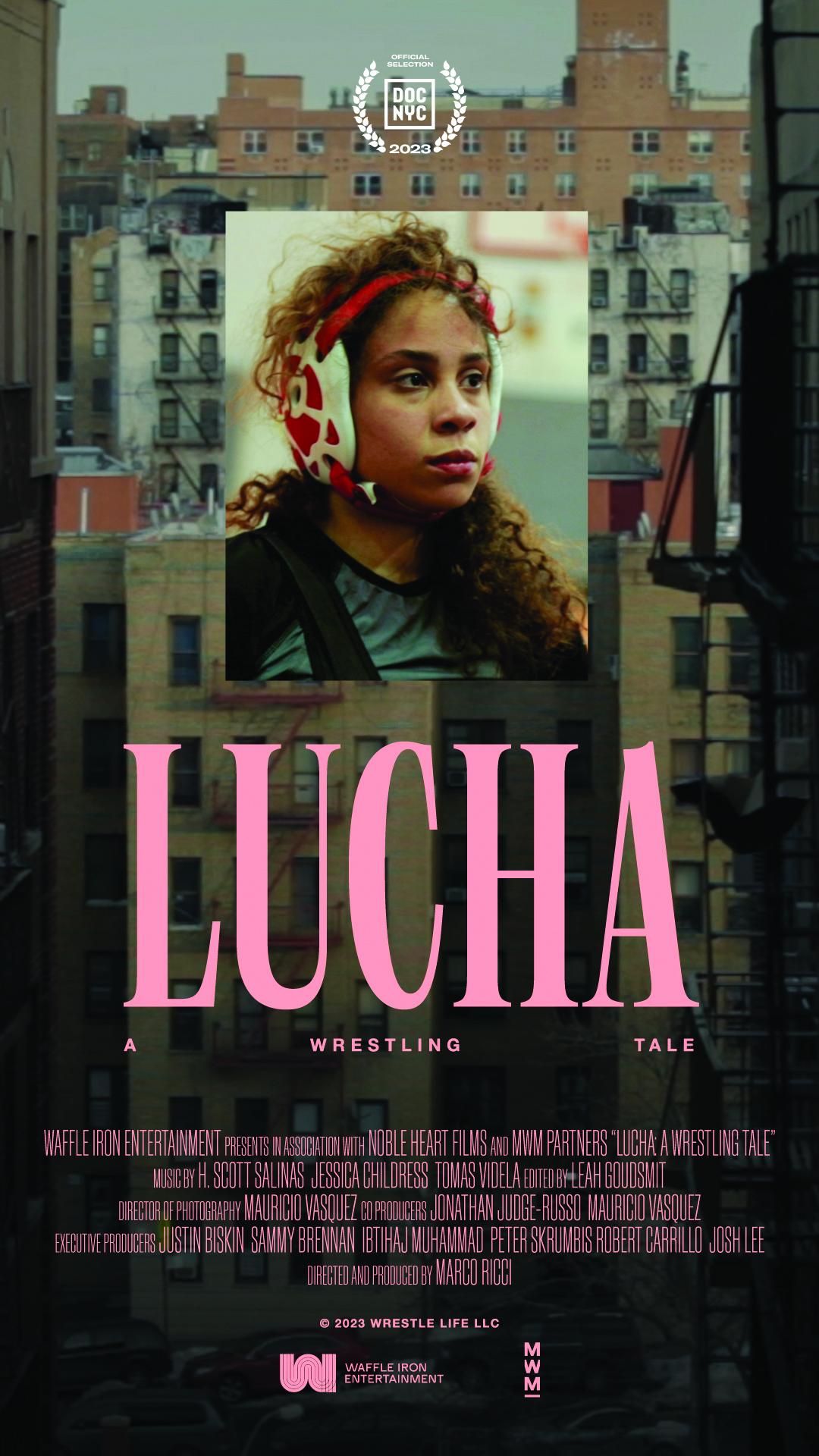
Lucha: A Wrestling Tale follows the lives of four of Lee’s wrestling team members at Taft High School in the Bronx. The film claimed the Grand Jury Metropolis Prize when it debuted in 2023 at DOC NYC, the largest annual documentary film festival in the United States.
It took nearly five years to finance post-production and get final approval from the Chancellor of New York City Public Schools to release the film.
Lucha: A Wrestling Tale debuted in 2023 at DOC NYC, the largest annual documentary film festival in the U.S., and it claimed the Grand Jury Metropolis Prize. The film has since been featured in The New York Times and The Hollywood Reporter and on The Today Show and The Kelly Clarkson Show.
Though the program no longer falls under Taft’s umbrella, Lee’s efforts have continued as the Lucha Wrestling Club, named for the documentary. “Lucha means struggle [in Spanish], and it also means fight,” Ricci said in a press release. “These girls didn’t just learn to wrestle. They learned to fight for their education, for their dreams and for each other.”
At the documentary festival, Lee was approached by an elderly woman who told him she was not allowed to try out for the wrestling team in high school because she was a girl. “To hear a little old lady tell me ‘that wasn’t possible when I was a kid’ and seeing it as possible, it doesn’t just make her think wrestling is coming around. It makes her think the world is coming around,” Lee said.
Girls’ wrestling is the fastest-growing high school sport in the country. Lee said it’s just “a Caitlin Clark away from being a household sport,” referring to the pro basketball player’s popularity and appeal to young athletes. Women’s wrestling became an officially recognized NCAA sport in January 2025.
For the girls at Lucha Wrestling Club, the sport is more than an after-school activity. It’s life-changing.
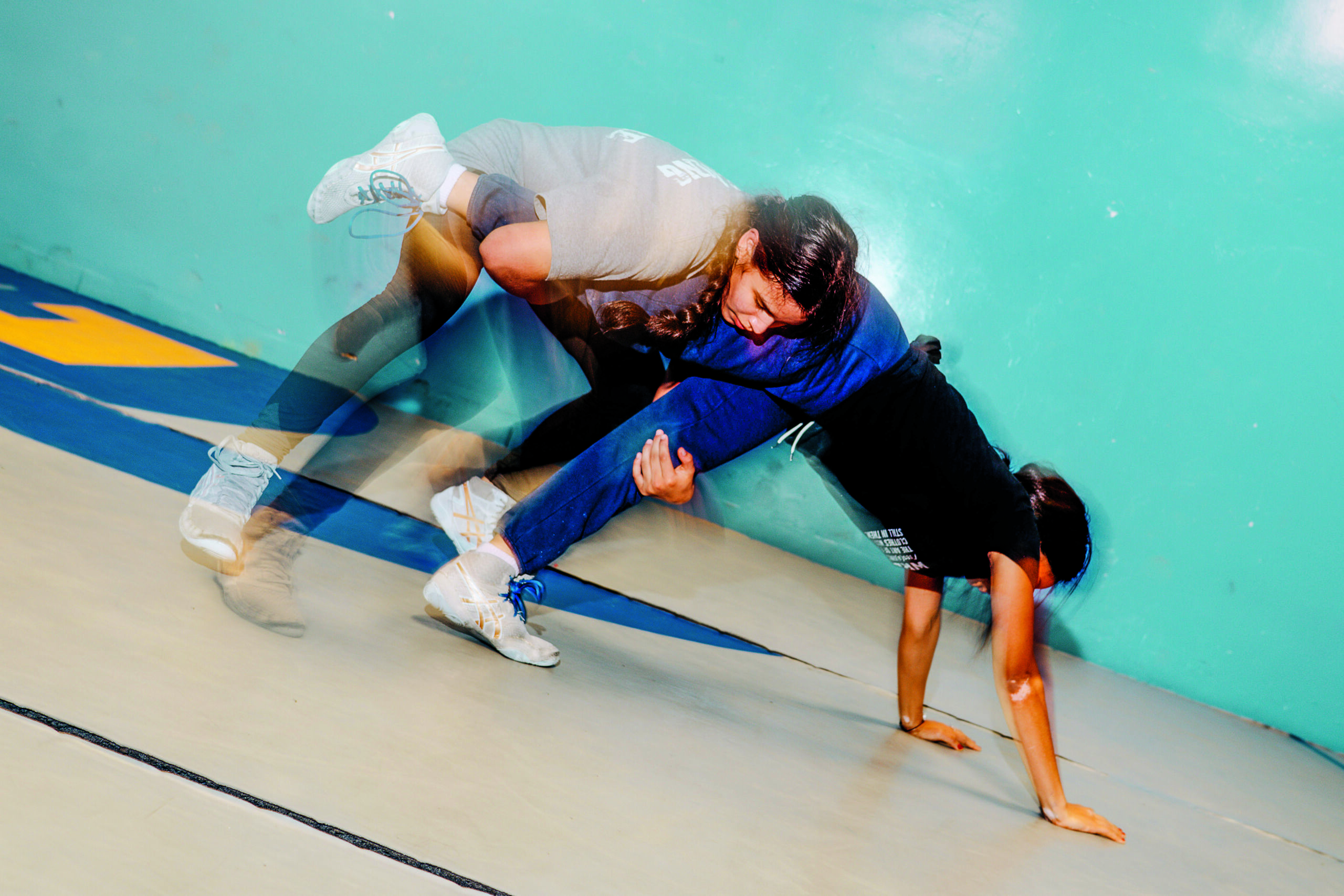
Lee said Lucha ultimately was trying to capture “the struggles on the mat and struggles off the mat, and how having this structure on the mat can help with the struggles off the mat.”
“You realize one of the best girls on your team is homeless, and she’s going out there and just fighting her ass off, just giving every ounce of energy she has and being devastated when she does lose, when the odds are stacked against her,” Lee said.
He added that teachers approach him to say how much better the girls are doing as students after joining the wrestling club. That fight to overcome the odds is what Lee hopes viewers take away from the documentary.
“It wasn’t about, ‘Oh, the women can be just as good as the men’ [or] ‘All these kids in the inner city can be just as good as the kids in the suburbs,’ ” Lee said. “It wasn’t about that at all. It was [that] life dealt these kids a really crappy hand, and they still won’t quit. Imagine if they got half a chance. Wrestling was the closest thing they had to a level playing field.”
At their core, Lee said, the movie and the Lucha Wrestling Club are about heart. “There’s something very American about rooting for underdogs, seeing somebody put up a fight.”
Lucha: A Wrestling Tale is available to stream on Amazon Prime and Apple TV+.
Thanks for reading the Carolina Alumni Review
Carolina Alumni members, sign in to continue reading.
Not yet a member? Become one today.