The Beauty Everywhere
Posted on Oct. 5, 2026In nature near and far, Hayden Dumaw ’22 (’23 MS) found a patient purpose.
by Emily Halnon
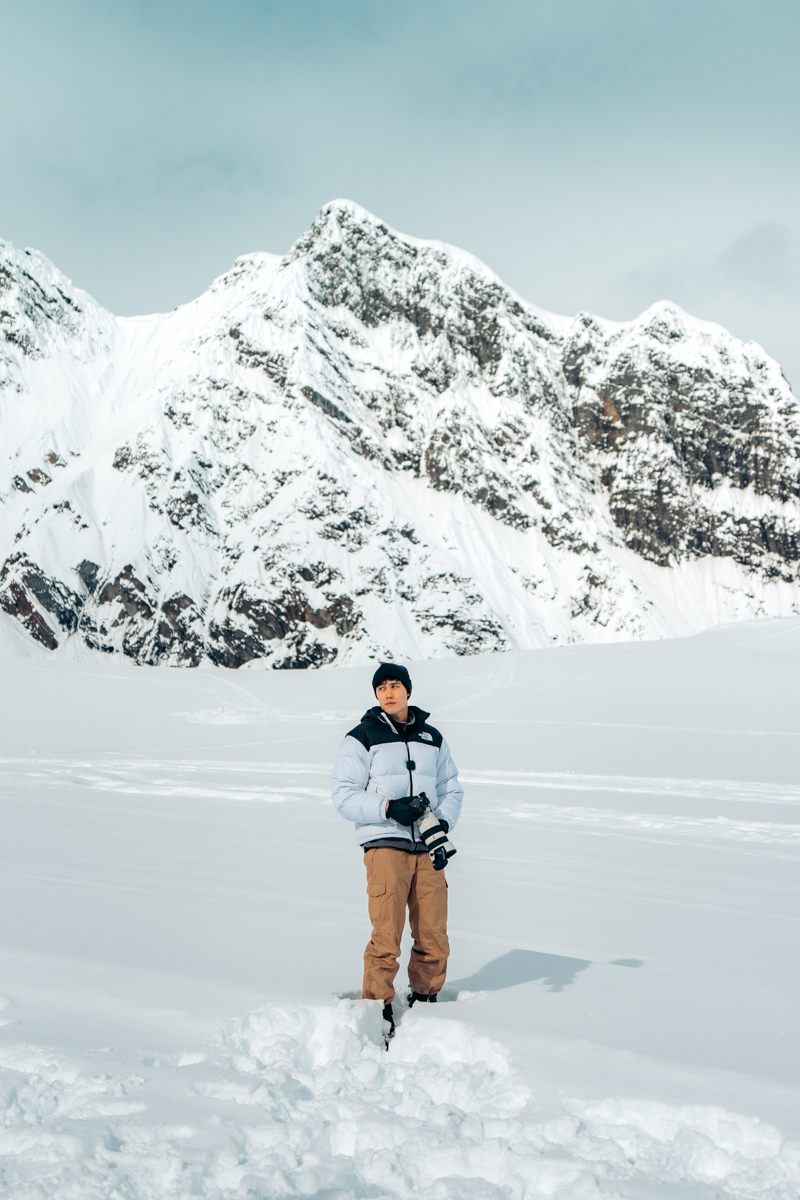
Dumaw is a biostatistician by day and a wildlife photographer by … every hour he can get out with his camera. (Photo: Hayden Dumaw ’22 (’23 MS))
It was still dark when Hayden Dumaw ’22 (’23 MS) trekked onto Atlantic Beach and lay down, belly first in the cold sand, barely moving a muscle for hours while the sun crawled over the horizon. His eyes were fixed on the sand, watching for a flash of movement.
Dumaw was trying to spot an Atlantic ghost crab, a mostly nocturnal creature that takes refuge in underground burrows during the day to avoid predators and heat. At sunrise, they scurry across the beach to dig holes, kicking up kernels of dirt as they conceal themselves beneath a thick layer of sand. There’s only a fleeting moment in which you can catch them. And there was Dumaw, camera in hand, biding his time.
It’s the kind of moment Dumaw has shaped his life around, trying to capture this ghost of the beach.
Dumaw is a biostatistician by day and a wildlife photographer by … every hour he can get out with his camera. While his day job pays his bills and is deeply meaningful to him, he looks at his profession and his passion for photography as equal strongholds in his life.
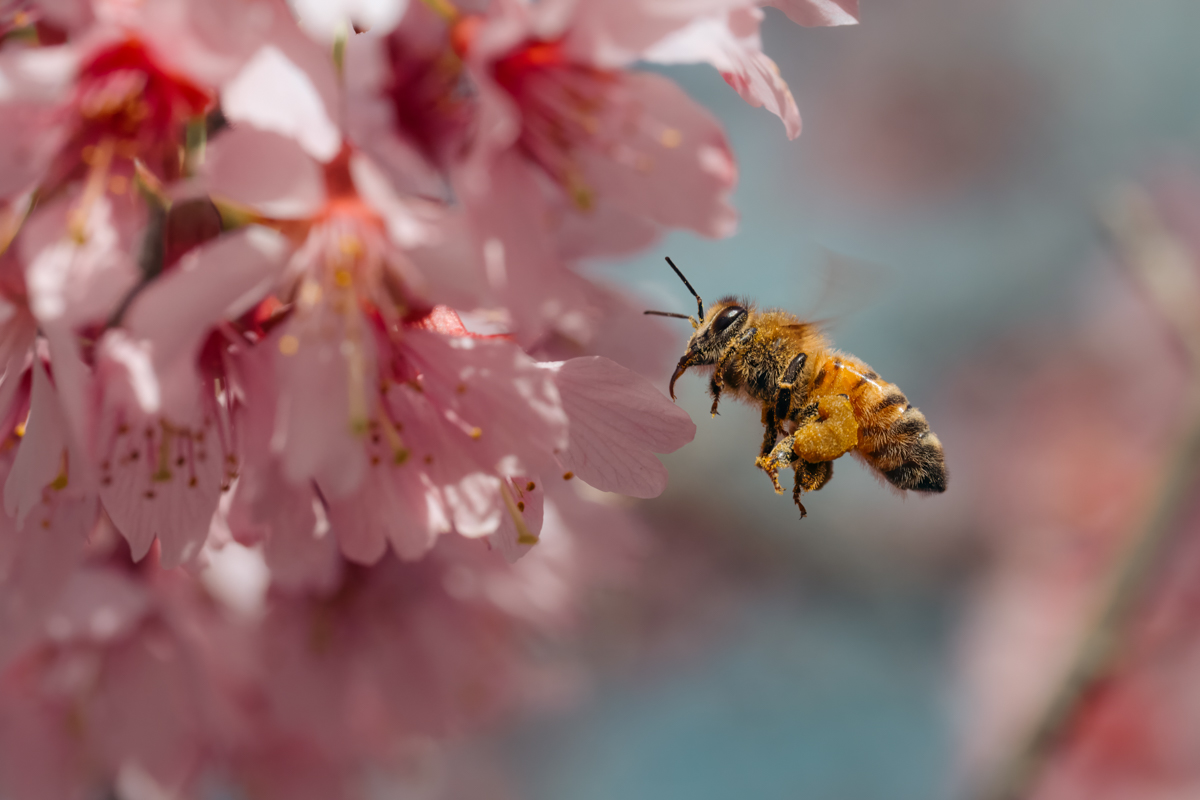
Honeybee, North Carolina. Dumaw: “You don’t have to go to exotic places to see amazing creatures. You just have to be willing to look around and actually open yourself up to what you might not see if you’re not looking for it.” (Photo: Hayden Dumaw ’22 (’23 MS))
“When I first got into photography, it was a creative outlet for my free time,” he said. “Now, they coexist perfectly, and I am dedicating myself to wildlife photography while still maintaining a full-time career.”
That has required a lot of sacrifice and discipline, but Dumaw wouldn’t change a thing. Wildlife photography is where he feels most alive. When he’s out with a camera among animals, an entire day can pass by in a flash. He loves nothing more than sharing space with wildlife and getting the chance to observe their natural behaviors in their habitats, whether it’s a sea turtle in Belize, a brown bear in Alaska or a honeybee in North Carolina. It’s changed how he appreciates the world — both near and far — and he hopes his photography can do the same for others.
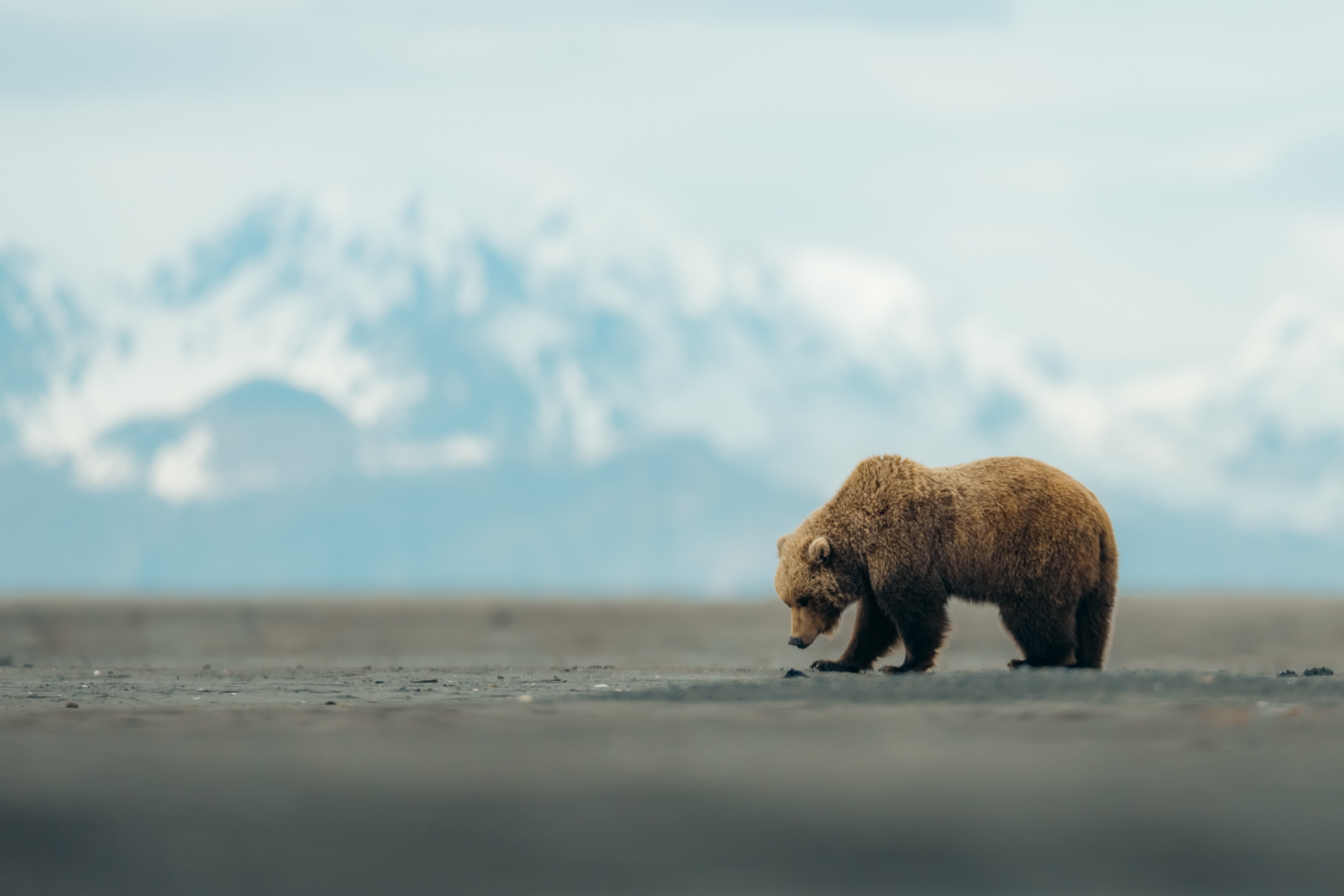
Brown bear, Katmai National Park and Preserve, Alaska. Dumaw: “We approached slowly and respectfully, making sure this individual knew we were there from a distance and giving her hours to get comfortable with our presence before we ever got close.” (Photo: Hayden Dumaw ’22 (’23 MS))
“I feel like my purpose on Earth is wildlife photography,” he said. “I want to share as many photos as I can to help other people see the beauty of the world and to appreciate that it’s everywhere on this planet.”
Emphasis on “everywhere.” Dumaw has traveled to every continent but Antarctica to find and photograph wildlife, including lions, elephants, giraffes and hundreds of birds.
While a lot of his work showcases blockbuster species with reputations as especially exciting creatures, the less glamorous moments with more typical species, such as the Atlantic ghost crab, really hooked Dumaw.
It’s the little things
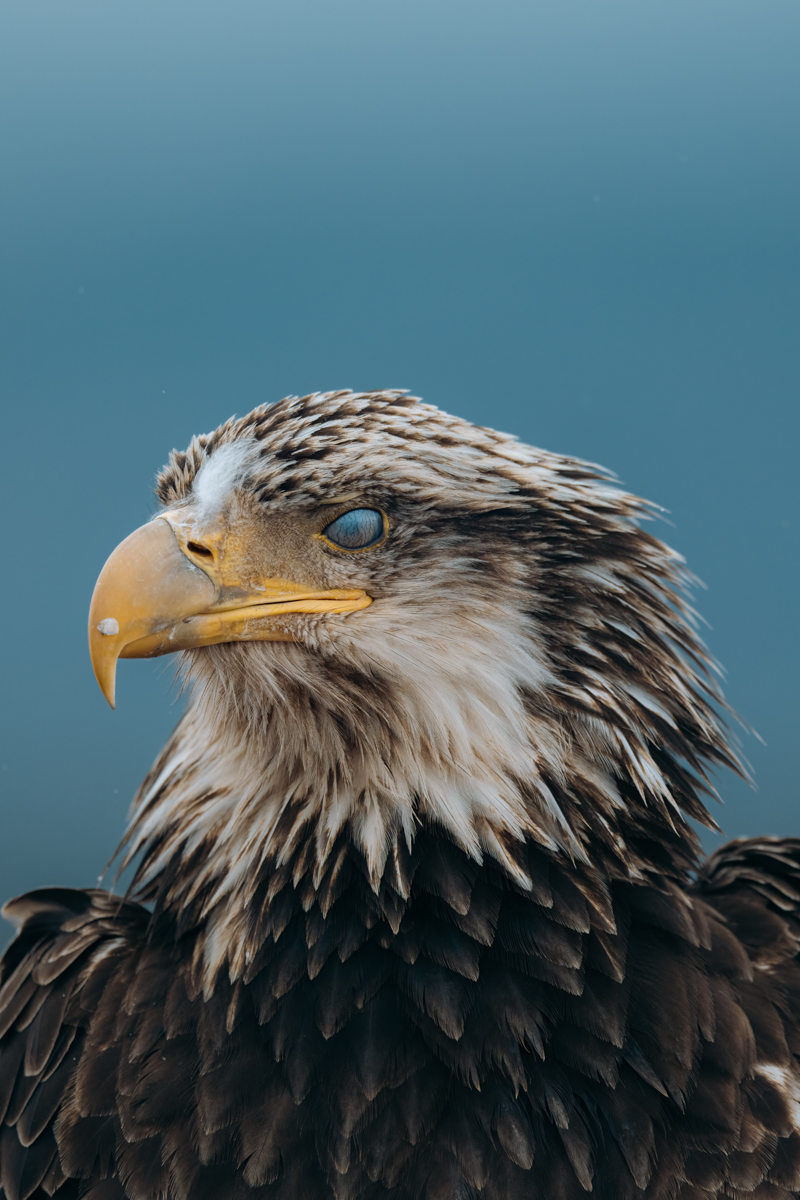
Bald eagle, Alaska. (Photo: Hayden Dumaw ’22 (’23 MS))
Dumaw got his first camera when he was an undergraduate at Carolina and started taking portraits of friends and photos around campus. One day, he noticed an American robin and pointed his camera in the bird’s direction. When he zoomed in, he could see every nook and cranny of a feather, the texture of the barbs, the shape of its spine, the exact shade of its coloring.
“It was incredible seeing every small detail that you wouldn’t see with the naked eye,” he said, “and that was a defining moment where wildlife clicked for me.”
It shouldn’t be surprising that the details drew Dumaw in. As a biostatistician focused on cancer research, he knows precision is paramount. He leverages detailed data points and statistics to advance biomedical science through clinical trials.
From the outset of each trial, he helps design and shape studies so they can probe key research questions. And he analyzes data from each trial to identify meaningful trends that can inform future research and advance new cancer treatments.
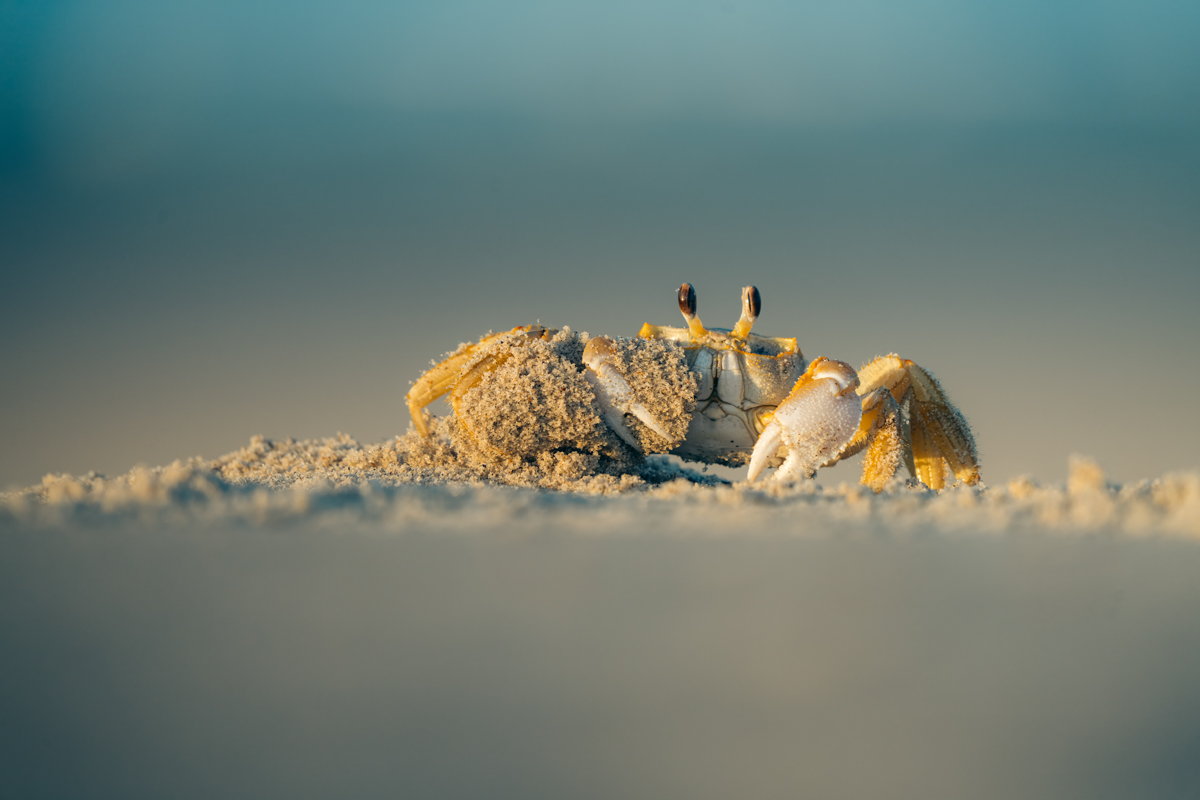
Atlantic ghost crab, Atlantic Beach. Dumaw: “Years ago, I probably would have walked right past a crab like this without a second thought. Wildlife photography changed that for me. Spending time with animals — especially the small, easily overlooked ones — has a way of slowing you down and making you notice the personality and beauty in places you might never expect.” (Photo: Hayden Dumaw ’22 (’23 MS))
“The conclusions we draw can directly influence whether a new treatment becomes an option for the general public,” Dumaw said.
His work also requires patience and a deep respect for collaborators, whether they are oncology patients or semiterrestrial crustaceans. In both endeavors, he constantly researches and analyzes data to ensure he operates with the utmost care for humans and wildlife.
“Behind every data point is a real person whose health is more or less in my hands, and that weight is something I carry into every analysis I do,” he said. “The same thing can be said for wildlife, where I’m doing sufficient research on specific animals so I can photograph them with respect, integrity and ethics.”
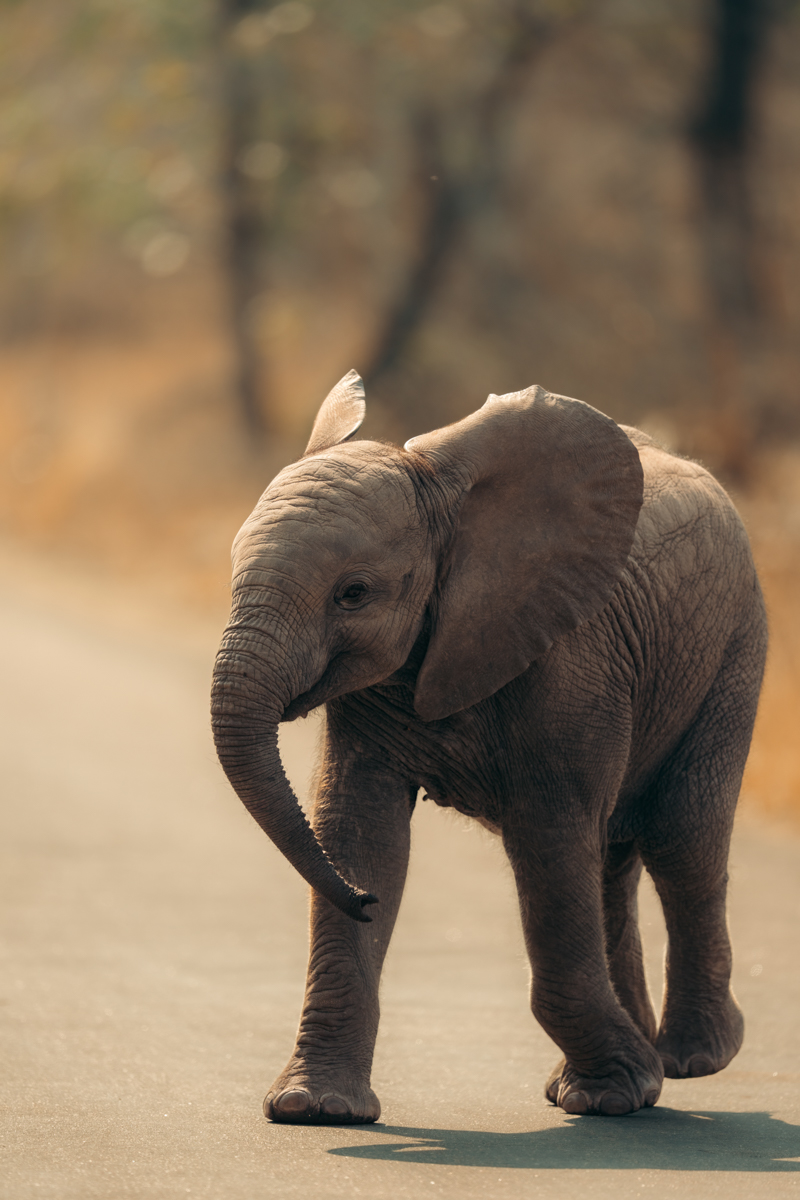
African elephant calf, Kruger National Park, South Africa. Dumaw: “One of the highlights of this encounter was watching a young calf excitedly dart around while the adults kept it close, never letting it stray too far. At one point it grabbed onto its mother’s tail and followed close behind her as the herd moved — one of the most endearing things I’ve ever witnessed in the field.” (Photo: Hayden Dumaw ’22 (’23 MS))
While he’ll lie in the cold sand in the dark or shiver his way through a rainstorm to shoot wildlife, he won’t “do anything to get the shot.” He always lets the animals approach him on their terms. If he captures a close-up portrait of a screech owl or a brown bear, it’s because they’ve chosen to be in Dumaw’s vicinity, not because he encroached upon their space in a way that might make them feel stressed or threatened. (His fleet of zoom lenses also helps.)
Dumaw once flew more than 4,000 miles to photograph a red fox in the Netherlands. He spent hours researching its habitat and behavior. He felt confident he knew where he could find one. He woke up at the crack of dawn and spent an entire day looking for one, only to come home with no foxes on his camera’s memory card. But that’s part of the fun for Dumaw.
“If every single time I went out, I got a cool moment on camera, I mean, in theory, that sounds great, but that wouldn’t make it nearly as special when it works out,” he said. That’s the nature of wildlife photography. You can’t control what an animal will do. But you can do your homework, dedicate time and travel far to create an opportunity to capture an incredible moment.
A thousand words
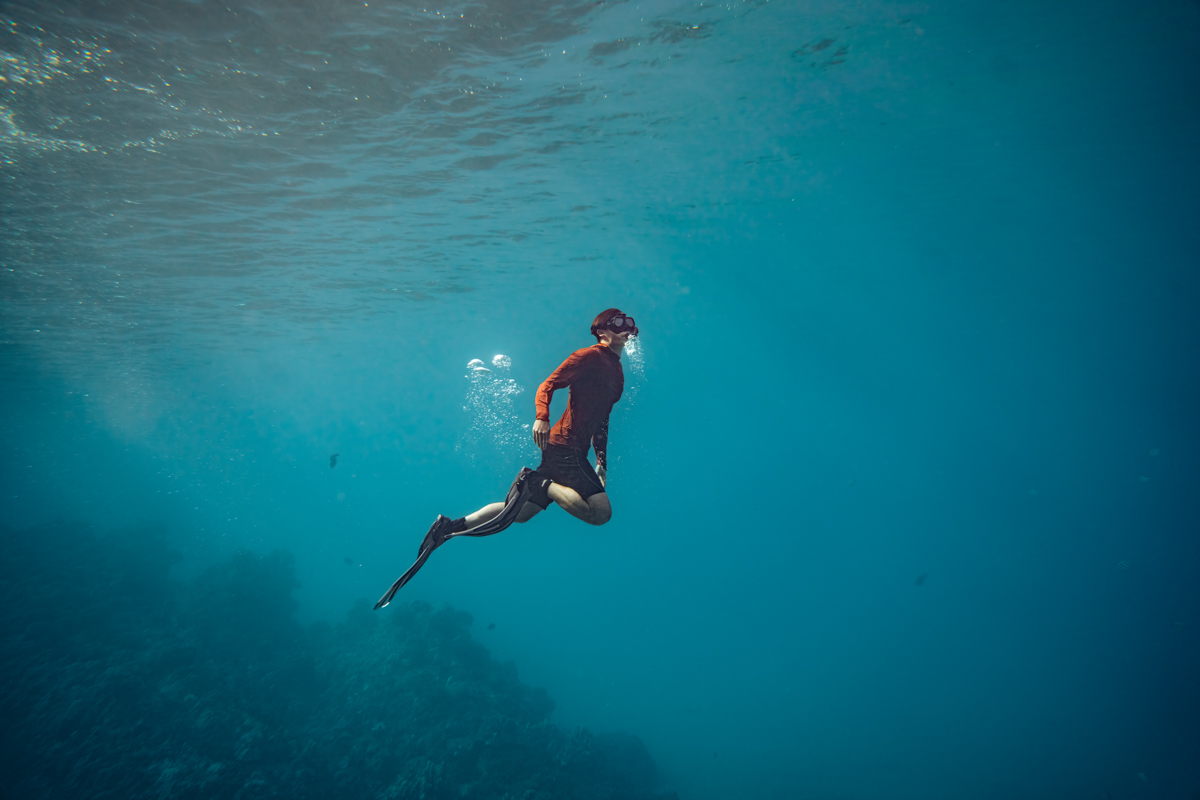
Dumaw snorkeling off Maui (Photo: Gracelyn Kitchings)
While some photographers maintain a bucket list of shots they want to get, Dumaw said he wants to tell stories and convey emotions. He believes he’ll find more compelling narratives and photographs if he goes into nature with his mind and eyes open instead of a predetermined shot list.
When he took a picture of a rhinoceros in South Africa, a single tear was trickling down its face from a half-closed eye. It looks as if the massive animal is crying, which isn’t a thing they do, Dumaw said. It’s likely the young rhino got poked with a stick or had something in its eye. But in the context of South Africa, the photograph conveys a message of habitat destruction and endangered species that no amount of research or shot planning could have produced. He hopes the photo captured both grief and hope in a single moment, showcasing wildlife’s resilience alongside the collective sorrow over the threatened future of Earth.
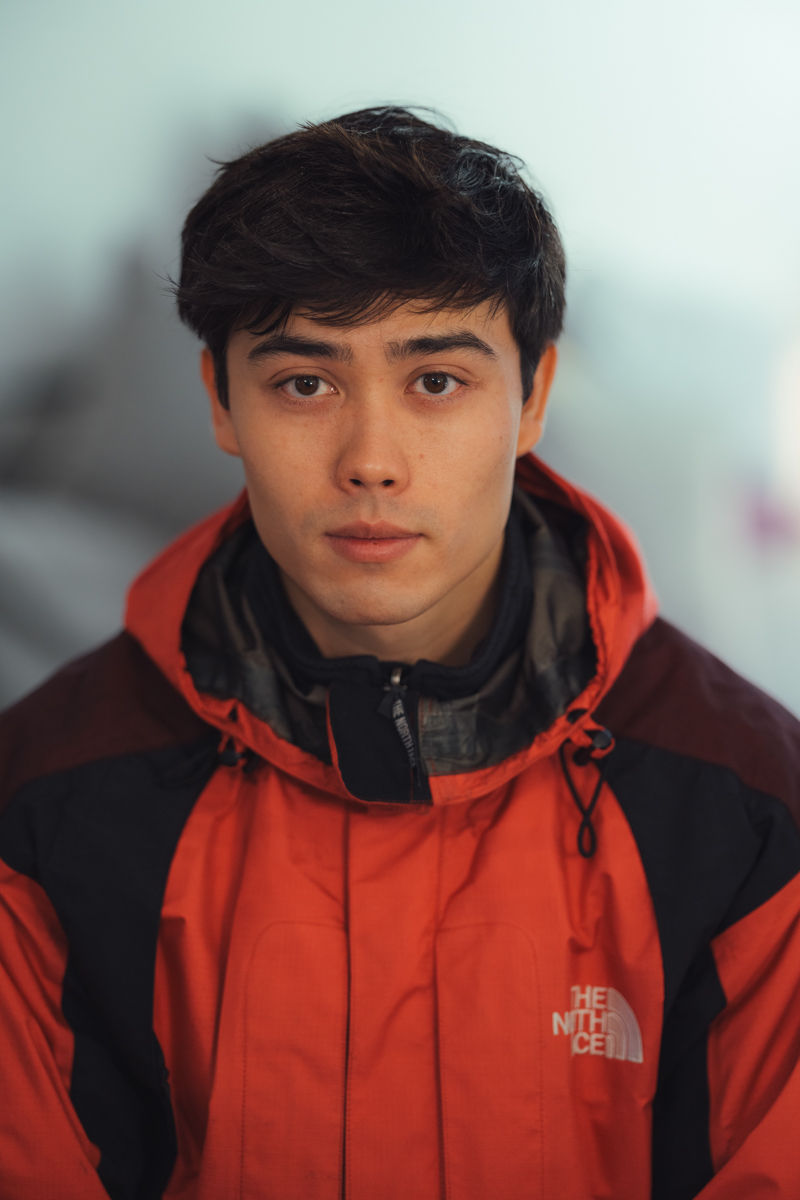
Now several years into his wildlife photography career, the 25-year-old Dumaw carries his camera most everywhere he goes, sometimes hiking miles up a mountain with his heavy lens, just in case he sees something. (Photo: Hayden Dumaw ’22 (’23 MS))
“I couldn’t have possibly planned to photograph this moment, but I’m so thankful I got to witness it,” Dumaw wrote on Instagram when he shared the picture. “It’s a strong reminder of why I’m passionately sharing my work.”
Now several years into his wildlife photography career, the 25-year-old Dumaw carries his camera most everywhere he goes, sometimes hiking miles up a mountain with his heavy lens, just in case he sees something. He spends countless hours researching animals to give himself the best chance of getting a good shot and sharing a compelling story through his art. He sets his alarm for the middle of the night so he can spend hours waiting for an opportunity to see a creature that’s easy to miss if you’re not looking for it.
While he was belly down on Atlantic Beach, Dumaw spotted a flash of movement at sunrise. A ghost crab scuttled across the sand and started digging out its burrow for the day, scanning the shoreline every few seconds as it went about its morning routine.
It was the crab equivalent of brushing your teeth or making coffee, and Dumaw couldn’t look away. He caught the crab in his viewfinder and started shooting. From his position on the ground, he was at eye level with the crab, its long, dark eyes staring back at him from antenna-like eyestalks. Its eight limbs were covered in sand, and its claws kicked up more as it burrowed deeper into its hole. And then, just like a ghost, it vanished from sight.
But not before Dumaw got exactly what he was looking for.
Emily Halnon, a freelance writer living in Eugene, Oregon, is the author of To the Gorge: Running, Grief, Resilience & 460 Miles on the Pacific Crest Trail