- Membership
- Perks
- Things To Do
- Resources
- News
- About
- Shop
Related Content
Veterans Day Spotlight: A Fight for Our Future
Nov. 11, 2026
Veteran Rye Barcott ’01 thinks courage is the key to preserving our democracy Rye Barcott...
Read MoreThe Student Who Brought Dumplings to the Dining Hall
Oct. 19, 2026
Many Carolina students curate their pictures on dating apps like Hinge — sunset smiles, silly...
Read MoreChoosing Love
Oct. 19, 2026
Emmy Award-winning director Luchina Fisher ’88 learned the power of storytelling as a student at...
Read More-
2026
-
2025
-
2024
-
2023
-
2022
-
2021
-
2020
-
2019
-
2018
-
2017
-
2016
-
2015
-
2014
-
2013
-
2012
-
2011
-
2010
-
2009
-
2008
-
2007
-
2006
-
2005
-
2004
- Academics and Athletics
- Admissions
- Alumni Profiles
- Alumni Recognition
- Around Town
- Arts
- Books
- Campus Profile
- Campus Safety
- Carolina Alumni Awards
- Carolina Alumni Leadership
- Carolina Alumni Programs and Outreach
- Carolina Alumni Reunions
- Carolina Alumni Review
- Celebrations
- Championships
- College and Costs
- Commencement
- Coronavirus
- Discovery
- Extracurricular
- Faculty
- Faculty Awards
- For the People
- Go Heels
- Greek Life
- Hark the Sounds
- Higher Education
- Homecoming
- In Class
- In Memoriam
- Innovation and Technology
- Issues
- Object Lesson
- On View
- Philanthropy
- Podcast
- Public Service
- Race and Reckoning
- Research
- Serving Our State
- Sexual Assault
- Silent Sam
- Sports
- Structures
- Student Achievement
- Students
- Timelines
- Tuition and Financial Aid
- UNC Libraries
- UNC’s History
- Undergraduate Spotlight
- University Achievements
- University Awards
- University Budget Issues
- University Development
- University Leadership
- University News
- University Rankings
- What We Do
- Who We Are
- Young Alumni
- Yours at Carolina
Why Natalie Haith-Edwards Loves Coordinating the Black Alumni Reunion Gala
Posted on March 26, 2026Natalie Haith-Edwards ’91 remembers how proud she felt when her older sister, Sherry Haith Boatright ’89, became the first person in their family to attend college, about 30 miles from their hometown of Burlington.
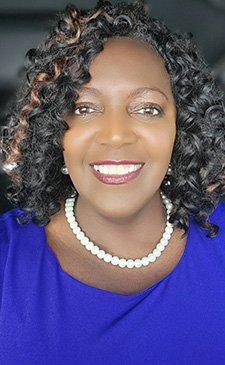
Natalie Haith-Edwards ’91
So when the time came for Natalie and her younger sister, Alicia Scott ’92, to begin filling out college applications, there was really only one option.
“UNC was what we knew,” Haith-Edwards said. “That was what our dream was. That’s what we had to do.”
She arrived early, through the Summer Bridge Program, and immediately threw herself into collegiate life. She majored in psychology, joined Zeta Phi Beta Sorority, attended meetings of the Black Student Movement and made connections with her professors, one of whom proved especially formative.
Harold Woodard ’78 was a lecturer in what is now the Department of African, African American and Diaspora Studies. Haith-Edwards said Woodard made her feel like she could do anything she set her mind to.
He taught her and her classmates the value of staying focused and instilled a sense they were part of something bigger than themselves. When Haith-Edwards arrived at Carolina, it had been just 26 years since Karen Parker ’65 became the first Black woman to enroll at the University. Through Woodard’s lectures, Haith-Edwards realized she and her classmates were part of an ongoing legacy.
A few years after graduation, feeling a sense of responsibility to keep that legacy going and to help students realize they could reach their goals, she joined the Black Alumni Reunion. “When I found out about it, I was full steam ahead,” Haith-Edwards said. “I loved it.” She started volunteering to coordinate the event, and in 2009, she chaired the reunion gala.
She said the annual event is an inspiring evening that celebrates both the young scholars the reunion supports and the legacy of trailblazers who broke barriers at Carolina. For instance, the Black Alumni Reunion features awards named for firsts such as Harvey E. Beech ’52 (LLB), Carolina’s first Black graduate, and Hortense K. McClinton, Carolina’s first Black professor. Woodard, the professor who inspired Haith-Edwards, earned the Black Alumni Reunion’s Outstanding Faculty Award in 2003.
In 2005, a committee of passionate alumni at Homecoming weekend established the Light on the Hill Society Scholarship, a program that honors early Black graduates of the University and supports incoming Black students. Those scholars are honored at the Black Alumni Reunion gala each year.
Seeing those two generations in the same room — those who cleared paths and the scholars who follow in their footsteps — keeps Haith-Edwards coming back.
“It gives me an opportunity to be in the midst of greatness,” she said. “From the scholars to the alumni to faculty to our trailblazers, I’m just so [proud], so I want to give back to the University.”
She encouraged anyone considering volunteering to try it. “You don’t know how good it’s going to make you feel, giving back to a place that has given so much to you.”
© 2026 Carolina Alumni